
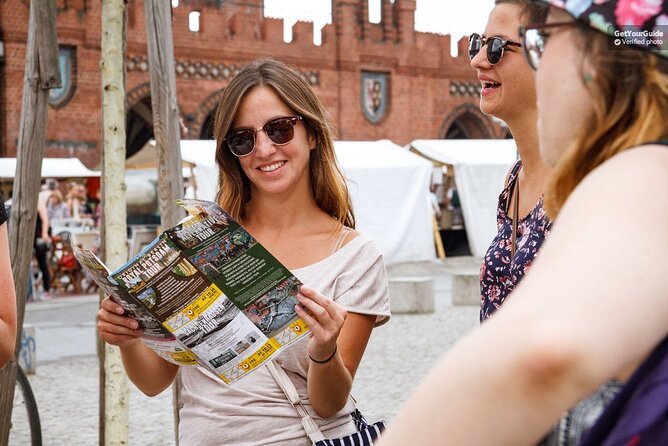
Tour review · BERLIN STREET ART & ALTERNATIVE TOURS
Berlin: Alternative & Street Art Tour
Berlin makes street art feel personal.
This 3-hour walk is built around Berlin’s alternative subcultures, from punk-and-techno energy to the politics behind squatting culture, and you also get great photo opportunities at the key stops. One thing to consider, though, is that this tour is intentionally focused on the gritty, unofficial side of the city, so if you only want traditional sights and tidy timelines, it may feel a bit rough around the edges.
I like that the guide keeps the storytelling human. You’re not just spotting walls and murals, you’re learning why Berlin has attracted so many artists and why the city still feels like it belongs to people who create outside the mainstream. And bonus: you’ll walk through multiple neighborhoods where the emphasis shifts, so the tour doesn’t feel like one repeated theme.
What makes it extra fun is that it’s a live, English-speaking guided experience that stays active rain or shine. The route includes major alternative culture stops like Haus Schwarzenberg, YAAM beach, Künstlerhaus Bethanien, Treehouse on the wall, SO36, and RAW Gelände, so you’re not waiting around for the next interesting thing to happen.
Key things you should know before booking
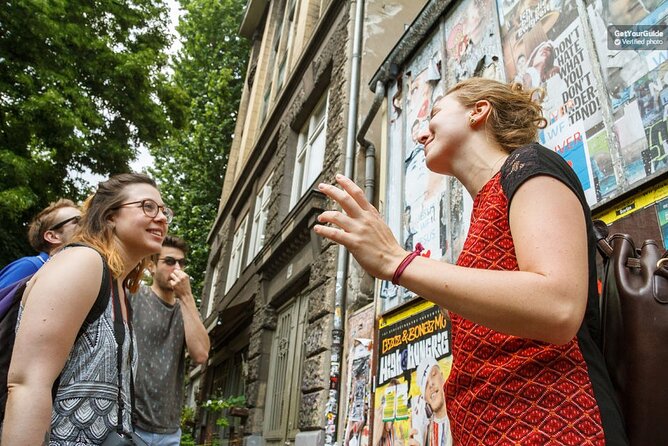
- Street art meets subculture history, with themes ranging from punk rock and techno to politics and squatting
- Neighborhood shift in the story, starting with graffiti context in Friedrichshain and Mitte, then moving into Kreuzberg history
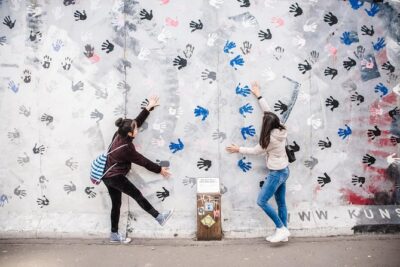
- Big photo moments at well-known alternative stops, including Treehouse on the wall
- You hear why Berlin attracts artists, and how Berliners protect creative space
- A real guide drives the experience, with strong impressions from guides including Damien and Antonio Castello
More of Berlin’s street art, studios and alternative culture
- Berlin: Alternative Berlin Walking Tour★ 4.6 · 1,204 reviews
- Berlin: City Street Art Guided Walking Tour★ 4.8 · 886 reviews
- Berlin: 3-Hour Street Art Tour★ 4.7 · 778 reviews
- Kreuzberg: Culinary Food Tour★ 4.5 · 770 reviews
Why Berlin’s street art feels different on foot
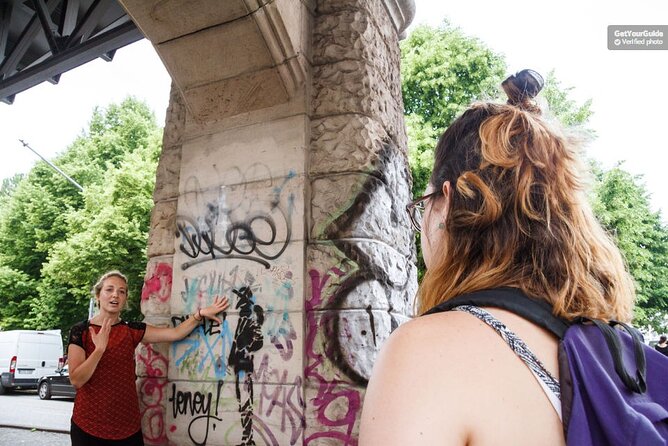
Berlin street art does not come off like a side hobby. On this tour, it shows up as a language for identity, resistance, and community, all braided together. The best part is that you’re not just looking at visuals, you’re getting the context that makes those visuals make sense.
I especially like how the tour connects art to real social forces. You’ll hear about squatting culture, revolution, and gentrification, and you’ll also see how that history still shapes what people build and where they gather. That framing helps you read the city like a living document, not a set of static photos.
And yes, the walk is very photo friendly. You’ll hit places designed for creativity, so you can actually capture the texture of Berlin, not just a landmark shot.
Getting started under the TV Tower (and walking rain or shine)
You’ll meet right underneath the TV tower, in front of a Vapiano restaurant. It’s an easy landmark, and it helps you orient fast if you’re coming in from elsewhere.
This is a 3-hour walking tour. That matters because you’ll have enough time to move between neighborhoods and hear full explanations, not just quick stop-and-go points. Also, it runs rain or shine, so I’d plan on bringing a light rain layer or an umbrella and wear shoes you can handle on wet sidewalks.
The tour is wheelchair accessible, which is helpful for planning a smoother route if mobility is a concern. You’ll still be walking, but the fact that it’s explicitly labeled accessible means it’s built with that in mind.
Friedrichshain and Mitte: graffiti, music, and the city’s creative rules
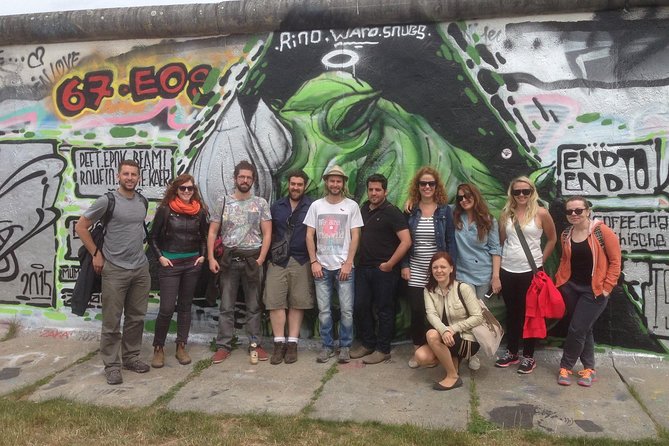
The tour’s first phase focuses on getting your bearings for street art and graffiti in Friedrichshain and Mitte. This is where the guide’s explanations help you stop seeing street art as random tagging and start seeing it as a scene with its own logic.
Expect to hear how Berlin’s alternative culture mixes music, style, and politics. The themes named for the tour include punk rock and techno, and that pairing is important. Berlin street art often isn’t separate from sound and nightlife culture, so you’ll get a fuller sense of why certain looks and messages show up in the same places.
You’ll also learn why Berlin is such a magnet for artists. That theme repeats across the tour highlights, and it’s a big part of what makes the city feel different from other European capitals. The guide doesn’t treat art as decoration, they treat it as a reason people stay.
Practical note: if you’re the type who likes to zoom in and really study details, this first stretch is your sweet spot. You’ll have time to watch how the art changes as you move and to ask questions while the guide is still in the teaching mode.
Kreuzberg shift: squatting culture, revolution, and gentrification
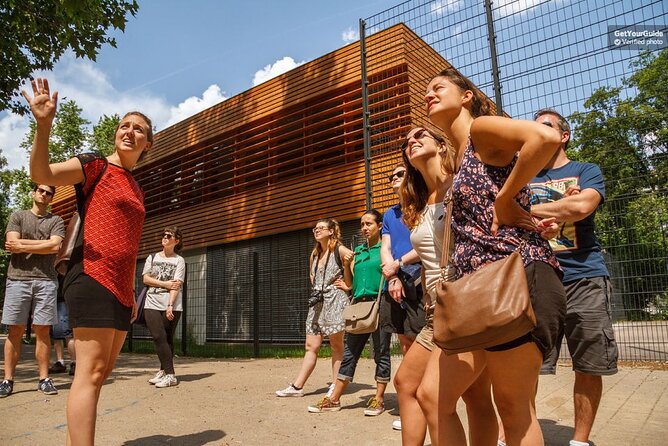
As the tour moves into Kreuzberg, the emphasis shifts toward the history of squatting, revolution, and gentrification. This is where Berlin stops being just cool street art and turns into a place with complicated choices.
I like that this part of the tour doesn’t pretend everything is purely romantic. The point is that alternative spaces don’t exist in a vacuum. They are created under pressure, they change over time, and they can be reshaped by development, attention, and rent pressures.
Because the tour focus can change slightly depending on the guide’s profession and personal interest, the exact balance between art and politics might feel different from one day to the next. But you can count on the overall theme: Berlin’s underbelly and alternative culture explained as something ongoing, not just something that happened in the past.
If you want to understand Berlin beyond the official monuments, this is where you start connecting the dots. You’ll hear why artists live here, how communities formed around creative spaces, and why the city’s identity includes conflict as well as invention.
More Berlin ideas for the space still left in the itinerary
- Berlin Street Art Walking Tour – Off The Grid
★ 5.0 · 270 reviews - East Meets West: Berlin Food Culture & Street Art
★ 5.0 · 157 reviews - Berlin Street Art & Graffiti Walking Tour
★ 5.0 · 109 reviews - Berlin: Street Art and Alternative Tour
★ 4.7 · 98 reviews - Berlin: Private Kreuzberg Street Art Walking Tour
★ 4.8 · 57 reviews
The major stops that make your camera happy
The route includes a set of famous alternative sites that work as anchors for the stories. You’ll visit Haus Schwarzenberg, YAAM beach, Künstlerhaus Bethanien, Treehouse on the wall, SO36, and RAW Gelände. Exact moments will depend on the day and the guide, but the purpose stays consistent: tie what you’re seeing to why it matters.
Here’s how these stops tend to land for visitors, in real-world terms:
Haus Schwarzenberg
This is one of the stops that signals you’ve entered the part of Berlin where creativity is treated as public culture. It’s a strong starting point for the alternative tone of the walk, and it tends to set the expectations for what comes next.
YAAM beach
The name alone tells you this stop is about contrast. Berlin isn’t just grey buildings and formal institutions, and this is a good place to notice how alternative spaces can feel unexpected and playful at the same time.
Künstlerhaus Bethanien
This stop is tied into the tour’s focus on art as a lived practice. I like it because it reinforces that the story is not only about walls, it’s also about people who keep making space for creation.
Treehouse on the wall
This is the photo opportunity stop. If you enjoy taking pictures that look like Berlin, not like any other city, this is usually where you’ll want to slow down. The structure is distinctive, and it makes an easy scene for wide shots and close details.
SO36
This stop supports the tour’s music and subculture themes. Even if you’re not a scene insider, you’ll understand why Berlin keeps pointing you back to venues and communities tied to alternative sounds and identities.
RAW Gelände
RAW Gelände rounds out the feeling that Berlin’s creativity often lives in old or unconventional spaces. It helps you end the tour with a stronger sense of how alternative culture keeps moving, changing, and reappearing.
Across all of these, the guide’s job is to connect the visual to the story. That’s what makes your photos better too, because you can explain what you photographed and why it exists.
Guides matter, and this one brings energy
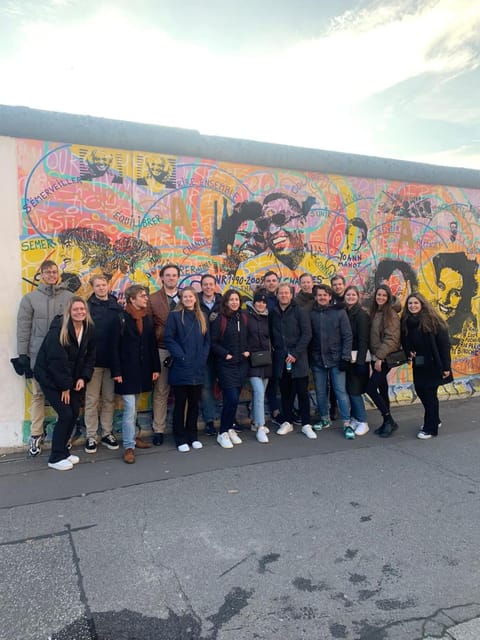
The biggest reason this tour works well is the guide. The experience is live, English-speaking, and built around personal storytelling, and the quality shows through the impressions of guides like Damien and Antonio Castello.
Damien is repeatedly described as enthusiastic and engaging, with a clear ability to connect the alternative side of Berlin into a tour that feels more like conversation than a lecture. Antonio Castello, in particular, is credited with making the tour for people, which tells me the guide’s personality and storytelling style can genuinely shape the whole experience.
Also, because the tour can vary slightly based on the guide’s interests, you’re not guaranteed a copy-paste route. What stays consistent is the overall structure: street art and graffiti in Friedrichshain and Mitte, then the Kreuzberg history themes, plus the set of alternative culture stops along the way.
I’d treat this as a tour where you can get more out of it by asking questions. If you ask about squatting culture, gentrification, or how punk and techno intersect with street art, you’ll usually get answers that tie directly back to what you’re standing next to.
Price and value: what $23 buys you in Berlin
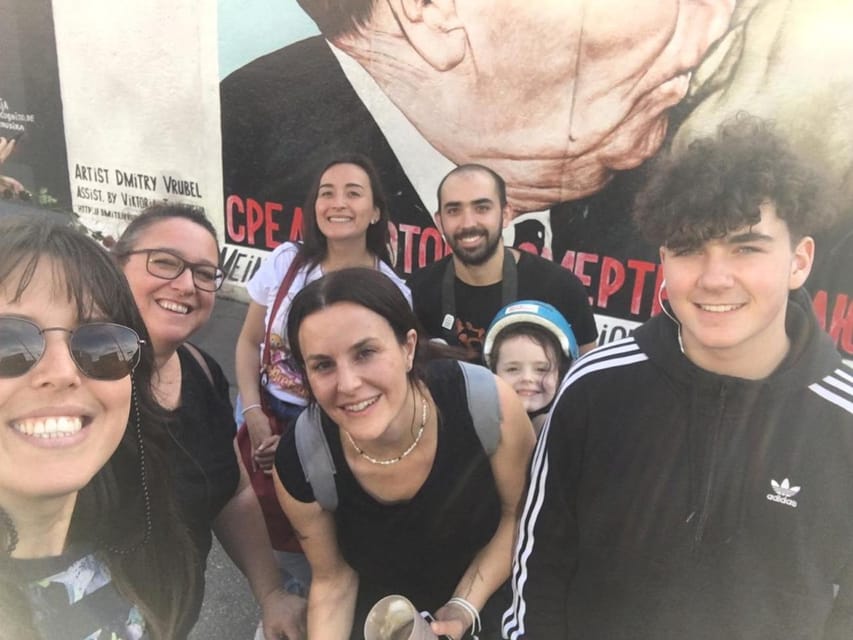
At $23 per person for a 3-hour guided walk, this is one of the more accessible ways to get focused local context on Berlin’s alternative culture. You’re paying for time, an English-speaking guide, and the route structure that stitches multiple neighborhoods together into one coherent story.
In practical terms, you also save yourself effort. Without a guide, you can still see graffiti and street art in Berlin, but you may miss the why. This tour aims to fix that gap by giving you introductions to street art and graffiti culture and by explaining how squatting, revolution, and gentrification shaped today’s atmosphere.
It also avoids extra costs that often sneak in on tours. The price includes the guide, but it does not include pickup or drop-off, food and drinks, gratuities, or any transportation ticket. That means you can control your total budget by planning snacks separately and using your own transport options.
Who this walking tour is perfect for
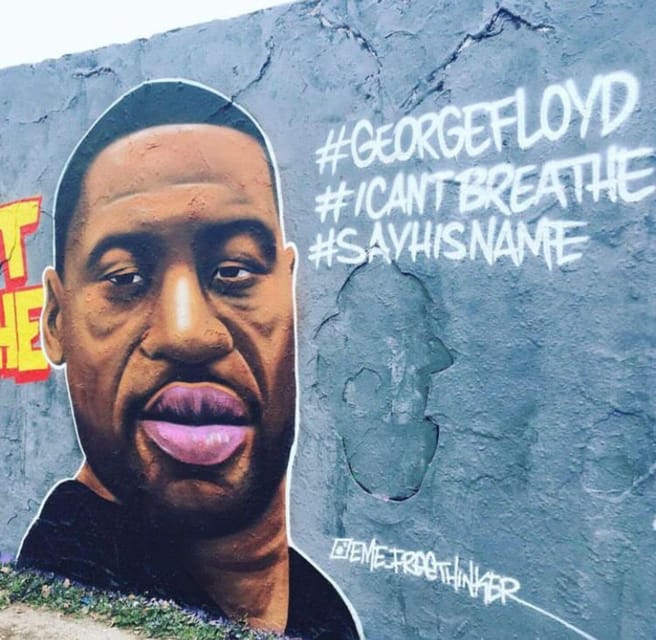
This is a strong fit if you want more than photos. You’ll probably enjoy it if you like subcultures, you’re curious about how Berlin’s creative spaces developed, and you want to hear the city explained through street art and music scenes.
It also works for people who travel with a camera and like to shoot while learning. The stops are known for visual impact, and the tour is designed to give you a steady rhythm of explanations and photo chances.
It’s also suitable for all ages, and it’s labeled wheelchair accessible. That makes it easier to include friends or family who might not want a long, complicated day trip.
When it might not be your best match
Choose something else if you prefer standard top-ten landmarks and polished museum-style narratives. This tour leans into Berlin’s underbelly and alternative culture, with a heavy emphasis on squatting culture, revolution, and gentrification.
Also, because it runs rain or shine and involves walking, plan accordingly if you’re dealing with mobility limits or you hate wet-weather routes. Even though it’s wheelchair accessible, it’s still a walking experience, not a sit-down museum hour.
Should you book this Alternative and Street Art Tour?
Yes, book it if you want Berlin to feel like a living city, not a postcard set. The combination of street art and graffiti context, plus the Kreuzberg history themes, gives you a reason to care about what you’re seeing. And the guide factor is real, with strong impressions tied to guides like Damien and Antonio Castello.
I’d skip it only if you want strictly official history or if you’re not interested in alternative subcultures. Otherwise, for a $23, 3-hour guided walk that includes major stops like YAAM beach and Treehouse on the wall, it’s a smart way to understand why Berlin still draws artists and why Berliners keep reinventing their creative spaces.
FAQ
How long is the Berlin Alternative and Street Art Tour?
It lasts 3 hours.
Where is the meeting point?
Meet right underneath the TV tower, in front of the Vapiano restaurant.
What does the tour include?
It includes an English speaking tour guide.
Is transportation included?
No. A transportation ticket is not included.
Does the tour run in bad weather?
Yes. The tour runs rain or shine.
Is the tour wheelchair accessible?
Yes, the tour is wheelchair accessible.
Can I cancel or change my plans?
Free cancellation is available up to 24 hours in advance for a full refund. The tour also offers a reserve now & pay later option.
More Tours in Berlin
More Alternative Berlin

More Tour Reviews in Berlin
Recently added around Berlin

Berlin Street Art & Alternative Tours, compared.
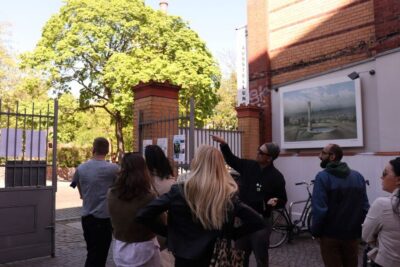 ★ 4.6Alternative Berlin Walking TourFrom $291,204 reviews
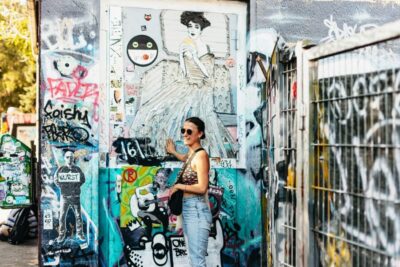 ★ 4.8City Street Art Guided Walking TourFrom $23886 reviews
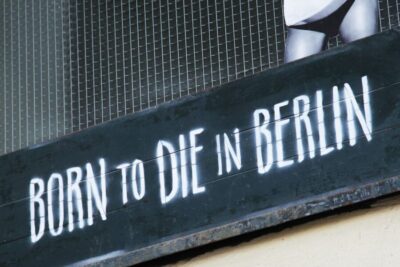 ★ 4.73-Hour Street Art TourFrom $23778 reviews
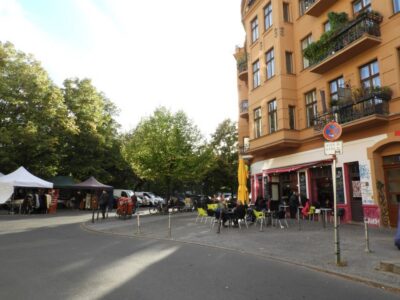 ★ 4.5Kreuzberg: Culinary Food TourFrom $589770 reviews
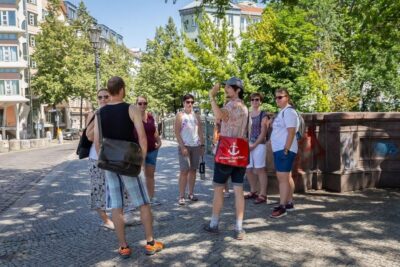 ★ 4.7Kreuzberg Guided Walking Evening TourFrom $27555 reviews
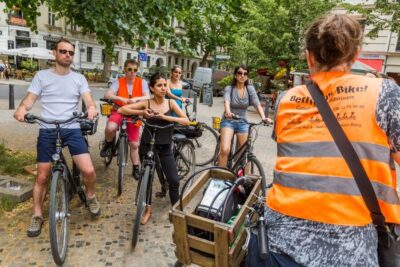 ★ 4.7Alternative Bike Tour of Kreuzberg & FriedrichshainFrom $41548 reviews
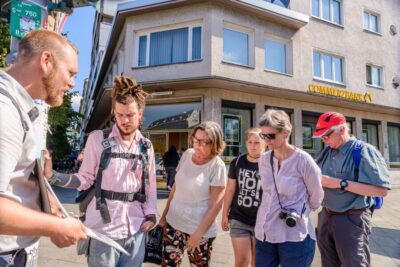 ★ 4.92.5-Hour Walking Tour through Kreuzberg 61From $23525 reviews
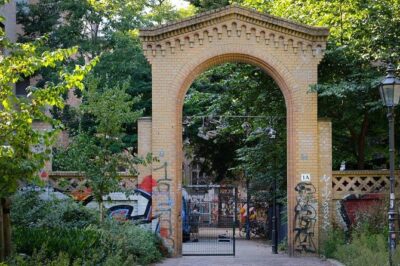 ★ 5.0Berlin Off-the-Beaten-Path Walking Tour: Kreuzberg, Mitte and FriedrichshainFrom $30412 reviews
Browse the lists this tour appears in