
Tour review · BERLIN NEIGHBOURHOOD TOURS
Berlin: Experience the Alternative Kreuzberg on a Bike Tour
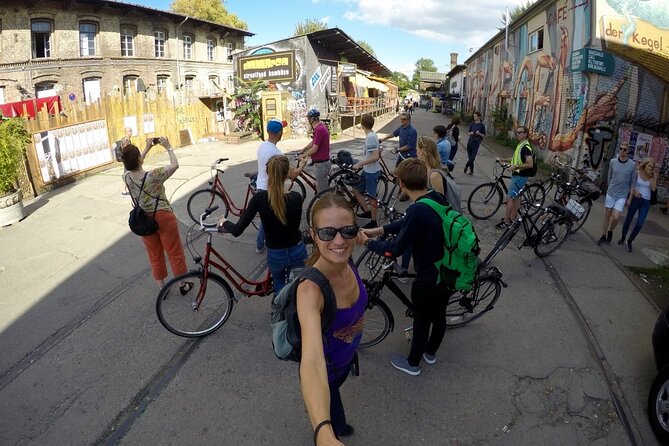
Berlin can change fast, especially on two wheels. This 3-hour alternative Kreuzberg bike tour threads together Wall-era meaning and today’s street-level culture, with stops that feel like real neighborhoods instead of museum sets. I love how the route focuses on the gritty, human side of the city, and I love that guides bring the story to life with personal anecdotes and sharp context. One thing to consider: you will spend a good chunk of time riding and listening outdoors, so come ready for weather and plan for short stops rather than a long cycling spree.
You’ll start near central Berlin, roll through areas like Kreuzberg and Friedrichshain, and pick up the why behind the scenes, from artist spaces to river views that hit right in the middle of the city. Along the way, the tour keeps returning to a theme you can feel, borders, belonging, and how people remake rough spaces into places to live, work, and create. The main drawback is that this is a popular concept, so in some cases a tour can shift by language or timing, meaning you should double-check the details when you book.
Key Highlights to Expect on the Alternative Kreuzberg Bike Tour
- Alternative Berlin route with real local stops, not just the postcard spots
- Wall and border context shown through places you can still see today
- Guides who tell stories with humor and clarity, plus help with tricky language
- Bike and helmet included, so you can travel light
- Frequent short photo stops that make the history feel immediate
- Family-friendly setup, with infant seats available on request
More of Berlin’s broad streets and green routes by bike
- Berlin: Sights and Highlights Bike Tour with a Local Guide★ 4.8 · 2,698 reviews
- Berlin Highlights 3-Hour Bike Tour★ 5.0 · 948 reviews
- Berlin City Bike Tour with Beer Garden Stop★ 5.0 · 917 reviews
- Berlin Highlights: 3-Hour Bike Tour★ 4.9 · 809 reviews
Why This Alternative Kreuzberg Tour Makes Sense for Berlin
If you only have a half day in Berlin, this kind of tour helps you get your bearings fast. You’re not trying to cover everything, you’re learning what makes this city tick, by moving through the neighborhoods that carry the consequences of the Wall.
The tour’s value is in how it balances movement with meaning. You’ll bike, yes, but the real payoff is the way the stops connect, Nikolaiviertel to Kreuzberg, then toward the Wall sites, and finally into today’s creative and everyday city life. At about $42.33 for roughly 3 hours, it’s a solid deal once you count the bike, helmet, and a guide who is shaping your route.
One reason it works so well is the Free-Berlin concept, where each guide designs their own route. That means you’re not locked into a rigid script, and it helps explain why two different groups might emphasize slightly different angles of the same districts.
Getting Started at Free Berlin Bike Tours, What’s Included, and How Safe It Feels
You meet at Free Berlin Bike Tours & Rental, Poststraße 11, 10178 Berlin. The tour starts at 2:24 pm and finishes back at the meeting point, so you’re not figuring out a new transit plan at the end.
The basics are handled for you: a bicycle and helmet are included, and you ride with a professional guide. With a group size of 4 to 15, you’re not stuck in a giant herd, and it’s easier for the guide to keep an eye on everyone.
Language is another practical point. The tour runs in English and German depending on the option you choose, and that matters here because the whole format depends on explanations, street names, and small historical details. If you’re the type who likes to ask questions, this setup is built for that.
The Bike Route: How You Read Kreuzberg and Friedrichshain Like a Local
This is the kind of tour where you start with a famous old area and then gradually shift into the Berlin that lives next door to it. You’ll move through Kreuzkolln and Friedrichshain style neighborhoods, areas that often get flattened into one slogan unless you see how people actually use the streets.
Instead of stopping at one big viewpoint, the route keeps showing you contrasts. Pre-fab buildings beside older architecture. Quiet corners wedged between major structures. Borderland history sitting right next to modern development. That rhythm makes the city feel logical, not random.
And you get small glimpses of how the districts work day to day. Even when you’re learning heavy Wall-era themes, the guide ties it back to human scale, where someone could walk out their door, sit by the water, or show up for nightlife.
Stop-by-Stop: Nikolaiviertel to Kreuzberg, The Story Starts Soft
The first stop is Nikolaiviertel, and the clue is in the wording. It’s described as a place that has probably been the last stop of an established world. That framing matters because it sets up what follows. From here, you’re going to see more authenticity and more day-to-day city reality.
You get about 5 minutes at this stop. It’s not meant to be a long museum-style pause. It’s a quick orientation moment that helps you calibrate what you’re looking at before the tour shifts deeper into Kreuzberg’s lived-in character.
Next comes Kreuzberg, with roughly 30 minutes. This is where the tour leans into the district as a melting pot, with lots of stories. Kreuzberg is famous for being famous, but the tour’s angle is the less obvious layer: how the neighborhood’s reputation links to real history, different communities, and constant change.
A short ride after Kreuzberg brings you to Engelbecken, an unexpected pocket of peace between pre-fab buildings and older structures, with modern architecture nearby. You’ll get about 10 minutes here. The payoff is that you see how “quiet” can exist inside a big-city machine, which makes the later Wall and border themes feel even more personal.
More of Berlin’s street art, studios and alternative culture
- Berlin: Alternative Berlin Walking Tour
★ 4.6 · 1,204 reviews - Berlin: City Street Art Guided Walking Tour
★ 4.8 · 886 reviews - Berlin: 3-Hour Street Art Tour
★ 4.7 · 778 reviews - Kreuzberg: Culinary Food Tour
★ 4.5 · 770 reviews - Berlin: Alternative Bike Tour of Kreuzberg & Friedrichshain
★ 4.7 · 548 reviews
Das Baumhaus and the Wall’s Creative Afterlife
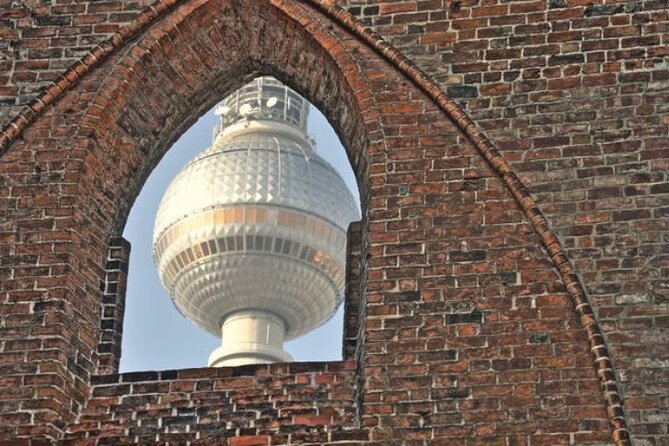
One of the stops that really crystallizes the alternative side is Das Baumhaus, described as a treehouse connected to the Wall. The point isn’t the structure itself. The point is what it represents, a story of adaptation and boldness right by the wall, and how people marked territory with that unmistakably Berlin kind of stubborn imagination.
You spend around 10 minutes there. It’s long enough to absorb the narrative, but short enough to keep the bike momentum and keep the tour from feeling like a long lecture.
After that, there’s a stop centered on an artists’ building shaped by squattings. The description focuses on how squatting led to an artist space not only at the start of the scene, in the 1980s, but also through early 2000s. That arc is useful because it shows the culture isn’t just a one-moment phenomenon. It keeps evolving and keeping space for different art forms.
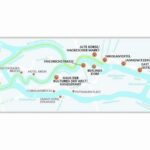
Then the tour adds a club-related stop: YAAM gets a mention for its energy, and you also get an especially interesting viewing moment. The view from here can include the TV tower, the Holzmarkt, the Oberbaumbridge, and the river Spree. Even if you’re not a nightlife person, that kind of skyline framing helps you understand where the city’s creative life sits in relation to official landmarks.
East Side Gallery to Oberbaumbrücke: Border History You Can Walk Along
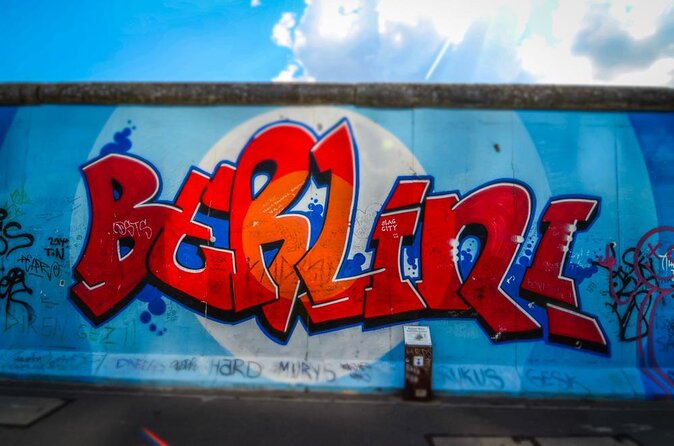
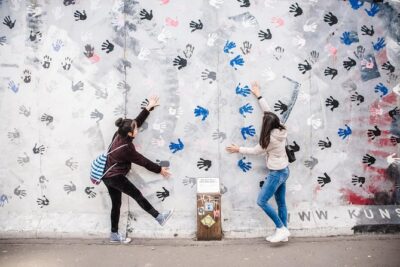
Now you shift toward the Wall story in a more direct way. The East Side Gallery is the next major marker, and it’s described as the longest remaining part of the Wall, packed with spectacular art and located within a newer business-quarter. You’ll have about 10 minutes here.
This stop is powerful because the art doesn’t float in a vacuum. The Wall is still there. The neighborhood around it has changed. You get a chance to notice that tension in real time, art as memory, and development as the present-day answer to that memory.
From the East Side Gallery, you go to Oberbaumbrucke, with about 10 minutes. The guide frames it as a district landmark for crossing borders in any meaning. That wording matters. It’s not just about crossing a physical barrier. It’s about crossing social and cultural divides, and how Berlin keeps replaying those questions.
Next is Osthafen, a former restricted borderland now described as a spot for young urban creatives. You’ll get about 5 minutes there. It’s a short stop, but the explanation is the point, that you can understand the GDR obsession with the Wall and border restrictions by seeing how the space is used today. The river Spree also invites a quick break, which the tour builds into the pacing.
There’s also mention of a unique sculpture that leads to multiple interpretations, with the official one probably making the least sense. That’s a good reminder of how Berlin often treats public art, not as a single answer key, but as a prompt.
Falckensteinstraße, Gorlitzer Park, and Liegnitzer Straße, When Daily Life Gets Strange
As the tour continues, you’ll see Kreuzberg’s diversity not as a brochure claim, but as a street-level reality. Falckensteinstraße is described as a strong example of buildings, people, and history mixed together. The vibe is big-city life with a side of escapism. Expect around 10 minutes here.
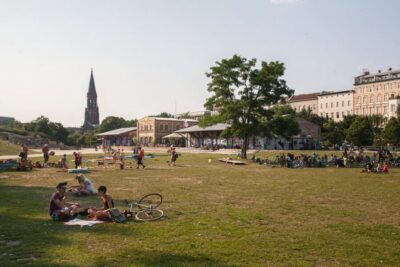
Then you reach Görlitzer Park, about 10 minutes. This one is described as a former trainstation transformed into a park, symbolizing the thin line between alternative life and anarchy. It’s another useful stop because it teaches you to look at reused infrastructure, not just old architecture.
After that comes Liegnitzer Straße, with about 5 minutes. Here the tour points to an unusual idea of capitalism in the heart of the melting pot: a car loft where you can take a car up to a balcony. Even if you don’t love cars, it’s a memorable contrast point. Berlin doesn’t just preserve history, it layers new absurdities on top of old identities.
Dolce Vita Waterfront Moments, Markets, and a Quiet Break
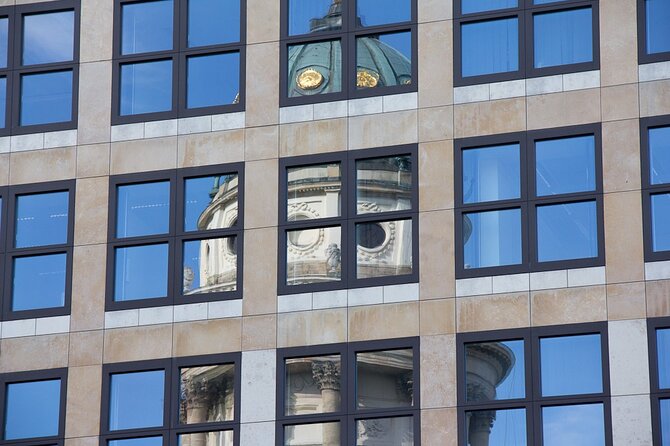
The tour also includes a stop described as Dolce Vita at the waterfront, including a Turkish market on Tuesdays and Fridays. You’ll likely appreciate this timing because it’s one of the few places where the neighborhood mood turns more relaxed without losing the culture context.
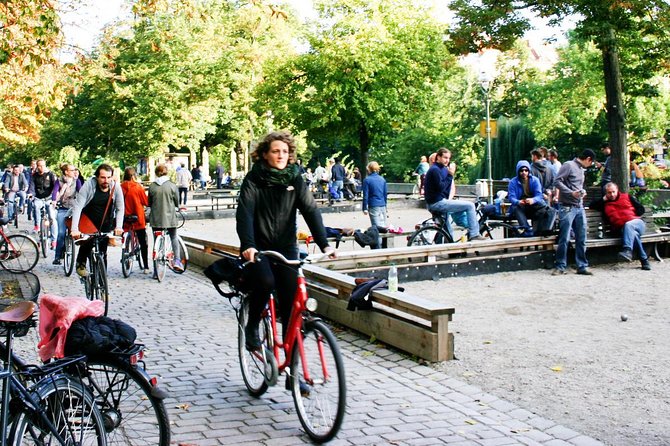
There’s also a short break described as an authentic bohemian neighborhood moment, with playing some boule. That small detail matters because it shows how the tour is not only about historical themes. It also gives you a chance to experience a slice of how people hang out outdoors in Berlin.
The guide also asks a question that hangs over the whole alternative Berlin idea: is Kreuzberg really the home of anarchists, slobs, and survival artists? The tour’s framing is that it is much more, and the opposite in some ways. That kind of challenge is valuable, because it pushes you to read the districts as lived communities, not as a single stereotype.
Admiralbrücke and Kottbusser Tor, Berlin’s Contrast in One Ride
The final stretch leans into contrast. At Admiralbrücke, about 5 minutes, you get a choice in how to end the experience: start your night in a bar, or watch a summer sunset with hundreds of strangers. The phrasing is practical, come as you are, because this stop is about atmosphere more than instruction.
Then comes Kottbusser Tor, about 5 minutes. The tour calls out brutal 1970s architecture, a vibrant drugscene, and heavy traffic. This is a short stop, but it’s meant as a blunt counterpoint to the more “Dolce Vita” feeling waterfront earlier. You leave with a fuller sense of Berlin’s range, not just the artsy edges.
Why the Guide Matters: The Names You’ll Hear in This Style of Tour
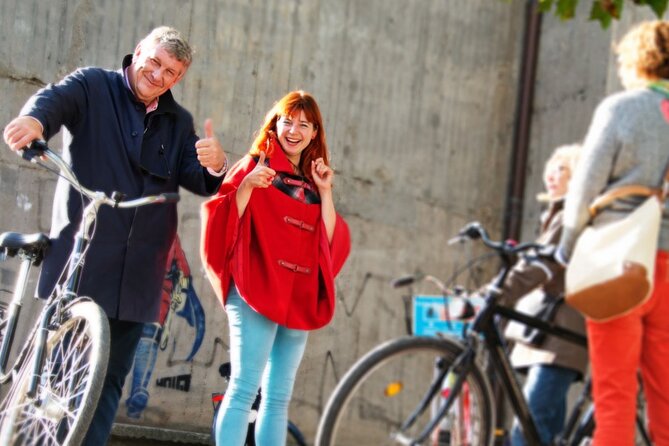
What makes this tour work best is the guide voice. Guides such as Rico, Rufus, Jake, Bjorn, Vincent, and Karl are described as friendly, funny, and strongly connected to the neighborhoods they ride through.
In particular, I like tours where the guide mixes history with street-level perspective. That’s what you’ll get here: stories tied to the Wall, then stories tied to the afterlife of those spaces. One guide dynamic also stands out, the ability to explain hard words and concepts clearly, including translating tricky bits into Dutch for some groups.
Safety also gets real attention. Several people highlight that the guide handles bike control and group management well, not just the talking part. That matters because this is a city ride, and you want to feel confident crossing routes and navigating traffic while still hearing the story.
And humor counts. It keeps the heavy material from becoming a slog, and it helps you stay present during those frequent short stops when you’re scanning details with the guide’s narration in your ear.
Price and Value: What $42.33 Buys You Here
At $42.33 per person, the math is pretty straightforward: you’re paying for bike and helmet use, a professional guide, and a structured route that includes multiple neighborhood stops where you otherwise might not go.
If you rented a bike yourself, then paid for a guide separately, you’d likely spend more. This format also saves time because the route does the selection work for you. You’re not trying to decide what’s “alternative” and what’s just old and touristy. The tour gives you a through-line, Wall and border effects, then today’s creative and everyday uses.
Also, the Free-Berlin style means the experience can feel slightly different across days. Even if you’re a repeat visitor to Berlin, you might not feel like you’re retreading the same highlight list.
The one thing you should plan for is that food and drinks are not included unless specified. Bring water, especially because you’re biking and stopping often, and you’ll feel the difference on a warm or rainy day.
What to Wear: Tight Trousers, Rain Plans, and Comfort on a City Bike
This tour runs in all weather conditions, so you should assume you’ll get a workout in either sun or drizzle. Wear layers, and bring something that helps with rain, even if you think it’ll pass.
One specific practical note that’s worth taking seriously: bike chains can pick up grime, and the tour experience includes a style warning about tight trousers getting dirty. If you don’t want that surprise, choose pants that can handle a little road splash or wear something you don’t mind getting marked.
Comfort matters too because the ride includes frequent stops for explanations. You won’t be sprinting, and it’s described as something most people can participate in, but you’ll still want shoes you can trust on city paths and streets.
Who This Tour Is Best For (and Who Might Want Another Plan)
You’ll enjoy this tour most if you want a neighborhood-focused Berlin experience, not just big sights. It’s ideal for first-timers who feel overwhelmed by options, and it’s great for repeat visitors who want the “real Berlin” side without building your own route.
It also suits people who like history that shows up in everyday places. If you only want strictly formal museum content, you might prefer a different style of tour. But if you want to understand how the Wall shaped spaces, then how those spaces evolved into art, markets, and nightlife-adjacent life, this is a strong match.
It’s also a good choice for families. The tour is described as family-friendly, and infant seats can be provided on request. Children must be accompanied by an adult, so plan accordingly.
Should You Book This Alternative Kreuzberg Bike Tour?
If your goal is to understand Kreuzberg as a living, changing district, not a single stereotype, I think you should book this. The route connects the Wall’s meaning to today’s neighborhood use, and the guide-led stories give you a reason to care about what you’re seeing.
I’d book it if you like bike tours that slow down at the right moments, with short stops that turn into clear themes. I’d also book it if you enjoy humor and personal storytelling, since guides in this style are praised for being friendly, funny, and focused on keeping things safe.
Skip it only if you hate listening while walking and biking. This tour includes lots of explanation time, and it’s built for learning on the move, not for pure sightseeing silence.
FAQ
How long is the bike tour?
It’s about 3 hours.
What does the tour cost?
The price is $42.33 per person.
What is included in the price?
You get a bicycle, a helmet, and a professional guide. The tour also follows the Free-Berlin concept, where each guide designs their own route.
Is the tour offered in English?
Yes. It’s offered in English (and also in German depending on the option selected).
Where does the tour start and end?
It starts at Free Berlin Bike Tours & Rental, Poststraße 11, 10178 Berlin and ends back at the same meeting point.
What time does the tour begin?
The start time listed is 2:24 pm.
Is food or drink included?
No. Food and drinks are not included, unless specified.
Is the tour family-friendly?
Yes. Children are welcome, and infant seats can be provided on request. Children must be accompanied by an adult.
How many people are in a group?
Groups range from 4 to 15 travelers.
Does the tour run in bad weather?
Yes. It operates in all weather conditions, so dress appropriately.
When should I book?
On average, this tour is booked about 10 days in advance.
More Alternative Berlin
More Berlin by Bike

More Tour Reviews in Berlin
Recently added around Berlin
Berlin Neighbourhood Tours, compared.
 ★ 4.4Charlottenburg Palace Entry TicketFrom $222,076 reviews
 ★ 4.5Kreuzberg: Culinary Food TourFrom $589770 reviews
 ★ 4.7Kreuzberg Guided Walking Evening TourFrom $27555 reviews
 ★ 4.7Alternative Bike Tour of Kreuzberg & FriedrichshainFrom $41548 reviews
 ★ 4.92.5-Hour Walking Tour through Kreuzberg 61From $23525 reviews
 ★ 5.0Berlin Off-the-Beaten-Path Walking Tour: Kreuzberg, Mitte and FriedrichshainFrom $30412 reviews
 ★ 4.9Prenzlauer Berg District Guided Walking TourFrom $23316 reviews
 ★ 4.8Small Group Tour: “Wild Kreuzberg”From $24189 reviews
Browse the lists this tour appears in