
Tour review · SACHSENHAUSEN MEMORIAL TOURS
Berlin: Sachsenhausen Concentration Camp Bus Tour in English
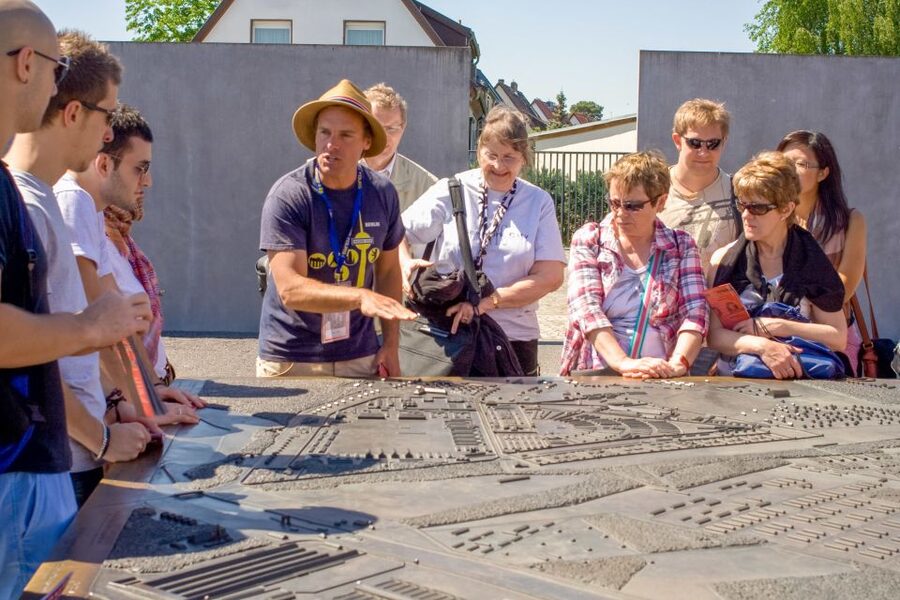
You come to Berlin for light and history, then head to Sachsenhausen for the heavy kind. This award winning English guided bus tour pairs time inside the memorial with commentary on the route, so you understand how the camp system worked. You also see key locations like the crematoria, execution trench, and the infirmary barracks, not just a set of buildings.
What I love most is the mix of logistics and learning. The air-conditioned bus gets you to Sachsenhausen without a long slog from the station, and your guide keeps the context clear as you pass Oranienburg, where many inmates would have worked.
One drawback to plan for: you only get about 2 hours inside the memorial. It is enough to cover the major sites, but if you want to read every panel slowly, you may wish you had more time.
Key things to know before you go
- Meet at Friedrichstraße at the square by the Tränenpalast, with guides carrying a yellow umbrella
- Round trip by bus with commentary en route, so you start learning before you even arrive
- 2 hours on site with a guided walk through the barracks and major camp locations
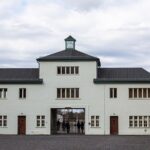
- Specific sights included, like Tower A with the Arbeit Macht Frei inscription, gas chamber areas, crematoria, and punishment cells
- Infirmary barracks and experimentation are part of the tour focus, with careful context
- Guides are praised for tone and Q&A, including names like Ariel, Nickolai, Paul, and Lewis
More responsibly guided visits to Sachsenhausen Memorial
- Berlin: Sachsenhausen Concentration Camp Tour in English★ 5.0 · 5,711 reviews
- Berlin: Sachsenhausen Concentration Camp Memorial Tour★ 4.7 · 3,716 reviews
- Sachsenhausen Concentration Camp Bus Tour in English from Berlin★ 5.0 · 1,962 reviews
- Berlin: Sachsenhausen Concentration Camp Tour in English★ 4.8 · 1,889 reviews
Why the Berlin to Sachsenhausen format works
Sachsenhausen is not the kind of place you rush through. It is also not the kind of place you want to waste time figuring out transit or walking long distances in the wrong shoes. This bus tour hits the sweet spot: you get transportation handled, then you get a guided route through the memorial.
The biggest win is how the guide frames what you are seeing. Sachsenhausen was not an improvised camp. It was the first concentration camp designed and constructed from the ground up, with a plan for maximum control and expansion. That detail changes how you interpret everything else, because you stop thinking of it as random cruelty and start seeing a system built to run.
The bus portion also matters. You are watching the landscape around Oranienburg and learning what inmates did, not just taking photos at a memorial. It helps you connect the camp to the wider world outside, including how people’s lives continued around the barbed wire.
Meeting at Friedrichstraße: how to find your guide fast
Berlin is big, and Friedrichstraße station area can feel busy. The tour keeps it simple, but you still need to show up on time.
Your meeting point is outside Friedrichstraße train station, in the square between the Tränenpalast (Palace of Tears) and the station. Guides wear a blue lanyard and a yellow name tag and carry yellow umbrellas. It is an easy visual cue when you are looking for your group.
At the end, the tour returns you to the same meeting point area, with drop-off at Reichstagufer 17.
If you are the kind of person who hates being lost, give yourself a little buffer. Not for drama, just because it makes the start feel calm instead of rushed, and you’ll want calm before you face the topic ahead.
The drive to Brandenburg: Oranienburg context and en route commentary
The itinerary gives you about 50 minutes on the bus each way. That time is not wasted. Your guide uses the ride to set context and start connecting dots.
One of the most useful bits is the drive through Oranienburg, where the tour explains where inmates would have worked. That matters because it helps you see Sachsenhausen as part of a broader machinery, not an isolated site.
This is also when you can ask practical questions. If you have questions about what you are about to see, or you want guidance on where to focus inside the memorial, asking early is smart. Guides on this route are often praised for how they handle questions with sensitivity, including names like Ariel and Nickolai, who are repeatedly described as respectful and thoughtful in how they deliver hard facts.
Sachsenhausen Memorial: a guided walk through control and routine
Once you arrive at the Sachsenhausen Memorial, you get a guided tour of about 2 hours. Expect a steady walk through major sections, not a slow museum-style drift.
The guide starts with the barracks and the daily routines. That focus on routine is important. The camp was engineered for maximum control, which means that the routine was part of the punishment, the intimidation, and the effort to strip people of agency.
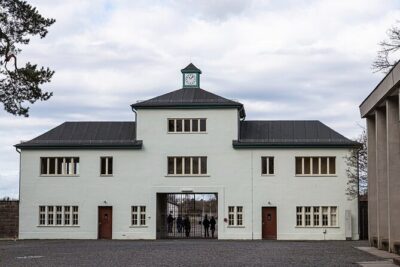
You will also encounter the camp’s layout reminders, including Tower A. The gate area carries the phrase Arbeit Macht Frei, and seeing it in the physical space is a shock. You will understand why it is not a slogan, but part of how the system tried to control the mind, too.
Another section that lands hard is the commandant’s house area. It is one of those stops that changes your perspective. Even without dramatics, you can feel the contrast between the people trapped in the camp and the people running it, using architecture and access as tools.
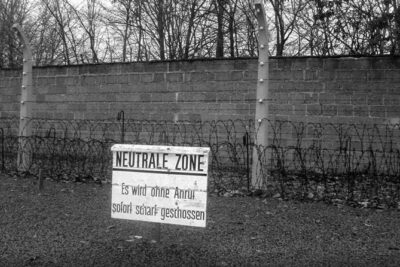
And yes, you will spend time in the interior areas, where about 35,000 people were murdered or died of disease, as described in the tour framing. That number is not there to shock you into silence. It is there to anchor the scale so you do not treat the site like a set piece.
- Berlin: Reichstag, Dome and Government District Guided Tour
★ 4.7 · 18,288 reviews - Berlin: 1-Hour City Tour by Boat with Guaranteed Seating
★ 4.3 · 16,993 reviews - Berlin: Boat Tour Along the River Spree
★ 4.4 · 11,252 reviews - Discover Berlin Half-Day Walking Tour
★ 5.0 · 9,624 reviews - Berlin: Hop-on Hop-off Bus Tour with Live Commentary
★ 4.3 · 8,579 reviews
Gas chamber, crematoria, execution trench, and punishment cells
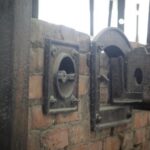
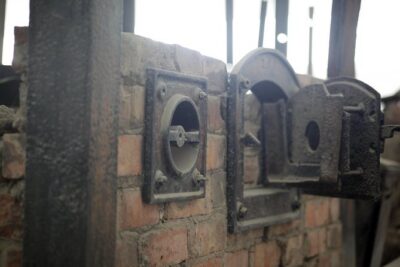
This is the part of the tour that many people remember most. You are shown sites like the gas chamber, crematoria, and the execution trench. You also see areas tied to punishment and isolation, including isolation cells and punishment cells.
What makes these stops valuable is not just that they exist. It is that the guide connects them to how the camp operated day to day and how terror was used to keep order.
You will also learn about the broader network of camps it was part of. That helps prevent a common mistake: treating Sachsenhausen as a one-off tragedy instead of understanding it as part of a wider system.
A practical note: bring emotional stamina, not just shoes. The tour does not set out to be sensational, but the subject is brutal. If you are the type who gets overwhelmed, it helps to decide in advance that you will take breaks when you need them, even if that means standing a moment and letting your guide continue. You can rejoin the group without feeling like you missed something essential.
Infirmary barracks and experimentation: medical cruelty, not treatment
The memorial includes a section focused on the infirmary barracks, where experimentation took place during the war. This is one of the tour’s most sobering focuses, because it shows how medical language and institutions were weaponized.
You will see the infirmary areas and learn how the camp’s approach to bodies included deliberate harm, not care. The word experimentation is not used casually here. Your guide’s job is to put it in context so you understand the purpose and the cruelty, not just the fact that experiments happened.
If you are hoping to leave with a stronger grasp of how Nazi concentration camps functioned, pay attention to how the guide explains the camp staff’s roles and how that role connected to locations you see on the ground. The infirmary stops are where that connection gets painfully clear.
Where the barbed wire ends: connecting camp history to Germany today
One thing I appreciate about this style of tour is that it does not stop at descriptions of suffering. The tour uses what you learn to show how Germany acknowledges and teaches the difficult past.
You also get a reminder of what local populations at the time knew, and how the camp affected life beyond the barbed wire. That is an important layer, because it pushes you to think beyond the fences. You start asking better questions about responsibility, awareness, and how ordinary life can sit next to organized atrocity.
Guides named in past groups, like Paul and Dr Thomas, are repeatedly praised for balancing history with sensitivity and for being kind when the questions get heavy. That balance matters because you are not just learning dates. You are learning how to talk about what happened in a way that respects victims and avoids turning tragedy into trivia.
Timing inside the memorial: what you can realistically absorb
You get about 2 hours on site, after a 50-minute bus ride in. That means you will see a lot, but it also means you will not have time to slow down to the pace you might want in a big museum.
So here is how I would optimize your experience:
- Focus on the major structures the guide points out, especially the locations tied to executions, cremation, and the infirmary
- Take photos only if they help you remember later, not as a substitute for paying attention in the moment
- Use your guide’s explanations as your mental map, so you know what you are looking at when you walk between spots
If you are someone who prefers long reading time at memorials, this tour may feel fast. But if you are short on time in Berlin, or you want a guided route that reliably hits the key points without you having to plan every step, it is a very workable choice.
What’s included in the price, and what feels like value
The price is listed at $49 per person (check current availability for exact totals and starting times). For that, you get a lot of the expensive headaches handled.
Included highlights:
- A professional licensed guide
- Transport in a private air-conditioned vehicle with a driver
- Sachsenhausen Memorial entry
- A €3 donation per person to the Sachsenhausen Memorial
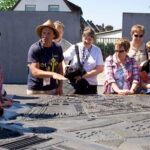
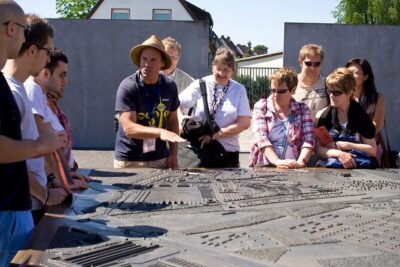
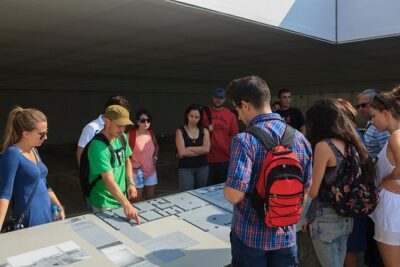
- A map of the former concentration camp
What you do not get:
- Hotel pickup and drop-off
To me, the best value part is the combination of guide + entry + transportation. You are paying for a guided understanding, not just a bus ride. And the donation component means your money is feeding the memorial’s work, not only a tour operator margin.
One small practical catch: because you meet at Friedrichstraße and the tour ends there, you still need to plan how you get to and from that area. If you are staying far from Friedrichstraße, build in transit time.
Practical tips: shoes, snacks, and staying comfortable
This tour is mostly walking. Your feet will be working while your brain processes what it is seeing, so comfort is not optional.
Bring:
- Comfortable shoes
- Camera (if you use it respectfully)
- A light snack and drink, since you are advised to bring one and you do not have time to hunt for food
Wear:
- Weather-appropriate clothing. Even on normal days, Berlin weather can flip. Past groups have noted that the trip went ahead despite rain and wind, so dress for wet conditions and moving outdoors.
Not allowed:
- Alcohol and drugs
If you want the day to feel smoother, pack a small day-bag with water and something small to eat. It sounds basic, but when you are walking through intense space, low blood sugar is the last thing you need.
Who should book this Sachsenhausen bus tour?
This is a strong fit if you:
- Want an English guided approach without planning transit into Brandenburg
- Appreciate a structured route through the main camp areas, including the gas chamber, crematoria, execution trench, and infirmary
- Have limited time in Berlin and still want a serious, well-organized day trip
It may not be your best match if you:
- Need a lot of quiet reading time and could get frustrated with a 2-hour guided window
- Prefer unguided memorial time, where you set your own pace without any group flow
Also, if you are planning to see another major site later, having a guide explain Sachsenhausen’s role in the camp system can help you frame what you see next. Guides are praised for answering questions, and that can reduce confusion later in your trip.
Should you book? My recommendation
If you want a guided Sachsenhausen Memorial visit from Berlin that is efficient, structured, and thoughtfully led, I think you should book this tour. The format makes sense: you get transport handled, you learn during the ride, and you cover the core locations in about four hours total.
I would book it especially if English guidance is important to you and you want someone to explain what the camp layout means, not just recite facts. Just go in knowing the trade-off: the inside visit is focused and timed, so plan to absorb deeply in the places the guide highlights most.
If that sounds right for your style, it is a solid use of a half-day in Berlin, and a powerful one.
FAQ
How long is the Berlin to Sachsenhausen tour?
It runs for about 4 hours total, including around 50 minutes on the bus each way and a guided visit of about 2 hours at Sachsenhausen Memorial.
Where do we meet in Berlin?
You meet outside Friedrichstraße train station, in the square between the Tränenpalast and the station. Look for the guide with a blue lanyard, a yellow name tag, and a yellow umbrella.
Is transportation included?
Yes. The tour includes transportation by a private air-conditioned vehicle, with a driver, for the ride to and from Sachsenhausen.
What is included in the price?
The tour includes a professional licensed guide, Sachsenhausen Memorial entry, a €3 donation per person to the memorial, transportation, and a map of the former concentration camp.
How much time do we have at the memorial?
You get a guided tour of about 2 hours at Sachsenhausen Memorial.
What languages are available?
The live guide is available in English and Spanish.
Can I cancel, and what should I bring?
You can bring comfortable walking shoes, and a light snack and drink are recommended. Alcohol and drugs are not allowed. Cancellation is free up to 24 hours in advance for a full refund.
More Tours in Berlin




More Sachsenhausen Memorial Visits

More Tour Reviews in Berlin
Recently added around Berlin

Sachsenhausen Memorial Tours, compared.
 ★ 5.0Sachsenhausen Concentration Camp Tour in EnglishFrom $365,711 reviews
 ★ 4.7Sachsenhausen Concentration Camp Memorial TourFrom $213,716 reviews
 ★ 5.0Sachsenhausen Concentration Camp Bus Tour in English from BerlinFrom $681,962 reviews
★ 4.8Sachsenhausen Concentration Camp Tour in EnglishFrom $221,889 reviews
★ 5.0Sachsenhausen Concentration Camp Bus Tour in English from BerlinFrom $681,962 reviews
★ 4.8Sachsenhausen Concentration Camp Tour in EnglishFrom $221,889 reviews
 ★ 5.0Sachsenhausen Concentration Camp Memorial Tour (Max. 15 Guests)From $351,516 reviews
 ★ 4.6Sachsenhausen Concentration Camp and Potsdam TourFrom $651,334 reviews
 ★ 5.0Sachsenhausen concentration camp.From $341,189 reviews
 ★ 5.0Visita en español al campo de concentración SachsenhausenFrom $341,170 reviews
Browse the lists this tour appears in