
Tour review · SACHSENHAUSEN MEMORIAL TOURS
Visita en español al campo de concentración Sachsenhausen
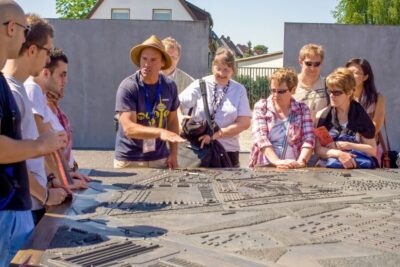
Sachsenhausen hits hard, even before the first gate. This Spanish-language guided visit takes you through key parts of the memorial complex so you can understand what happened, with a guide guiding you through the spaces rather than leaving you to guess.
I love that the group gets a proper guided visit in Spanish, not just a quick overview. And in my experience with this kind of site, the difference is huge: a good guide helps you connect what you see to the human choices behind the system.
One thing to plan for: the tour runs on a schedule. If you prefer slower pacing or you are traveling with kids, you may feel the time pressure, since you are meant to cover a lot of ground.
Key highlights worth prioritizing
- Spanish-language guidance that keeps the story clear at memorial level, not just textbook level
- Admission to the memorial museum included as part of the main visit
- A full walk through major areas, including armory, entry, casino, headquarters, Tower A, the execution area, barracks, and the kitchen
- Round-trip from Berlin that makes a day trip realistic
- Smallish group size (up to 30) for a more manageable experience
- All-weather operation, so you should dress for the day you book
More responsibly guided visits to Sachsenhausen Memorial
- Berlin: Sachsenhausen Concentration Camp Tour in English★ 5.0 · 5,711 reviews
- Berlin: Sachsenhausen Concentration Camp Memorial Tour★ 4.7 · 3,716 reviews
- Sachsenhausen Concentration Camp Bus Tour in English from Berlin★ 5.0 · 1,962 reviews
- Berlin: Sachsenhausen Concentration Camp Tour in English★ 4.8 · 1,889 reviews
Why a Spanish-guided Sachsenhausen visit makes sense
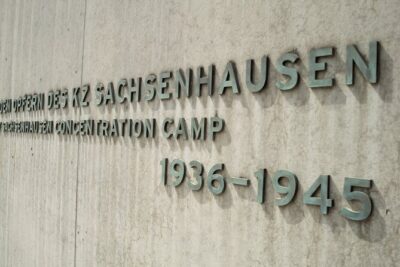
Sachsenhausen is not a place built for casual sightseeing. It is a memorial site tied to the German Nazi regime, and the whole point is to help you understand what that system did and how it operated in space and daily life.
A Spanish-language format matters more than you might expect. When the explanation is in your language, you spend less energy translating and more energy paying attention to the details your guide points out. That is how the visit becomes meaningful, not just “I saw buildings.”
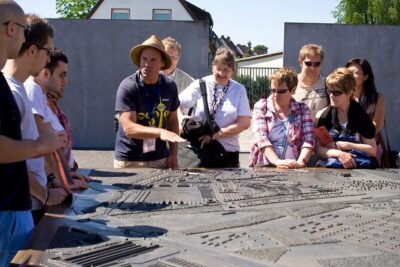
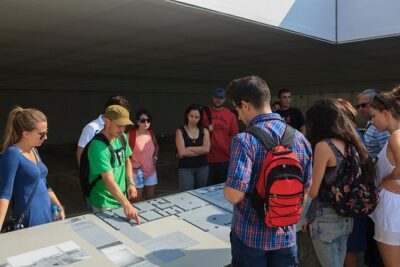
The other big advantage is that you are not walking it alone. The tour focuses on major parts of the camp, which means you get a guided path through the most important areas rather than a scattered self-walk. On a site this heavy, direction is not a luxury. It helps you make sense of what you are seeing.
Price and what you actually get for the money
At about $34.58 per person, this is a fairly straightforward “pay for the guide, pay for access, get round-trip help” kind of deal. You are not paying for a luxury day, and you are not paying for endless time either.
What supports the value is the combination of:
- a professional guide,
- a local guide, and
- admission included for the memorial museum portion.
Plus, the schedule is set up as a day trip from Berlin, so you do not have to solve every logistics piece yourself. That has real value if you are short on time or you do not want the stress of figuring out the route on your own.
One cost detail to know up front: you need a transport card ABC, and the tour does not include it. If you show up without it, you will have to sort it out before you can fully enjoy the day.
Getting from Berlin with the least hassle
The meeting point is Pariser Platz 4, 10117 Berlin, and the tour starts at 9:00 am. The tour ends at Sachsenhausen Memorial & Museum, Str. d. Nationen 22, 16515 Oranienburg.
Because this is designed as a round-trip from Berlin, the main benefit is that your travel time is built into the plan. The tour duration is listed as about 5 hours, which usually means you are budgeting time for transport plus the guided visit. That time framing helps you plan the rest of your day in Berlin afterward.
Two practical notes from how this type of tour tends to run, and what to watch for:
- The day is structured, so arrive a bit early at Pariser Platz 4.
- Wear shoes that work for walking outdoors in a memorial setting. Even if the “camp itself” is not a museum mall, you will still be on your feet.
Inside the memorial grounds: what you’ll see and why it matters
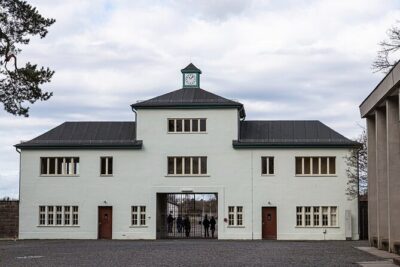
The main stop is the Gedenkstatte und Museum Sachsenhausen, with about 3 hours for a guided visit of both inside and outside areas. This is the core of the experience: the tour is built around key physical locations, not just general background.
Here is what the visit includes, and what you should pay attention to at each part.
- Berlin: Reichstag, Dome and Government District Guided Tour
★ 4.7 · 18,288 reviews - Berlin: 1-Hour City Tour by Boat with Guaranteed Seating
★ 4.3 · 16,993 reviews - Berlin: Boat Tour Along the River Spree
★ 4.4 · 11,252 reviews - Discover Berlin Half-Day Walking Tour
★ 5.0 · 9,624 reviews - Berlin: Hop-on Hop-off Bus Tour with Live Commentary
★ 4.3 · 8,579 reviews
Armory and the entry points
You begin with the areas that help explain how the camp functioned as a system. The armory and entry areas matter because they connect to control and organization. Even if you already know the historical overview, seeing these spaces with commentary makes the structure feel real.
For you, this is the moment to keep your mind on the logic of the place. The guide’s job is to translate structure into meaning, so listen for the way your guide explains purpose, movement, and constraints.
The casino and the headquarters
Yes, those words can sound jarring in the context of a concentration camp. That is exactly why they are included. The casino and headquarters sections help you understand the camp not only as suffering, but as a controlled environment where power operated, decisions were made, and authority was represented by space.
If you are sensitive to contrast, know this part will likely feel uncomfortable. For many people, it is also one of the most clarifying sections, because it shows how ordinary social terms can appear in completely inhumane contexts.
Tower A: seeing the site with the guide’s framing
Tower A gives you an elevated sense of the camp layout. When a guide points out sightlines and spatial control, you start understanding why certain areas are placed where they are.
This is also a good moment to ask questions. One of the most praised strengths from Spanish-speaking guides is answering queries clearly and patiently. If something feels confusing, do not wait until the end. Ask while you are looking at the actual place.
The execution area and the shooting area
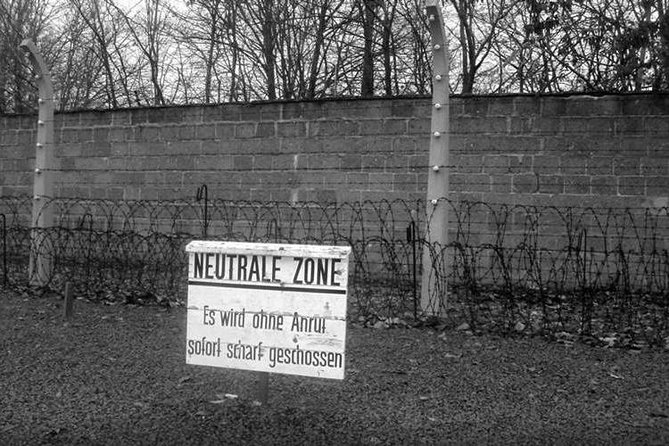
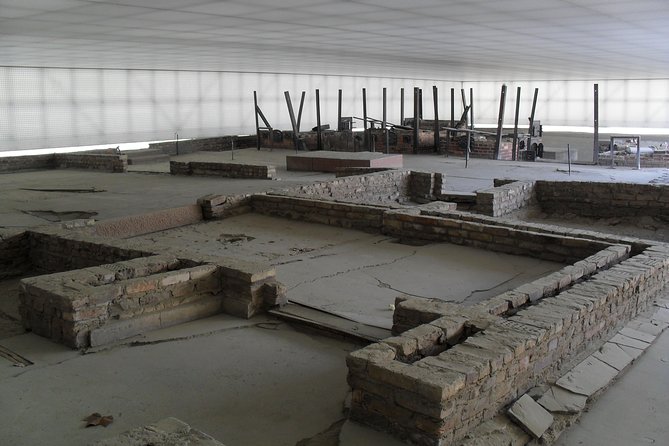
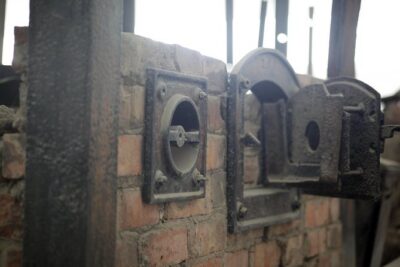
This section is the hardest part of the walk. The tour includes an area of execution and the shooting area.
Even if you come prepared for darkness, this is still emotionally intense. Give yourself permission to slow down mentally here. Listen, but also take the time to absorb the gravity of why memorials preserve these spaces and not just the paperwork behind them.
Practical advice: bring a steady pace to this part. If your body is rushing, your mind will rush too, and that can make an already heavy section feel worse.
Barracks and the kitchen
The visit includes barracks and cooking areas, which shift the focus toward daily life inside the camp system.
This is one of the best places for a Spanish-language guide to shine. When you hear explanations in Spanish, you can follow the details about routines, conditions, and the way the camp shaped survival.
A useful mindset for you here: try to focus on what your guide says about everyday functioning. It is not random suffering. It is a system that controlled food, movement, work, and basic needs.
The guided pacing: what feels strong and what might be tough
The tour is built for coverage, not wandering. That is why the overall visit is about 5 hours total, with about 3 hours inside the memorial areas.
The biggest positive pattern is strong guiding: guides described as passionate, clear, and respectful, with explanations that make the site easier to understand. Names like Alberto, Vicent, Ivan, Micaela, Francisco, Edu, Mika, Jorge, and Eduardo show up in Spanish-speaking guide experiences shared through the tour’s guide teams. The common thread is that you should expect history explained in a way meant for comprehension, not for performance.
That said, a consideration is pacing. Some people noted the experience can feel time-crunched, and you may feel pressure if you want to linger. If you travel with children, or if you need extra time to process what you are seeing, plan for a tighter schedule than you might want.
Also consider winter. One consistent piece of practical guidance is to dress warmly. If you are booking in colder months, bring proper layers, because time outdoors can add up quickly.
Who this tour is best for
This is a strong match if you:
- want a Spanish-language guide who explains the meaning behind the spaces,
- prefer a structured route through major sites rather than self-navigation,
- like history explained in clear, direct terms, and
- want a day trip that is manageable from Berlin.
It may be less ideal if you:
- need a very slow pace and frequent stops,
- travel with people who struggle with timed group movement,
- or you are hoping for lots of open-ended time for independent exploration.
Think of it this way: this tour is for understanding, not for casual browsing.
What to bring to avoid turning the day into a struggle
This site visit is outdoors in parts, and the day has a clock. Bring the basics so you can focus on the guide instead of your comfort level.
I recommend you bring:
- warm layers if it is cold, since the experience runs in all weather conditions,
- comfortable walking shoes,
- your transport card ABC (purchased ahead),
- and a respectful, ready-to-focus mindset.
The tour uses a mobile ticket, so have your phone charged enough for the day.
If you have questions or want clarity, remember that many guides on this route are praised for helping people get to the right spots without confusion and for answering questions respectfully.
Respectful viewing: how to get more out of the tour
A concentration camp memorial is not a “checklist” experience. Even when the tour takes you through multiple locations, you will get more if you treat the visit like a guided lesson with space to absorb.
Here is a simple approach that tends to work:
- listen first, then look, then allow yourself to feel what you feel,
- ask questions when you hit confusing parts, especially around spatial layout like Tower A,
- and use your guide’s explanations to interpret what you see, rather than trying to connect the dots alone.
If you go in thinking this will be fast, you might miss the point. If you go in knowing it is heavy and structured, you will be better prepared to make it meaningful.
Should you book this Spanish-language Sachsenhausen tour?
If your goal is a guided, Spanish-language visit to the most important areas of Sachsenhausen, and you want a day trip from Berlin that includes admission and professional guiding, then this is a sensible booking.
I would book it if you:
- want clarity in Spanish,
- value a structured path across major sites,
- and can accept a timed pace in exchange for comprehensive coverage.
I would hesitate if you need more unstructured time on site, or if you know strict group timing is likely to stress you out. In that case, look for an option that allows longer stops, because here the schedule is part of how the tour is designed.
FAQ
How long is the Sachsenhausen memorial visit?
The tour duration is listed as about 5 hours, with the guided memorial museum visit taking about 3 hours.
Is the guide available in Spanish?
Yes, this is a Spanish-language guided visit.
What meeting point does the tour use in Berlin?
The start meeting point is Pariser Platz 4, 10117 Berlin, Germany.
What time does the tour start?
The start time is 9:00 am.
Do I need to buy a transport pass like ABC?
Yes. The tour notes that you must bring your Tarjeta de transporte ABC purchased in advance.
Is admission to the memorial museum included?
Yes. Admission ticket is included for the Gedenkstatte und Museum Sachsenhausen stop.
Is the ticket mobile?
Yes, the tour uses a mobile ticket.
Does the tour operate in bad weather?
Yes, it operates in all weather conditions, so dress appropriately for the day.
What is the group size limit?
The tour lists a maximum of 30 travelers.
More Sachsenhausen Memorial Visits

More Tour Reviews in Berlin


Recently added around Berlin

Sachsenhausen Memorial Tours, compared.
 ★ 5.0Sachsenhausen Concentration Camp Tour in EnglishFrom $365,711 reviews
 ★ 4.7Sachsenhausen Concentration Camp Memorial TourFrom $213,716 reviews
 ★ 5.0Sachsenhausen Concentration Camp Bus Tour in English from BerlinFrom $681,962 reviews
★ 4.8Sachsenhausen Concentration Camp Tour in EnglishFrom $221,889 reviews
★ 5.0Sachsenhausen Concentration Camp Bus Tour in English from BerlinFrom $681,962 reviews
★ 4.8Sachsenhausen Concentration Camp Tour in EnglishFrom $221,889 reviews
 ★ 5.0Sachsenhausen Concentration Camp Memorial Tour (Max. 15 Guests)From $351,516 reviews
 ★ 4.6Sachsenhausen Concentration Camp and Potsdam TourFrom $651,334 reviews
 ★ 5.0Sachsenhausen concentration camp.From $341,189 reviews
 ★ 4.9Sachsenhausen Concentration Camp Bus Tour in EnglishFrom $49709 reviews
Browse the lists this tour appears in