
Tour review · SACHSENHAUSEN MEMORIAL TOURS
Berlin: Sachsenhausen Memorial 6-Hour Tour in Spanish
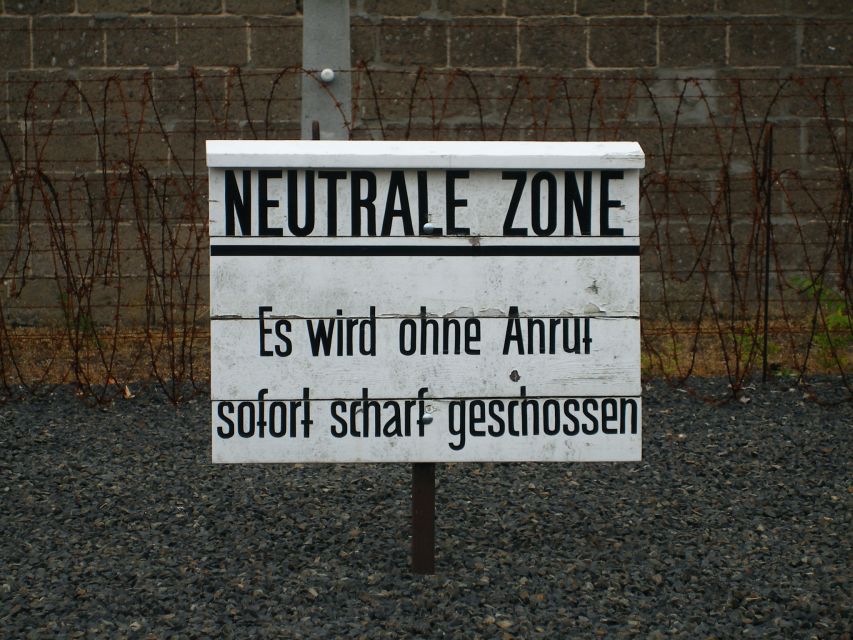
History gets real at Sachsenhausen. A Spanish-speaking guide helps you connect the dots from Nazi design to the later Soviet gulag, including the stark A Tower and Station Z.
I especially like the way the visit is built around specific, memorable places, not vague talking points. And I love that a guide with strong command of Spanish, like Héctor mentioned in feedback, can explain how the camp system worked, even from a legal, structured point of view.
One heads-up: this is emotionally intense, and you’ll likely be outside on uneven ground, so plan for cold wind and the fact there’s no shop to buy food on site.
Key highlights worth planning for
- Station Z: added in 1942, designed for killing quickly and clinically
- A Tower: the roll-call location, where control and intimidation were built into daily routine
- Museum and exhibits: personal accounts, photographs, and official documents to anchor what you’re seeing
- Nazi camp purpose and prisoner labor: explained through the origins of Sachsenhausen and the work prisoners were forced to do
- GDR memorial space: a reminder that the story didn’t end with WWII
- Practical Spanish guidance: helpful if you want more understanding than just reading plaques
More responsibly guided visits to Sachsenhausen Memorial
- Berlin: Sachsenhausen Concentration Camp Tour in English★ 5.0 · 5,711 reviews
- Berlin: Sachsenhausen Concentration Camp Memorial Tour★ 4.7 · 3,716 reviews
- Sachsenhausen Concentration Camp Bus Tour in English from Berlin★ 5.0 · 1,962 reviews
- Berlin: Sachsenhausen Concentration Camp Tour in English★ 4.8 · 1,889 reviews
Meeting at Alexanderplatz, Then the 50-Minute Train North
Your day starts in central Berlin, at the Alexanderplatz TV Tower area. You’ll find your group by a green flag that says tours en español, near the tower’s entrance at Fernsehturm. The meeting point is between the TV station building and Alexanderplatz train station, beside the Espresso House.
From there, you head north to Sachsenhausen. The train ride is about 50 minutes, which matters more than it sounds. It gives the day some breathing room before you step into a site that demands your full attention.
This tour is in Spanish, so you’ll want to be comfortable listening for the entire experience, not just catching a few key facts. If your Spanish is solid enough to follow conversations, you’ll get a lot more out of the explanations. If it’s more beginner level, you’ll still benefit, but you might rely more on the visuals and slower pacing.
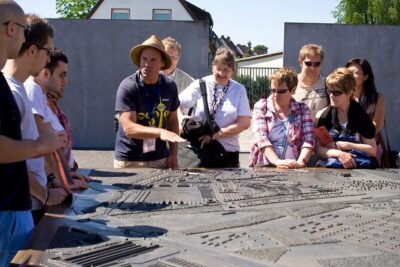
The group also benefits from a guide who sticks to clarity. In feedback, Héctor shows up as a standout because he’s direct and focused, and because he helps you stay in the right mindset even when weather is rough. That kind of guidance is valuable at a memorial, where tone matters as much as facts.
A Tower Roll-Call: Where Control Was Built Into Routine
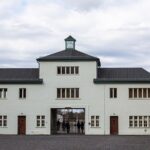
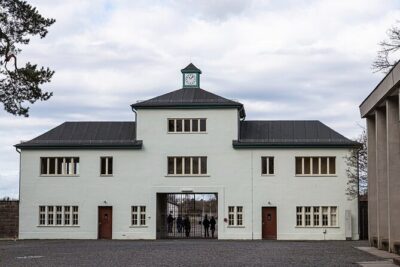
The A Tower is one of the first places that hits you in the gut, because it explains the camp’s function in a very literal way. It was the roll-call location, meaning it was tied to daily control, inspection, and forced order. Even if you’ve read about concentration camps before, standing at the roll-call point makes the logic of the system feel painfully concrete.
This stop is also where the Spanish guide can do some of the most important work: turning the place into context. You’re not just looking at a structure, you’re learning how the camp’s design supported constant supervision and obedience. Sachsenhausen was intended as a model camp, and the roll-call setup reflects how that model emphasized control as a tool, not a side effect.
You’ll also learn how Sachsenhausen functioned as more than a local prison. It was the center for administration of other Nazi concentration camps. That administrative role helps explain why Sachsenhausen was such a key part of the machinery of terror. When you understand that, the site stops feeling like a single location and starts feeling like a node in a wider system.
One practical thought: this part can be visually quiet, but mentally heavy. If you like to take photos, do it carefully. For many people, the best way to use your camera here is short and respectful. Let the guide’s facts do the heavy lifting.
Station Z: The 1942 Shift to Quick, Clinical Killing
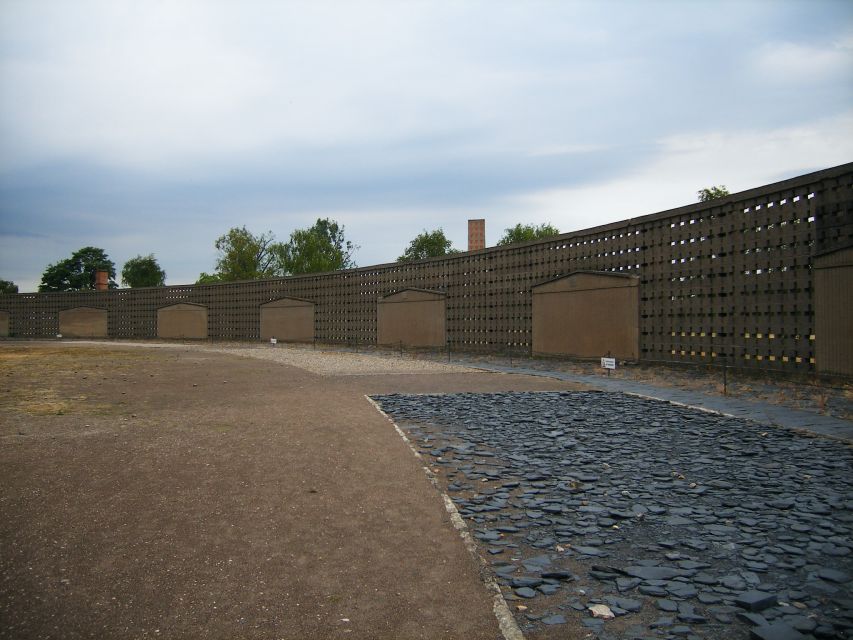
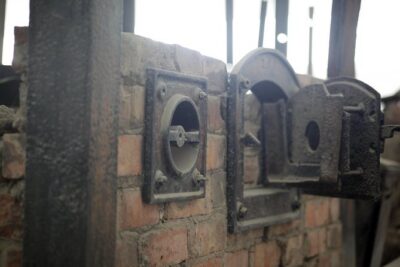
If the A Tower shows the camp’s “control phase,” Station Z shows a darker escalation. It was added in 1942, and its purpose was killing victims in a way described as quick and clinical.
This is not the kind of stop that gives you room for casual sightseeing. Station Z is sobering because it forces you to face how bureaucracy and process can be used to destroy people at scale. A memorial explanation here matters, because without context you might only recognize the site as “something terrible happened.” With a strong guide, you understand that the camp evolved, and the mechanisms of violence became more systematic.
What makes this especially valuable on a guided tour is that you’re hearing how these places connect to the camp’s purpose and to the broader Nazi plan. Sachsenhausen held over 200,000 people, and at least 50,000 died. Those numbers are hard to hold in your head. In a good Spanish explanation, they become grounded, tied to what the camp was built to do.
You’ll likely also hear about the broader timeline, including how the camp’s functions shifted over time. That helps you avoid the common trap of treating WWII prisons as a single, unchanging reality.
The Museum, Exhibits, and What Prisoners Were Forced to Do
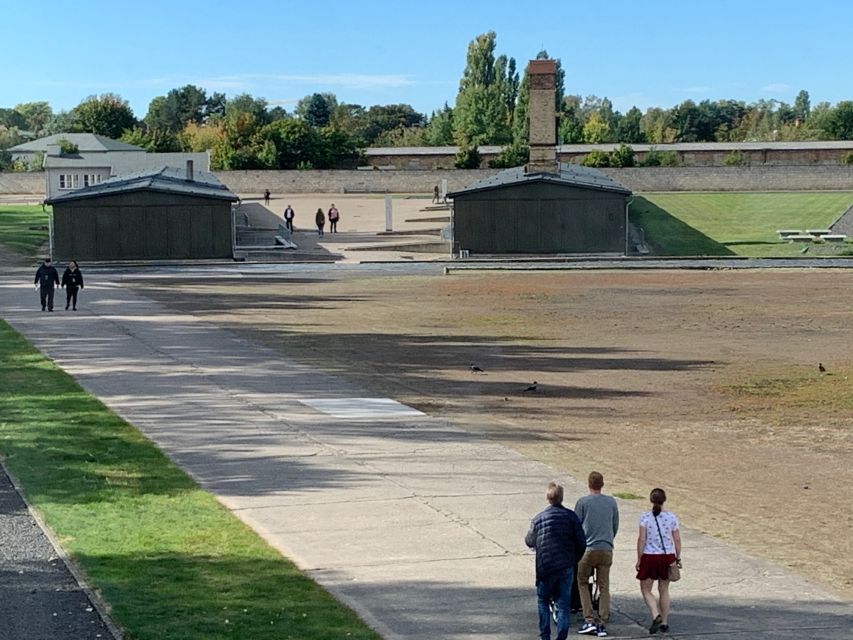
Sachsenhausen isn’t only outdoor structures. There’s a museum and multiple exhibits, and this is where the day becomes more “understandable,” even when it remains painful.
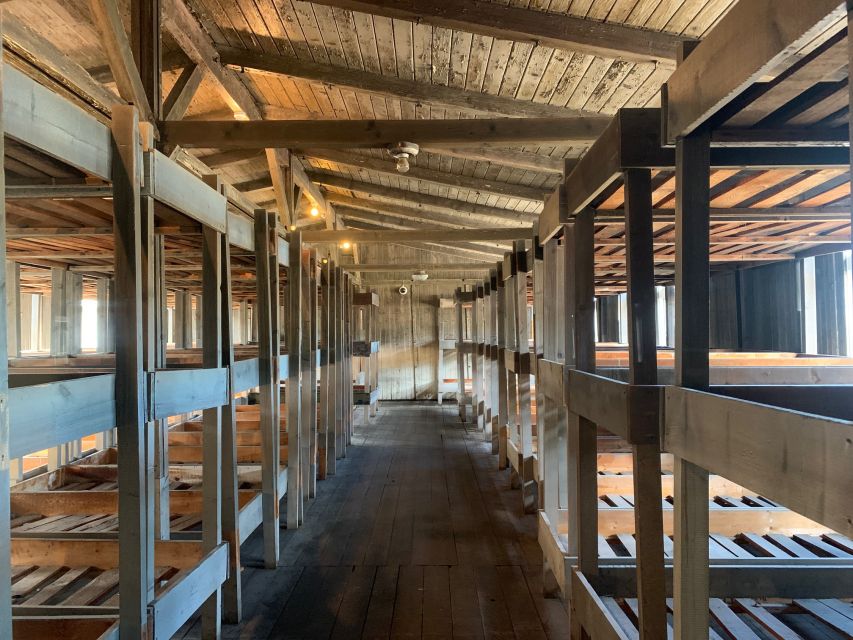
You can expect details about the camp’s origins and what life would have been like inside. The tour also covers the type of work performed by prisoners, which is crucial. Forced labor was one of the engines of the system, and learning what that work involved helps you see how the camp functioned day-to-day, not just at the points of execution or extreme punishment.
The information is anchored by personal accounts of survivors, plus photographs and official documents. I like this approach because it reduces guesswork. You’re not relying only on broad descriptions. You’re seeing evidence types side by side, which makes the story harder to dismiss and easier to understand as history.
A museum stop also helps you pace the day. After Station Z, your emotions can be high. Exhibits can bring you back to facts, and then back again to empathy. Done right, that rhythm helps you absorb more without shutting down.
If you get a guide who explains how the system worked, like the feedback you’ll see mentioning legal structure and how everything functioned, the museum part becomes more than reading captions. It becomes a guided interpretation of the evidence, which is exactly what you want from a Spanish tour.
- Berlin: Reichstag, Dome and Government District Guided Tour
★ 4.7 · 18,288 reviews - Berlin: 1-Hour City Tour by Boat with Guaranteed Seating
★ 4.3 · 16,993 reviews - Berlin: Boat Tour Along the River Spree
★ 4.4 · 11,252 reviews - Discover Berlin Half-Day Walking Tour
★ 5.0 · 9,624 reviews - Berlin: Hop-on Hop-off Bus Tour with Live Commentary
★ 4.3 · 8,579 reviews
GDR Memorial and the Camp After WWII
One reason Sachsenhausen matters is that the story did not end with Hitler’s defeat. After the fall of the Nazi regime, the Soviets transformed Sachsenhausen into a gulag for their own prisoners. That detail matters because it shows how places built for oppression can be reused, and how suffering can be institutionalized under different flags.
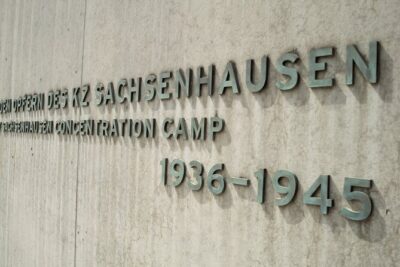
Today, the camp is preserved for educational purposes and as a memorial site for those who were killed. In the experience, you’ll also find a GDR memorial, which helps broaden the timeline beyond WWII. It’s a reminder that the violence and political imprisonment of 20th-century Europe did not operate in a straight line.
From a traveler’s perspective, this is one of the most useful parts of the tour because it prevents historical tunnel vision. You leave with a larger understanding of how power, ideology, and detention can overlap across regimes.
Still, the lesson here is not abstract. The place itself keeps pulling you back to the human cost. The site forces you to slow down, even when you’d rather speed through and “get it done.”
Spanish Guidance That Makes the Facts Stick
A concentration camp tour in a foreign language can go two ways. Either you get a readable script that barely lands, or you get a guide who can actually translate the meaning, not just the words.
This tour is built for Spanish listeners, and the feedback strongly suggests that clarity is a major strength. Héctor, for example, is praised for having the knowledge and for explaining in a way that helps people understand how the camp system worked. Another theme is how guides are direct and honest, with explanations that do not soften the reality.
That matters for you, because Sachsenhausen includes multiple concepts at once: design, administration, prisoner labor, violence mechanisms, and later Soviet use. If your guide strings these together clearly, you walk away with a mental map instead of random facts.
One practical note from real-world experience: if you’re booking online, keep a reliable way to contact the operator. Feedback mentions that sometimes app-based call or email methods can be limited. So save the contact info you’re given at booking time. It’s a small step that reduces stress if you need quick help.
Also, expect long stretches of listening. Bring your attention gear: a charged phone for photos if you want them, water ready before you start, and a willingness to be quiet during the most difficult parts.
Price, Value, and the One Cost You Must Plan For
The price is $41 per person for a 6-hour guided visit in Spanish. On top of that, there’s a concentration camp foundation surcharge of €3 included in what you’re paying. For a site like Sachsenhausen, the math is reasonable because you’re getting a full guided experience, not just entry into an attraction.
What’s not included is your public transport ticket. You’ll need a ticket that covers zones ABC. This is an important detail because it can change your total cost depending on how you’re already planning to move around Berlin that day.
If you’re comparing options, here’s the value logic I use: would you rather pay for a guide who can connect the evidence to real meaning, or try to do it alone with plaques and sporadic translations? For Sachsenhausen, a guided Spanish tour is often the better deal because you’re dealing with complex, layered history. You can spend hours reading, or you can spend a guided day understanding what matters most.
One more value tip: this is a memorial day, not a “quick stop.” Plan it like one. Wear layers and keep snacks in your bag, because there is no shop at Sachsenhausen and it’s advisable to bring drinks and food.
Should You Book the Sachsenhausen Tour in Spanish?
You should book this tour if you want a structured, Spanish-guided experience at Sachsenhausen and you’re okay with a serious, emotional setting. It’s a strong choice if you like understanding the logic behind historical events, not just memorizing dates. The focus on A Tower, Station Z, the museum, and the later GDR and Soviet gulag story helps you build a coherent picture.
You might think twice if you dislike emotionally heavy sites or if you get overwhelmed by long periods outdoors in cold or windy weather. In that case, you can still go, but go with extra preparation: layers, water, snacks, and a plan to pace yourself mentally.
If you want the best odds of a smooth, clear experience, show up early enough to find the meeting spot without stress. Then let the guide’s Spanish do what it’s meant to do, turn a difficult place into real understanding.
FAQ
Where is the meeting point for the Spanish Sachsenhausen tour?
You’ll meet next to a green flag that says tours en español, right beside the only entrance to the Fernsehturm (TV tower) in Alexanderplatz. It’s also between the TV tower and the Alexanderplatz train station, next to the Espresso House.
How long is the tour?
The duration is 6 hours.
Do I need a public transport ticket, and which zones?
Yes. You need a transport ticket covering zones ABC. Public transport is not included.
What major places will we see?
The tour includes A Tower and Station Z, plus the National Memorial Sachsenhausen, including the GDR memorial.
Is the tour wheelchair accessible?
Yes, it is wheelchair accessible.
Should I bring snacks or drinks?
It’s advisable to bring snacks and drinks because there is no shop at Sachsenhausen.
Can I cancel for a refund, and is pay later available?
There is free cancellation up to 24 hours in advance for a full refund, and you can reserve now and pay later.
More Tours in Berlin
More Sachsenhausen Memorial Visits

More Tour Reviews in Berlin
Recently added around Berlin

Sachsenhausen Memorial Tours, compared.
 ★ 5.0Sachsenhausen Concentration Camp Tour in EnglishFrom $365,711 reviews
 ★ 4.7Sachsenhausen Concentration Camp Memorial TourFrom $213,716 reviews
 ★ 5.0Sachsenhausen Concentration Camp Bus Tour in English from BerlinFrom $681,962 reviews
★ 4.8Sachsenhausen Concentration Camp Tour in EnglishFrom $221,889 reviews
★ 5.0Sachsenhausen Concentration Camp Bus Tour in English from BerlinFrom $681,962 reviews
★ 4.8Sachsenhausen Concentration Camp Tour in EnglishFrom $221,889 reviews
 ★ 5.0Sachsenhausen Concentration Camp Memorial Tour (Max. 15 Guests)From $351,516 reviews
 ★ 4.6Sachsenhausen Concentration Camp and Potsdam TourFrom $651,334 reviews
 ★ 5.0Sachsenhausen concentration camp.From $341,189 reviews
 ★ 5.0Visita en español al campo de concentración SachsenhausenFrom $341,170 reviews
Browse the lists this tour appears in