
Tour review · BERLIN PRIVATE TOURS
Private Guide Up to Group 6 – ONE Rickshaw, (E)Bikes, E-Scooters
Berlin feels different from the saddle.
This private, 3-hour sightseeing tour is a fun way to cover Berlin Mitte with your group and still get clear history at every stop. I like that you can pick your ride, including a rickshaw option for guests who find walking tough, and your guide keeps you together while you’re moving and stopping.
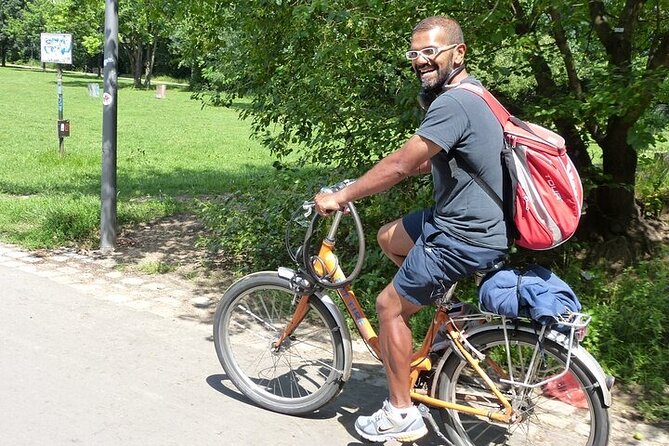
What I really enjoyed was the human pace and the way the guide explains big places without sounding like a textbook. If you get a guide like Levi, the storytelling comes with humor and real back-and-forth, and he can even speak Dutch, which makes the whole ride feel personal and relaxed.
One thing to consider: this route packs in major stops with short time windows, so you’re not doing deep museum visits at every site, and some places hit hard emotionally.
Key highlights you’ll feel right away
- Private group up to 6 so you can ask questions and adjust your pace
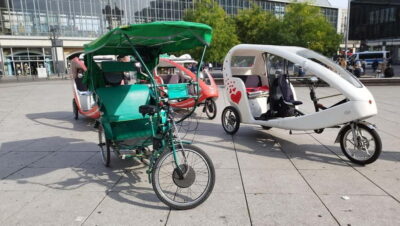
- Choose your wheels: rickshaw, e-bikes, regular bikes, or e-scooters
- Rickshaw-friendly access with minimal steps and close-up photo options
- Photo stops without wasting time at landmarks across Berlin Mitte
- A focused mix of iconic and reflective sites, from the TV Tower to Holocaust remembrance
Other Berlin days with the guide and route to yourself
- Berlin: Private Reichstag and Glass Dome Tour★ 4.8 · 2,226 reviews
- Berlin Private Complete History All Day Walking Tour★ 5.0 · 474 reviews
- Private Walking Tour Berlin Third Reich Hitler and World War II★ 5.0 · 360 reviews
- Private Berlin: Iconic Sights and Hidden Gems Walking Tour★ 5.0 · 292 reviews
A fast, human-scale way to see Berlin’s center
Berlin is big, but the core feels walkable only if you enjoy sprinting between landmarks. This tour solves that problem by mixing glide time with short, well-chosen stops. You get to see the “big hit” sights, but you also get the story behind them, not just the postcard view.
I like that it stays practical. You’re not wandering off in a crowd. Your group moves together, stops together, and you get the same information at each location. That makes it easier for families, friends, and mixed-experience groups, because nobody ends up out of the loop.
And yes, riding helps. Rolling past landmarks on a bike or scooter changes your sense of distance and direction. Instead of doing long, tiring walks, you’re in motion, and the city feels more connected.
Vehicles and comfort for mixed mobility groups
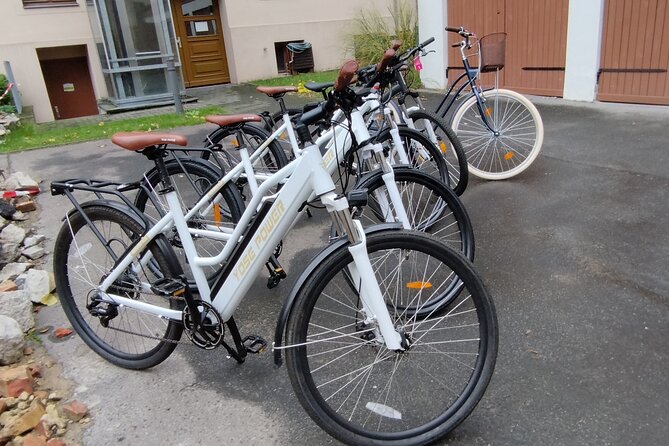
Here’s the big value: you’re not stuck with one kind of transport. You can choose e-bikes, regular bikes, e-scooters, or a rickshaw. That means you can build the tour around your group’s needs, not around a generic “one size fits all” plan.
The rickshaw option is especially useful if you have limited mobility. The tour format is set up so that in a few steps you get into the rickshaw, and you can still get close to monuments for pictures. You don’t necessarily need to fully step out at every stop. The guide can also stop where you want for memorable photo moments, and it’s even possible to get hands-on close to certain monuments.
Comfort is also taken care of. The tour includes an air-conditioned vehicle, plus WiFi on board and bottled water. That matters more than people think on a long sightseeing loop, especially if you’re riding and stopping in the sun.
Route at a glance, 3 hours with real meaning at each stop
This is built like a concentrated Berlin center sampler. Expect about 3 hours, with short stops where the guide explains what you’re seeing. The whole arc runs through political power, cultural landmarks, Cold War tension, and Holocaust remembrance, then returns toward the big celebratory icon: Brandenburg Gate.
The timing works because it’s a “ride and pause” style. You’ll spend time near major sites, but the clock keeps you moving. That’s great if you want context without losing your afternoon to lines and long indoor detours.
Starting with Fernsehturm, where Berlin’s modern skyline begins
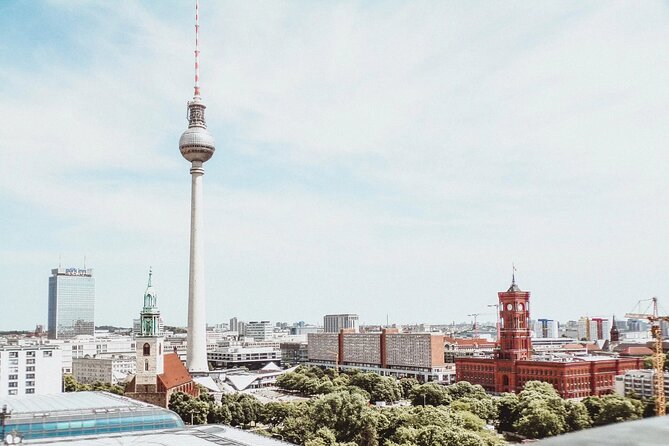
You start at the area around Berlin TV Tower (Fernsehturm), rising above Alexanderplatz. Even if you don’t go up to the observation deck, the outside view tells you a lot fast. The tower’s height, about 368 meters, is so dominant that it basically becomes your compass for the city center.
Your guide also covers why this tower looks the way it does. The distinctive spherical top and the modern design reflect Berlin’s postwar confidence and resilience. You’ll get oriented quickly here, because so many streets and historic sights connect back to this part of the city.
Practical note: this is a good opening stop because it’s visually easy. You see the skyline, then you roll into the political and cultural heart of Berlin with a better sense of where you are.
Other tours with a local leading the way
- Berlin: Reichstag, Dome and Government District Guided Tour
★ 4.7 · 18,288 reviews - Berlin: Government District around the Reichstag Guided Tour
★ 4.7 · 8,447 reviews - Berlin: Hidden Backyards Guided Walking Tour
★ 4.8 · 5,360 reviews - Berlin: 1-Hour Boat Tour with Bilingual Live Guide
★ 4.7 · 3,629 reviews - Berlin: Sights and Highlights Bike Tour with a Local Guide
★ 4.8 · 2,698 reviews
City Hall and Stadtschloss Berlin, from government to palace power
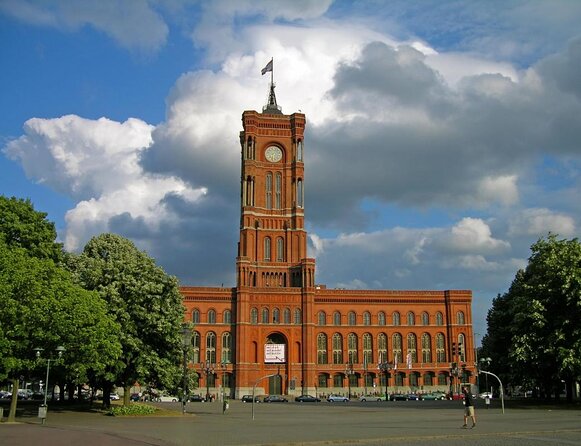
Next up is Rotes Rathaus, Berlin’s city hall. It’s a central hub of politics and administration, and the architecture gives you immediate “this is official power” vibes. It’s not just pretty to look at here. It’s a reminder that Berlin’s identity is constantly shaped by decisions made under that roof.
Then you move to Stadtschloss Berlin, also called the Berlin City Palace, and today’s Humboldt Forum. This stop is one of the most story-dense on the route, and it’s worth paying attention. The palace began as a royal residence in the 15th century, tied to the Hohenzollern dynasty and the rise of Berlin and Prussia. It was destroyed during WWII, and after the Berlin Wall fell, there was a long debate about whether to rebuild it.
The outcome is a mix of old and new: a restored Baroque façade with modern interiors used for cultural purposes. The result is that you can literally see Berlin’s argument with its own past, in brick and stone.
You get about 15 minutes here, and since the admission is listed as free for this stop, it’s an easy place to stand, absorb, and keep moving.
Museum Island and Unter den Linden, culture and state walking together
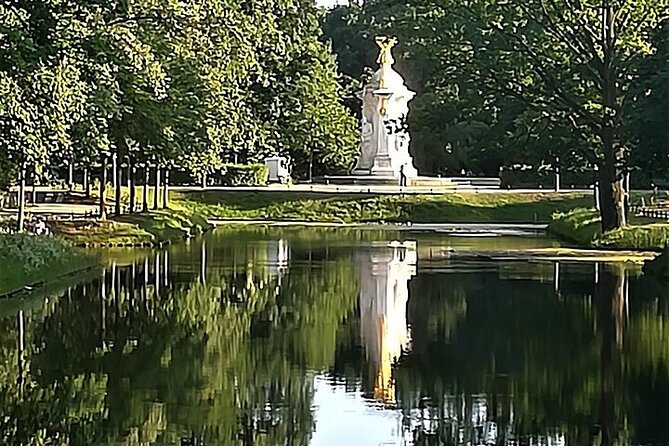
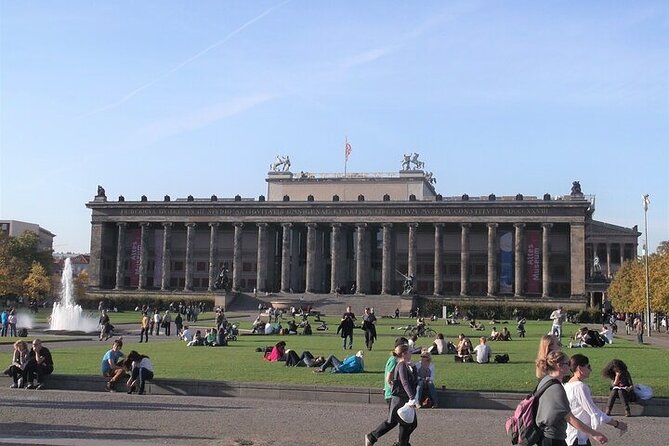
You’ll head to Museum Island, a UNESCO World Heritage site. This is where Berlin puts its money and its pride when it comes to art and history. The key idea is that this island is not just one museum. It’s a cluster of museums and historic collections, all sharing the same protected space and cultural weight.
Time is about 20 minutes. So think of this stop as a “where to focus later” moment. You’ll see the grandeur of the island and get context, even if you’re not doing full museum tickets in this tour window.
Then comes Unter den Linden, the famous boulevard that runs like a spine through the center. You’ll pick up a “Berlin architecture timeline” here. Expect a mix of Baroque, Neoclassical, and modernist styles in the same stretch. It also connects to major landmarks you’ll see later, including the relationship to Brandenburg Gate.
This portion of the tour is excellent if you like cities where the street itself tells you what era you’re in.
Bebelplatz and the memorial for book burning
At Bebelplatz, you’re stepping into a story that’s painful in a very specific way: the Nazi-era book burnings. In May 1933, crowds gathered here to incinerate books labeled as un-German. It’s a reminder that censorship is not ancient history. It can be made, organized, and performed.
Today, the memorial designed by Micha Ullman uses a simple but chilling concept. A glass plate on the ground reveals empty bookshelves below, like a visual silence. It’s brief in time, about 10 minutes, but it lands because it connects directly to the idea of protecting intellectual freedom.
If you’re with kids, this stop can work well if your guide frames it clearly. But it is still heavy material, so be ready for that emotional shift.
Gendarmenmarkt, Checkpoint Charlie, and the city split in two
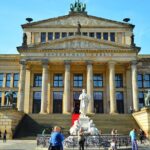
Gendarmenmarkt is where Berlin shows off its nicer side, and it does it with serious architecture. The square is dominated by three landmark buildings: the Konzerthaus (a concert hall), the French Cathedral, and the German Cathedral.
What’s interesting is the contrast in meaning. The French Cathedral is linked to Huguenot refugees from the 18th century, which gives the area a theme of multicultural roots and tolerance. The German Cathedral rounds out the trio and adds another historical layer with a museum inside.
Time is short, around 10 minutes, but you get enough to understand why people love this square for photos and evening walks.
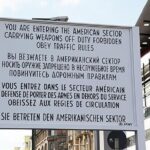
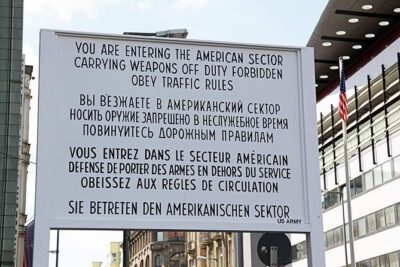
Then you pivot into Cold War reality at Checkpoint Charlie. The tour explains why it became such a famous symbol of division. It’s also named after the third letter in the NATO phonetic alphabet. During the Cold War, it stood between American and Soviet sectors and became a stage for tense standoffs.
Today, you’ll see a replica guardhouse, and actors dress as U.S. military police. There’s also a museum called the Mauermuseum connected with the site.
This stop is about 15 minutes. It’s a good time window because you get the core story without spending hours in a single building.
Topography of Terror, Führerbunker, and the Holocaust Memorial
This is the emotional center of the tour.
First, Topography of Terror. This is where Nazi organizations, including the Gestapo and SS, had headquarters. As a museum, it covers Nazi atrocities with exhibits, documents, and remnants of the original buildings. The point here is clarity and warning, not comfort.
You’ll have about 20 minutes. That can be enough to grasp the big picture, especially if you let your guide point out what matters most.
Next is the Führerbunker site. The Führerbunker was the underground bunker complex where Adolf Hitler spent the final months of WWII. The tour notes its location beneath the garden of the Reich Chancellery area, and that today there’s basically no visible trace because the site was removed after the war to avoid it becoming a neo-Nazi pilgrimage spot.
You’ll have about 10 minutes. It’s a strange kind of stop because the most important parts are invisible, and the guide helps you understand what you would have been looking at.
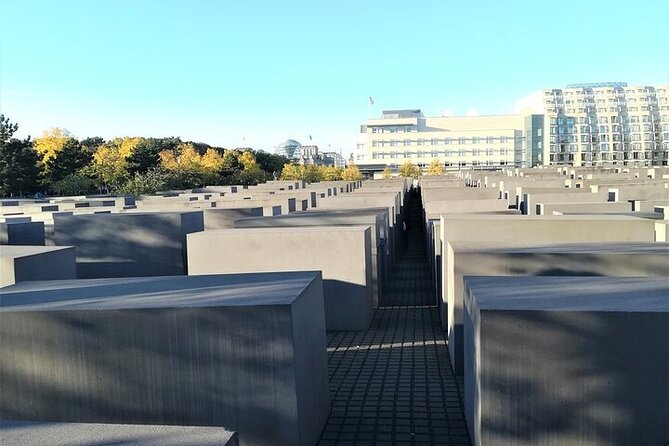
Then comes the Memorial to the Murdered Jews of Europe, commonly called the Holocaust Memorial. It’s made of 2,711 concrete slabs of varying heights laid on a sloping field. The maze-like layout is designed to create disorientation and unease, and as you move deeper, the ground descends so you feel more isolated from the rest of the city.
This one is about 10 minutes and free admission is listed for the stop. It’s not a checklist moment. If you’re the type who wants to process as you walk, this is the place to slow down slightly even within the time limit.
If you prefer lighter days, it’s worth knowing this portion is heavy on purpose. Plan your expectations accordingly.
Brandenburg Gate and the route’s final emotional note
You finish with Brandenburg Gate, Berlin’s iconic neoclassical triumphal arch. It’s completed in 1791, designed by Carl Gotthard Langhans, and commissioned by King Frederick William II of Prussia as a symbol of peace.
It also marks the beginning of the grand boulevard relationship with Unter den Linden, so it feels like the end of the story you’ve been tracing all day. You’ve gone from modern Berlin (TV Tower) to governance and palaces (Rotes Rathaus, Stadtschloss), to culture (Museum Island and Gendarmenmarkt), to division (Checkpoint Charlie), and finally to memory and remembrance (Topography of Terror, Führerbunker, Holocaust Memorial). Brandenburg Gate lands as a strong visual close.
You’ll spend about 10 minutes here.
Then it all returns toward your starting point, ending back where the tour began.
Price and value for a private group up to 6
The price is $465.43 per group, for up to 6 people, for about 3 hours. That sounds like a lot until you run the math for a private outing that includes transport, gear choices, and a guide who keeps the same information flowing for everyone.
If you fill all 6 seats, you’re effectively paying under $80 per person. If you go with fewer people, the per-person cost rises, but you still get a private format plus included comfort extras like WiFi and bottled water, and your ride type options.
The best part is that the value isn’t only about getting from A to B. It’s about how you see the city. You can get close to monuments without needing to walk long distances. You can also keep your group together even when mobility levels vary, thanks to the rickshaw option.
The main “trade-off” in value is the stop length. You’re doing smart overviews, not long deep-dive visits. If you want to spend hours inside museums or join major exhibits, you should treat this tour as your orientation and storytelling backbone, then follow up on specific places later.
Who should book this ride-style Berlin history tour?
Book it if you want:
- A private group experience where you can ask questions and get practical explanations
- A mix of iconic sights and high-meaning stops within one loop
- A transport option that fits mixed mobility, especially with the rickshaw setup
- A guide-led route that helps you connect the dots across centuries, from royal palaces to Cold War division
It might not be ideal if:
- You prefer slow travel with long museum hours at every stop
- You are not ready for a concentrated dose of WWII and Holocaust-related remembrance sites
Should you book this tour?
I’d book it if your priority is getting your bearings fast and understanding why Berlin looks the way it does. The blend of rickshaw-friendly mobility options, included comfort touches like water and WiFi, and the guided pacing makes it a strong pick for families and small groups.
If you want a tour that feels like Berlin is a story you can actually follow, this one does the job. Just go in knowing it’s short stops on purpose, and plan to take a quiet moment at the heavier sites when you need it.
FAQ
How long is the tour?
The tour is about 3 hours.
How many people can be in the group?
This is a private tour for up to 6 people per group.
What vehicle options are available?
You can choose from e-bikes, regular bikes, E-scooters, or rickshaws (including a rickshaw designed for guests who might have trouble getting around).
Where do we meet, and where does it end?
The tour starts at Weinbergsweg 6, 10119 Berlin, Germany, and it ends back at the same meeting point.
Is lunch included?
No, lunch is not included.
What’s included in the tour price?
Inclusions include the selected bikes or rickshaw, an air-conditioned vehicle, WiFi on board, bottled water, and an informative friendly tour guide. It also uses a mobile ticket.
Are admissions included for the stops?
The listed stops in the itinerary show Admission Ticket Free for the time at each location.
Is this tour suitable for less mobile guests?
Yes. The rickshaw option is described as ideal for less mobile guests, with a few steps needed to enter, and you can get close to monuments for photos.
Is the tour private?
Yes. It’s a private tour, and only your group participates.
What is the cancellation policy?
You can cancel for free up to 24 hours in advance for a full refund. If you cancel within 24 hours of the start time, the amount you paid is not refunded.
More Guided Tours in Berlin



More Private Berlin Days


More Tour Reviews in Berlin
Recently added around Berlin

Berlin Private Tours, compared.
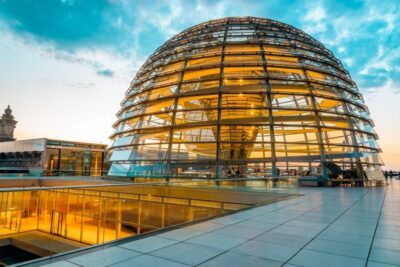 ★ 4.8Private Reichstag and Glass Dome TourFrom $2882,226 reviews
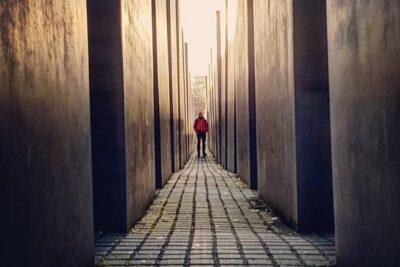 ★ 5.0Berlin Private Complete History All Day Walking TourFrom $253474 reviews
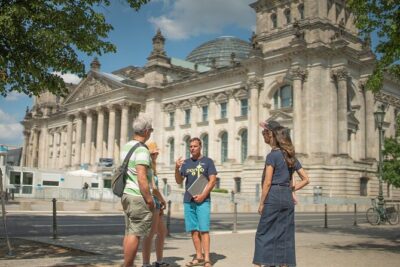 ★ 5.0Private Walking Tour Berlin Third Reich Hitler and World War IIFrom $192360 reviews
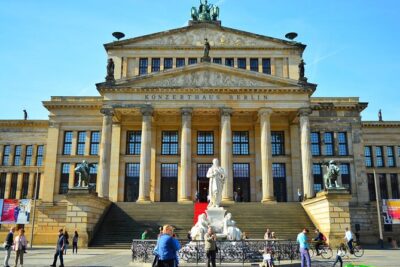 ★ 5.0Private Berlin: Iconic Sights and Hidden Gems Walking TourFrom $192292 reviews
 ★ 5.0Berlin Private Half-Day Walking Tour: Discover the German Capital’s HistoryFrom $180244 reviews
 ★ 5.0Private Walking Tour: World War 2 and Cold War Sites in BerlinFrom $192230 reviews
 ★ 5.0The History of Berlin: WWII PRIVATE Walking Tour With LocalsFrom $143209 reviews
 ★ 5.0Private Sachsenhausen Concentration Camp tour with trainFrom $338205 reviews
Browse the lists this tour appears in