
Tour review · BERLIN WALKING TOURS
Private Walking Tour Berlin 3 hours: Brandenburg, Historic Center
Berlin makes more sense on foot with a guide. This private, customizable walking tour in Berlin’s historic center lets you steer where you want the story to go, with stops tied to Brandenburg and major landmark areas. I especially like how it saves you from maze-like navigation, because a guide chooses efficient routes, and how the tour can be tailored to themes like the Third Reich, World War II, the Cold War, and the Berlin Wall.
One possible consideration: it’s a walking tour with a moderate fitness requirement, and there are no personal headsets, so street noise can affect how clearly you hear your guide.
If you want, you can also ask for a short snack or lunch stop, and the guide can adjust the route to your pace within the 3-hour window. On request, you can even arrange pickup from your hotel, train station, or the airport, and you’ll receive a mobile ticket for easier entry.
Key things that make this Berlin walk worth your time
- Private pace for up to 15 people, so you are not stuck with a rushed group schedule
- Choose the focus, from WWII and the Cold War to Prussian history and Jewish Berlin
- A mix of famous sites and physical reminders of history, including original Wall remnants
- Local guides who speak English well, and many are Berlin Guides Association members
- Flexible route planning, so you spend less energy figuring out where to go next
- No headsets on the street, which matters if you are sensitive to noise
Berlin on foot, with a few more routes worth comparing
- Discover Berlin Half-Day Walking Tour★ 5.0 · 9,624 reviews
- Berlin: Third Reich and Cold War 2 Hour Walking Tour★ 4.9 · 6,830 reviews
- Berlin: Discover Berlin Walking Tour★ 4.9 · 5,998 reviews
- Berlin’s Best: 2 Hour Walking Tour Third Reich and the Cold War★ 5.0 · 5,486 reviews
Why a private 3-hour walk works so well in Berlin
Berlin is big, spread out, and historically layered. A 3-hour walking tour may sound short, but that’s exactly the point: you get a guided orientation sweep through major zones, then you can build the rest of your trip around what you care about. This is also why private works better than generic hop-on, hop-off plans. Your guide can reroute in real time based on what you ask to see and what you want to skip.
What you get is not just a list of sights. You get a route designed to make sense of Berlin’s geography, from former border areas and government sites to the places where everyday city life still hums. That can save you time later, because you’ll start recognizing how neighborhoods connect and why certain places feel politically charged.
Finally, the tour is set up for flexibility. The time limit is real, but the guide can shift emphasis. If your interest is strongly Jewish history, for example, the pacing can reflect that. If you’re more into Cold War tensions and the Wall’s legacy, the route can tilt that direction instead.
Picking your focus: Third Reich, World War II, Cold War, Berlin Wall, and Jewish Berlin
One of the best parts of this experience is that you can shape it. The guide can focus your walk on different subjects, including the Third Reich and World War II, the Cold War and the Berlin Wall, Prussian history, and Berlin’s Jewish heritage. That matters because Berlin can feel overwhelming if you try to absorb everything at once.
If you want Jewish Berlin, you’ll likely spend more time connecting places to meaning, not just pointing at architecture. One of the standout themes from the guide feedback is how a tour focused on Jewish Berlin can explain why specific sites matter, and how you might connect the dots more easily on your own afterward.
If your priority is the Cold War and border history, you’ll likely spend more time at symbolic locations and places that physically represent division and transition. This is where a guide’s selection of routes and stop order really helps. You are not just standing in random spots, you are moving through the city’s logic.
The route hits the key landmarks, with room for smart detours
This tour is built around a set of classic targets, but it is meant to feel customizable, not rigid. In practice, that means you will see major Berlin anchors like Checkpoint Charlie, Brandenburg Gate, Reichstag building, and Kurfürstendamm, alongside Wall-era reminders such as the East Side Gallery and original Wall remnants.
It also includes several architectural and cultural landmarks that help you understand Berlin’s layers, including Gendarmenmarkt, Museumsinsel, and Unter den Linden. Then it brings you into the modern reshaping story with stops like Potsdamer Platz and Alexanderplatz, both tied to how Berlin reassembled itself after division.
A practical bonus: the tour is designed to avoid you doing the navigating. Berlin streets can be straightforward, but routing efficiently between history-heavy sites can still take brainpower you’d rather use for learning. With a guide, you spend more time looking, asking, and processing.
Checkpoint Charlie to Brandenburg Gate: border history and national identity
Checkpoint Charlie is one of Berlin’s most recognizable border-crossing symbols, and it’s the kind of place where you immediately feel the Cold War tension even if you arrive just for the photo. During your walk, this stop is most valuable when the guide connects what you see with what it represented at the time, including how border crossings became both physical obstacles and political statements.
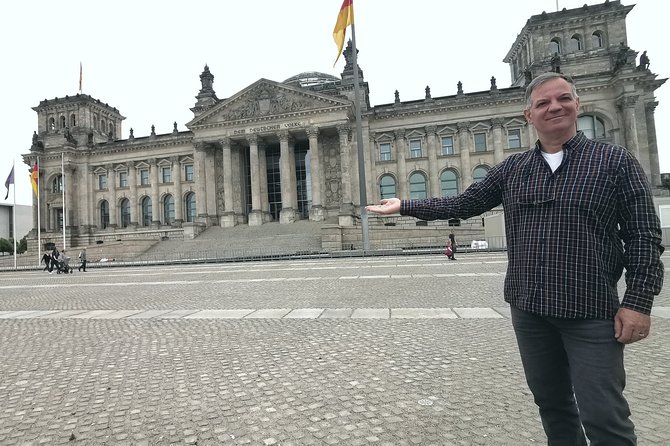
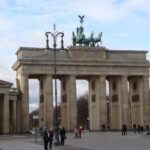
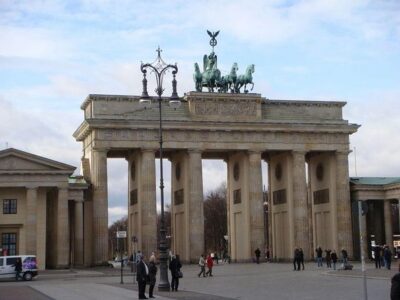
From there, the tour typically works toward larger identity markers, especially Brandenburg Gate. This is one of the places where Berlin’s story is both symbolic and real. It’s not just a monument, it’s a signpost for how the city and Germany have changed over time, including moments when the nation wanted to signal unity.
What I like about this sequence is the contrast. Checkpoint Charlie gives you the sharp edge of division. Brandenburg Gate helps you widen the lens toward how Germany and Berlin eventually wanted to redefine themselves.
Practical note: these are popular stops. For the best experience, plan to listen first, take photos second. Berlin landmarks can look obvious in pictures, but the meaning becomes clearer when a guide points out what to notice.
Other Berlin days with the guide and route to yourself
- Berlin: Private Reichstag and Glass Dome Tour
★ 4.8 · 2,226 reviews - Berlin Private Complete History All Day Walking Tour
★ 5.0 · 474 reviews - Private Walking Tour Berlin Third Reich Hitler and World War II
★ 5.0 · 360 reviews - Private Berlin: Iconic Sights and Hidden Gems Walking Tour
★ 5.0 · 292 reviews - Berlin Private Half-Day Walking Tour: Discover the German Capital’s History
★ 5.0 · 244 reviews
Gendarmenmarkt, Museumsinsel, and Unter den Linden: Berlin’s grand streets and civic spaces
Berlin has big ceremonial avenues, and Unter den Linden is the classic example. This boulevard is useful in a tour because it acts like a spine through the city. Walking it with a guide helps you understand why Berlin’s major institutions and political scenes often align along major axes.
Near that world, Gendarmenmarkt adds an architectural shock of elegance. The square is known for its baroque styling and its twin domes, and it gives you a calmer, more refined pace after the intensity of border and conflict sites. It’s a good place for your guide to explain how civic architecture communicates power and culture.
Then there’s Museumsinsel. The idea of an island of museums in the middle of Berlin tells you that this city doesn’t just store history in streets. It also concentrates it in institutions. Even if you do not enter every museum, a guided orientation here can help you decide what to see later based on your interests.
This cluster of stops is ideal if you want Berlin to feel like a planned city, not only a city of events. You’ll get the sense that architecture can be political, too.
Alexanderplatz, Potsdamer Platz, and Berlin’s two stories at once
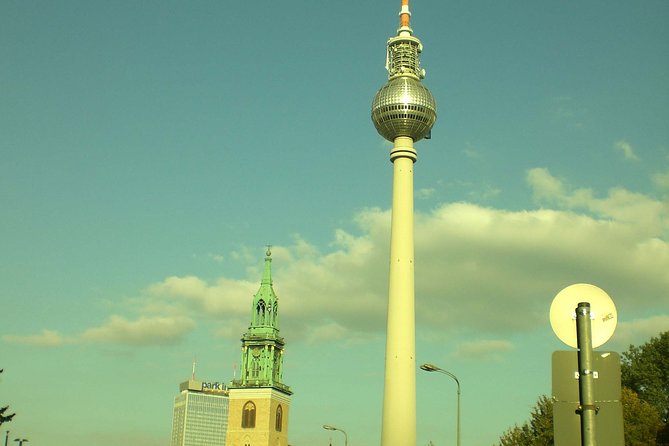
Alexanderplatz gives you a clear snapshot of post-World War II Berlin’s different identity chapters, because it became a central meeting point in the East. Pair that with the famous TV tower in the area, and you have an instant geography lesson: what you see in the skyline reflects the political era that built it.
Then your walk often shifts toward the newer urban center with Potsdamer Platz. This stop is valuable because it shows how Berlin rebuilt and rebranded. You get architecture that feels modern and planned, and you also get the chance to compare it with older ceremonial or historic spaces you’ve already visited.
If you’re the type of traveler who likes to connect past and present, these two stops can do a lot of work in just a few hours. You can literally feel how Berlin’s personality changed as the city moved from division toward reunification.
Berlin Wall reminders: East Side Gallery and original wall traces
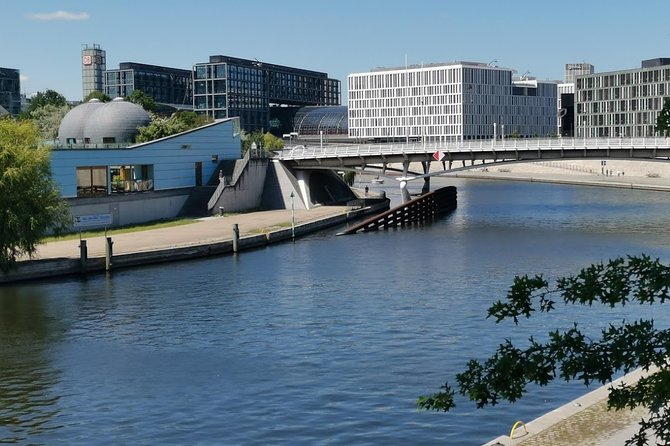
The Berlin Wall is not only a memory. Portions of it still exist in the city, and that makes the emotional impact more direct. Your tour can include the East-Side-Gallery, where the Wall’s surface has been turned into public artwork. It’s one of the most famous stretches, and walking it with context helps you read it as more than street art.
Just as important, the tour can also include original remnants of the Berlin Wall. These are powerful because they are physical fragments, not reenactments. Even if you already know the broad story, being near surviving sections makes the city feel more honest.
This part of the tour is also where your guide’s approach matters. You want someone who can connect art, location, and historical context into one readable story. The strong guide feedback on Jewish Berlin and on overall clarity suggests you are likely to get explanations that go beyond surface-level pointing.
Holocaust Mahnmal: a stop that needs time to land
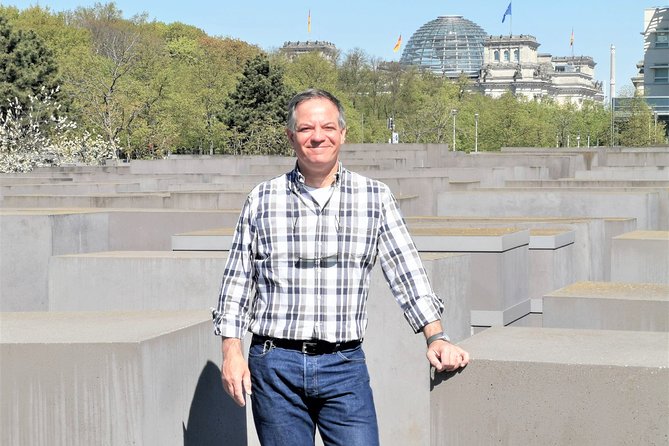
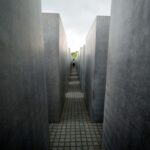
The Holocaust Mahnmal, formally the Memorial to the Murdered Jews of Europe, is not a quick-photo moment. It’s a place where the layout and scale are part of the message. Because this tour is only about 3 hours, you may not get long reflection time at every stop, but you can still make this moment count by slowing down and listening carefully to what your guide highlights.
I recommend you treat this as a mental reset, not just another item on a checklist. Even brief guided framing can help you understand why the design choices matter.
If you prefer a quieter pace, this is the stop where asking your guide to slow down can genuinely improve the experience.
Government architecture and memory: Reichstag and the site of Hitler’s bunker
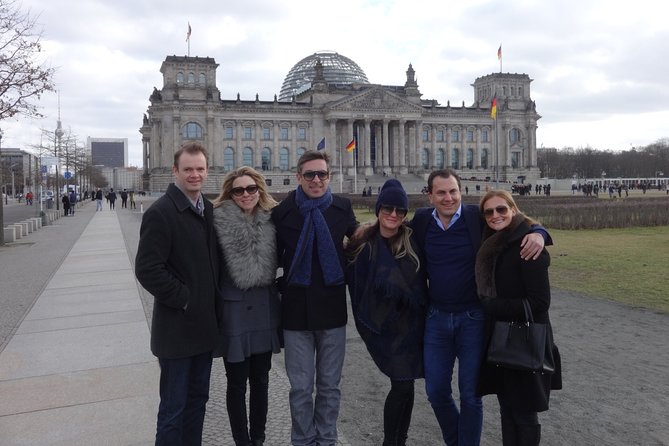
A tour of central Berlin that touches the historic center usually includes government and memory sites such as the Reichstagsgebäude and the former site of Adolf Hitler’s bunker. These are heavy themes, so the value is in clarity: what you are looking at, why it matters, and how the city transformed afterward.
The Reichstag building represents Germany’s political present in a setting that is deeply tied to the past. A guide can help you read the building as both current and historical, which changes how you see it compared with viewing it from a distance.
The bunker site, on the other hand, is valuable because it helps explain how Berlin was shaped by extreme wartime decisions. Even without going into graphic details, a guide can connect the location to the broader timeline of World War II and the collapse that followed.
If your interest is strongly political history, this is one of the stops that will likely stick with you longest.
Kaiser-Wilhelm Memorial Church and Kurfürstendamm: from damage to daily life
Berlin does not only remember through monuments. It also remembers through places that were damaged and then reinterpreted. The Kaiser-Wilhelm-Gedächtniskirche is often included because it gives that reminder of history’s cost in an architectural form that still draws attention today.
Then the tour frequently moves toward Kurfürstendamm, Berlin’s famous shopping street in the former West. This stop is useful for balance. After heavy Cold War and WWII scenes, it brings you back to how Berlin works as a living city with commerce, streetscapes, and everyday rhythms.
A good guide will not treat it as a distraction. They’ll help you understand how daily life continued and changed as Berlin shifted away from division.
Who your guide might be, and why that matters
A strong tour depends on the guide’s ability to explain without losing you in too many dates. The guide feedback shows a consistent focus on communication and preparation, including one case where guide Harald Zawuski handled schedule problems when airlines, trains, or cruise plans missed timing. That kind of reliability matters if your trip is already packed and you do not want last-minute stress.
Another name that shows up in the guide feedback is Susane Grauchy, noted for professionalism and for providing helpful orientation information for first-time visitors. When your guide is good at framing, the city stops feeling like disconnected landmarks and starts feeling like a story you can follow.
You will also benefit from the fact that the guides speak English very well, and many are members of the Berlin Guides Association. That’s not a small detail in a city full of complex history.
Price and value: $392.19 per group (up to 15 people)
The price is $392.19 per group, up to 15 people, for about 3 hours. That structure makes sense if you are traveling with a small group of friends or family. If you are two people, the per-person cost goes up. If you’re a full group up to 15, the per-person cost becomes much easier to swallow.
For value, think beyond the hourly rate. You are paying for route expertise, contextual explanations at each stop, and customization. In Berlin, that can prevent wasted time and it can improve what you take in on your own afterward. Instead of hunting for answers mid-trip, you get a guide to steer you toward what matters.
Also, you can request pickup from hotel, train station, or the airport. That can cut down on transit friction and improve how the tour fits into your day.
One more value note: the tour does not include food and drinks, but the guide can add a short snack or lunch stop on request. That flexibility can help you avoid an awkward mid-walk scramble for something decent.
What to know before you go: walking pace, weather, and headsets
This tour operates in all weather conditions, so dress for rain, wind, and temperature swings. Berlin can be dramatic in a single day, and you’ll be happiest if you wear layers you can adjust.
You should also plan for a moderate physical fitness level since it’s a walking tour. If you have mobility limits, this is where you should be extra honest with the guide so they can set a workable pace.
A practical point that affects comfort: there are no personal headsets provided when you’re walking in the street. If you tend to struggle with hearing in noisy places, bring that up early. If you want to maximize listening time, pick quieter moments when possible, and ask the guide for a brief pause if a stop area is noisy.
Food is not included. If you want lunch built into the schedule, request it in advance so the guide can adjust timing.
Should you book this Berlin historic-center walking tour?
Book it if you want a private, guide-led orientation through Berlin’s major central sites, and you care about connecting architecture to political and social history. It’s a smart choice for first-timers who want to get oriented fast, and it also works for repeat visitors who want a sharper narrative and a route designed to save time.
Skip it or rethink if you want a long, museum-heavy day instead of a street-and-landmark walk. This is also less ideal if you know you struggle to hear without headsets and you expect very noisy conditions.
If you do book, come ready with two or three must-interests, like Cold War sites, Jewish heritage, or WWII themes, and ask the guide to shape the route around those. You’ll feel the difference within minutes, because your Berlin experience will follow your questions, not a fixed script.
More Private Berlin Days



Keep Walking Berlin




More Tour Reviews in Berlin



Recently added around Berlin


Berlin Walking Tours, compared.
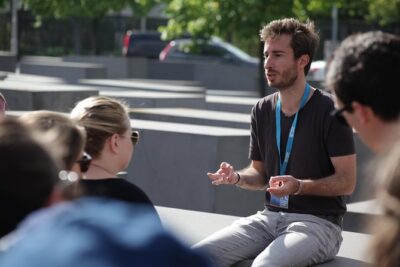 ★ 5.0Discover Berlin Half-Day Walking TourFrom $249,624 reviews
 ★ 4.9Third Reich and Cold War 2 Hour Walking TourFrom $236,830 reviews
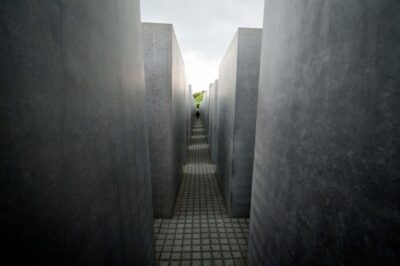 ★ 4.9Discover Berlin Walking TourFrom $235,998 reviews
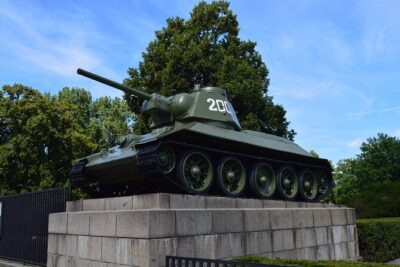 ★ 5.0Berlin’s Best: 2 Hour Walking Tour Third Reich and the Cold WarFrom $245,486 reviews
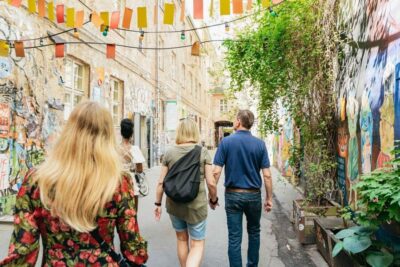 ★ 4.8Hidden Backyards Guided Walking TourFrom $235,360 reviews
 ★ 5.0Third Reich Berlin: Hitler and WWII Walking TourFrom $243,301 reviews
 ★ 4.6Alternative Berlin Walking TourFrom $291,204 reviews
 ★ 4.9Third Reich, Hitler, and WWII Walking TourFrom $201,133 reviews
Browse the lists this tour appears in