
Tour review · BERLIN WALKING TOURS
East Berlin and the Berlin Wall 2-Hour Walking Tour
A two-hour walk through East Berlin hits hard. You get street-level history, including touching preserved Berlin Wall remains and getting a real sense of the Death Strip before East Germany fell apart.
I especially like how the tour turns big events into human-scale scenes, with stops that explain what daily life felt like in the shadow of the border. And I like that your guide does the heavy lifting with clear storytelling and an easy walking pace for a compact schedule.
One drawback to plan for: two hours can feel like a sprint if you’re the type who wants to linger for photos, read every panel, or stop for lots of questions.
Quick takeaways before you go
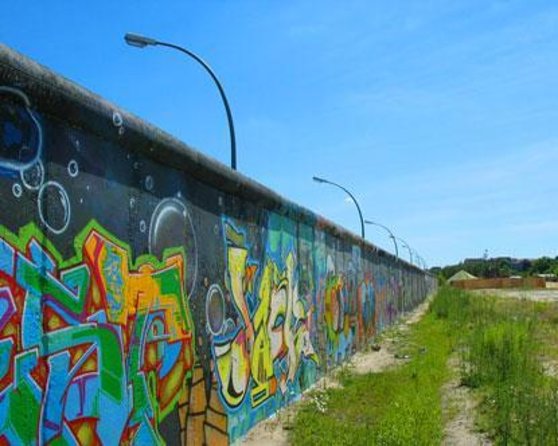
- Touch a preserved Berlin Wall section up close, not just view it behind glass
- See the Death Strip from above, with context for why it was so deadly
- Follow the border story north to Bornholmer Straße, where the Wall came down on Nov 9, 1989
- Pass Cold War landmarks tied to the Stasi, and learn how control worked in daily life
- Finish in the Alexanderplatz area, where you can look at East Berlin’s skyline from the heart of the former GDR
Other ways to read the Wall and divided Berlin in the street
- Berlin: Third Reich and Cold War 2 Hour Walking Tour★ 4.9 · 6,830 reviews
- Berlin’s Best: 2 Hour Walking Tour Third Reich and the Cold War★ 5.0 · 5,486 reviews
- Skip-the-Line: Berlin Wall Museum at Checkpoint Charlie★ 4.1 · 2,041 reviews
- Cold War, Berlin Wall, Spies and the East Side Gallery★ 5.0 · 1,024 reviews
How the East Berlin Wall walk brings Cold War history to street level
This is not a museum tour where you drift from room to room. It’s a focused, 2-hour walk that uses real locations to explain how a divided city actually functioned. You start in East Berlin, then thread through key border and political sites, so the Cold War stops feeling like a chapter in a textbook.
The emotional payoff is real. You’ll stand where the Wall shaped movement, families, and fear, and you’ll also get practical context for how the system worked. The guides often lean into storytelling, and you can feel that balance between facts and the human side of history.
The best part is that you’re not just told the timeline. You’re shown the geography. Berlin is flat enough to make lines and distances feel tangible, and your guide helps you understand why certain areas were chosen for surveillance and control.
Starting near Hackescher Markt, then stepping into the border era
Your tour kicks off near Hackescher Markt at Neue Promenade 3, with the walk beginning in East Berlin. This is a smart starting point because it gets you into the city’s modern fabric before the Cold War walls start dominating your view.
Your guide sets the scene early with big questions. How did the US and USSR slide into Cold War tension? How did Berlin become the pressure point? And how did military rivalry split one city into two realities that still shaped everyday choices?
You then move through central streets like Friedrichstraße, a major hub with both shopping and cultural energy today. Your guide uses that contrast to show how the border era invaded normal city life. If you like history that connects to what you can see now, this start works well.
If you have a question right away, don’t wait. Early explanations make the later stops click faster.
Friedrichstraße’s Palace of Tears moment, plus why that stop matters
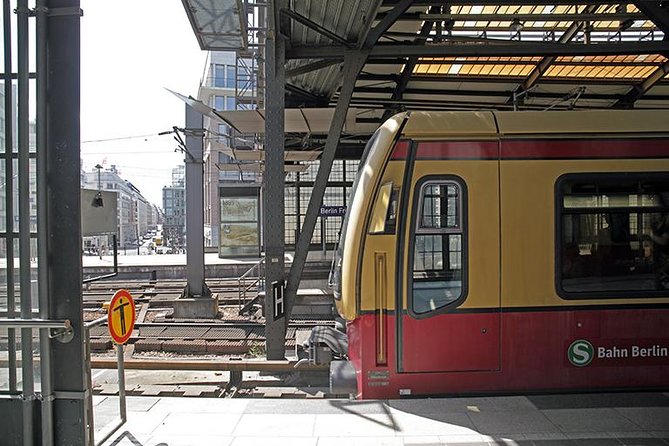
One standout stop along the route is the Palace of Tears, the nickname for the border crossing station area at Berlin Friedrichstraße railway station. The key idea here is not just the dramatic name. It’s what rail travel meant when crossing was controlled, stressful, and personal.
Your guide explains the story of farewells tied to this kind of crossing. Even if you’ve read about the Wall, the focus on families and goodbyes makes it feel immediate. This is the kind of stop that turns abstract politics into real consequences.
Practical note: rail corridors can be busy. Plan to keep close to your guide and listen when group movement speeds up, especially if you’re taking photos while walking.
Berlin Wall Memorial: the Wall section you can touch
Next comes the Berlin Wall Memorial (Gedenkstätte Berliner Mauer). This is the emotional core of the tour for many people, and for good reason.
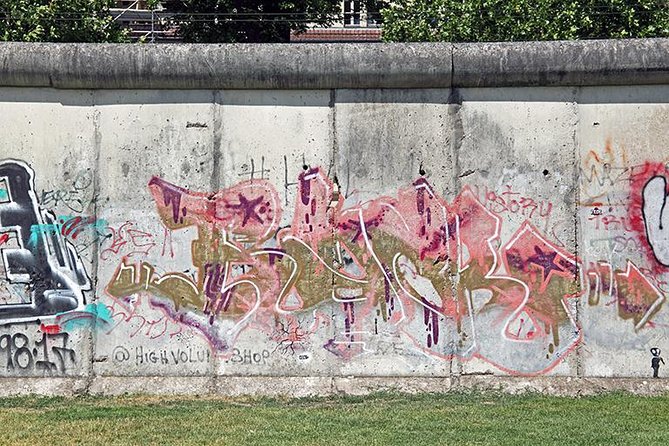
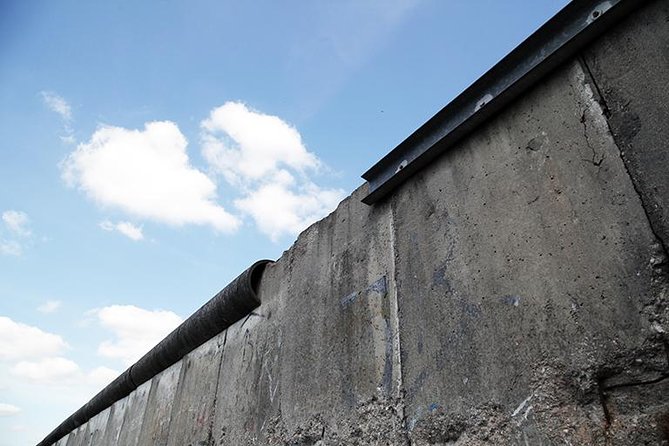
You’ll see a section of the Wall preserved in its original state. Then comes a rare and very tactile moment: you get the unique chance to touch the Wall’s remains. It changes the way the story lands. Metal, concrete, and rough surfaces don’t feel like a diagram, and that physical connection makes it harder to shrug off.
Your guide also sets the context for why this memorial matters. It commemorates the division of Berlin and the deaths that occurred at or because of the Wall.
If you’re visiting Berlin for the first time, this is also a good way to orient your emotions and your expectations for the rest of the walk. After this stop, the Stasi and escape stories don’t feel like side plots. They feel like part of the same machine.
Berlin on foot, with a few more routes worth comparing
- Discover Berlin Half-Day Walking Tour
★ 5.0 · 9,624 reviews - Berlin: Third Reich and Cold War 2 Hour Walking Tour
★ 4.9 · 6,830 reviews - Berlin: Discover Berlin Walking Tour
★ 4.9 · 5,998 reviews - Berlin’s Best: 2 Hour Walking Tour Third Reich and the Cold War
★ 5.0 · 5,486 reviews - Berlin: Hidden Backyards Guided Walking Tour
★ 4.8 · 5,360 reviews
Chapel of Reconciliation and the GDR watchtower relics
Right around the memorial area, you’ll encounter the Chapel of Reconciliation (Kapelle der Versöhnung). It’s a place of worship, and your guide uses it to connect history with human attempts to rebuild and reconcile after division.
Then you’ll get to the GDR Watch Tower, described as the oldest relic of the Berlin Wall. This is one of those stops where the lesson is in the structure itself. Watchtowers weren’t decorative. They were tools for observation, intimidation, and enforcement.
You’ll also hear about nearby points like Ackerstraße, where your guide explains the history of the site. These short, focused stops add up. They show how surveillance was built into neighborhoods, not just into a single grand wall line.
Getting a birds-eye view of the Death Strip
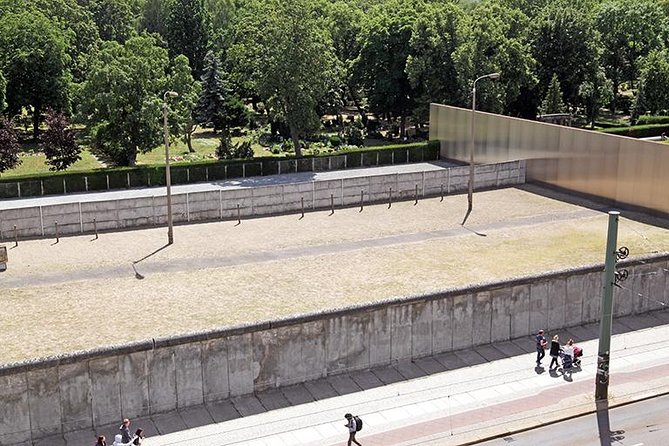
One of the most intense parts of the tour is seeing the Death Strip area from a birds-eye viewpoint. Your guide explains that this was where East Germany’s shoot-to-kill orders were carried out against people trying to escape.
That phrase can sound distant until you see the geography and understand what it was designed to do. The purpose was to remove options. Your guide helps you grasp that the system relied on distance, sightlines, and fear, all working together.
This isn’t a stop where you just look. It’s a stop where you listen, then look again with a different lens. If you want the tour to stay respectful and meaningful, this is where that mood settles in.
Bornholmer Straße and the Wall coming down on Nov 9, 1989
After the memorial area, the walk moves north toward Bornholmer Straße, where the Wall came down on November 9, 1989. This stop is about the turning point. And more specifically, it’s about how a single mistake can trigger a chain reaction.
Your guide explains the unlikely story of how an East German politician’s error helped set off the fall of the Wall. You’re not stuck with one simple version of history here. Instead, you get a sense of how confusing signals and the rigid system of control collided with real people on the ground.
This is also a good moment to ask questions. The tour timing is tight, and your guide can usually explain how these events relate to the Cold War patterns you heard at the start.
Stasi headquarters and the reality of being watched
Deeper into East Berlin, you visit the Stasi headquarters area. The Stasi is introduced as East Germany’s terrifying secret police, and your guide explains how the state increasingly spied on its own people.
This part matters because it explains control beyond fences. The Wall physically blocked movement, but the Stasi shaped what people dared to think, say, and do. Your guide ties that together into the idea of a system of complete government control over citizens.
If you’re the type who wonders how a society can function under constant fear, this segment is for you. It turns the Wall from a structure into a policy, then into an everyday reality.
Also, if you enjoy asking follow-ups, this is a good spot. Many guides (for example, people have mentioned guides like Dylan and Tom for strong big-picture explanations paired with individual stories) do a nice job of answering group questions in plain language.
Alexanderplatz finish: putting the skyline in the Cold War context
The walk finishes near Alexanderplatz, in the heart of the former East German capital. Even if you don’t go inside anything, this stop has value because it forces you to see East Berlin’s central planning and skyline in the context of what came before.
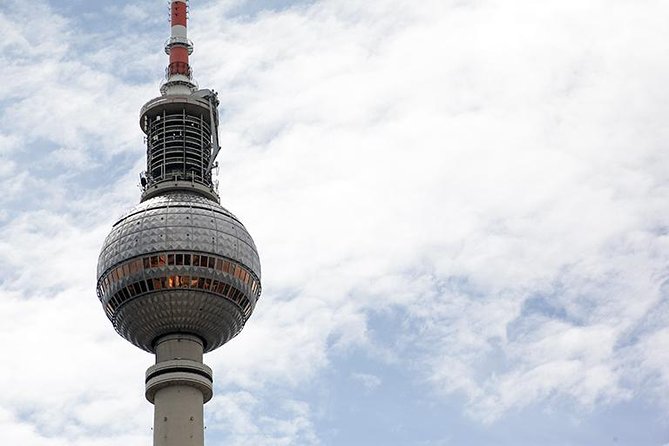
The Berlin TV Tower sits here, and the admission is not included. If you want views from the top, you’ll need to plan that separately. Even without tickets, standing at Alexanderplatz gives you a sense of scale for how the GDR presented itself.
If you’re curious about photo spots, your guide often helps. Some guides have shared practical suggestions for timing and viewpoints, like catching sunset in a nearby park. So after the tour, don’t rush off. Take 10 minutes, orient yourself, and then choose your next move.
Price and logistics: what $21.78 gets you, and what costs extra
At about $21.78 per person for roughly 2 hours, this is strong value if you like guided interpretation more than self-paced reading. The big reason is the guide. You’re not just receiving a route. You’re receiving explanations for places that are easy to misunderstand if you only skim placards.
Included is a professional guide and the walking tour itself. You’ll also have a mobile ticket in English, and the group stays small, with a maximum of 20 travelers. Small groups usually mean you can ask questions without getting steamrolled by the schedule.
What’s not included:
- You’ll likely need a Berlin Transport AB zone pass (about 10.60 Euros) for transit segments, depending on the route that day
- If you want to go up the Berlin TV Tower, its ticket is not included
My tip: bring some cash or an easy-to-use payment method for transport just in case. Walking tours like this can include short hops that go faster than you expect.
What kind of guide makes the difference here
Guides really shape the experience on Wall-related tours. The ones I’d look for are the storytellers who can connect Cold War events to everyday life without turning it into a lecture.
Based on what I’ve seen people praise, you might get guides such as Anastasia, Ariel, Dylan, Tom, Georgia, Jimmy, Nathan, Pip, Heidi, Tobi, Susan, Steve, Campbell, or Jasper. Many of these names come up with the same themes: clear explanations, engaging pacing, and lots of time for questions.
One practical takeaway: if you feel like the group is moving quickly, it helps to listen for how your guide wants you to follow. There has been at least one cautionary note from a past group about ticket handling and how the lead communicated plans while boarding transit. To keep your day smooth, stay close, keep your ticket handy, and watch for instructions rather than guessing.
Who should book this tour, and who might want something else
Book this if you want:
- A compact, 2-hour way to understand East Berlin and the Wall
- Hands-on impact, like touching a Wall remnant
- A guide who explains both the Cold War big picture and how it affected daily life
- A small-group experience that doesn’t feel like a cattle line
This also works well for mixed-age groups, since the tour is short and designed for most travelers to participate. The pace is walking-based, but it still includes multiple stops where you’ll stand and listen.
Consider a different format if you:
- Want a longer, slower route with lots of time for independent reading
- Hate standing still for memorial moments
- Prefer mostly visual exploration over guided context
If two hours is exactly what you want, this tour delivers. If you want more depth and more time at each location, plan a follow-up stop on your own the same day.
Should you book this East Berlin and Berlin Wall 2-Hour Walking Tour?
Yes, you should book it if you’re looking for a high-impact introduction that makes the Wall story understandable fast. For the price, you’re buying interpretation and access to moments you won’t get by wandering around alone, especially the tactile Wall remains and the guided explanation of the Death Strip.
If you can only spare one Wall experience in Berlin, this is a smart choice. It keeps the schedule tight, it hits multiple key sites, and the small-group format means you can actually interact with your guide.
If you’re sensitive to heavy topics, go in prepared. This tour focuses on fear, control, and violence, even when the tone stays respectful. Plan to take a quiet break afterward so your brain has time to absorb what you just learned.
FAQ
Where does the tour start?
The tour starts at Neue Promenade 3, 10178 Berlin, Germany, near Hackescher Markt.
What time does the tour begin?
The start time listed is 10:00 am.
How long is the walking tour?
It lasts about 2 hours.
Is the tour offered in English?
Yes. The tour is offered in English.
What is included in the price?
The price includes a professional guide and the 2-hour walking tour.
Is public transportation included?
No. You should plan for a Berlin Transport AB zone pass (about 10.60 Euros).
Are tickets for the Berlin TV Tower included?
No. Berlin TV Tower admission is not included.
Does the tour run in bad weather?
It operates in all weather conditions, so dress for the conditions.
Is there free cancellation?
Yes. You can cancel for a full refund up to 24 hours before the experience’s start time. If you cancel less than 24 hours before, the amount paid will not be refunded.
What is the maximum group size?
The tour has a maximum of 20 travelers.
Keep Walking Berlin




More Wall & Cold War Berlin
More Tour Reviews in Berlin




Recently added around Berlin



Berlin Walking Tours, compared.
 ★ 5.0Discover Berlin Half-Day Walking TourFrom $249,624 reviews
 ★ 4.9Third Reich and Cold War 2 Hour Walking TourFrom $236,830 reviews
 ★ 4.9Discover Berlin Walking TourFrom $235,998 reviews
 ★ 5.0Berlin’s Best: 2 Hour Walking Tour Third Reich and the Cold WarFrom $245,486 reviews
 ★ 4.8Hidden Backyards Guided Walking TourFrom $235,360 reviews
 ★ 5.0Third Reich Berlin: Hitler and WWII Walking TourFrom $243,301 reviews
 ★ 4.6Alternative Berlin Walking TourFrom $291,204 reviews
 ★ 4.9Third Reich, Hitler, and WWII Walking TourFrom $201,133 reviews
Browse the lists this tour appears in