
Tour review · BERLIN WORLD WAR II & THIRD REICH TOURS
Hitler’s Berlin – the rise and fall (Small Group)
Berlin can feel heavy fast. This 2.5-hour small-group walk turns “famous landmarks” into a clear story of Nazism’s rise and collapse, anchored by memorials and primary-site context. I especially like the small-group size and the fact that you can ask questions without feeling shoved along. One thing to consider: it is a dense, emotionally serious tour, so you should be ready for heavy topics and lots of walking in winter cold or summer heat.
What I really love is the way the guide connects spots that are close together. You get Then and Now photographs and historic maps, which makes the physical changes in Berlin actually mean something, not just look interesting. The other practical plus is that it is timed tightly, so you cover a lot of ground without feeling like a nonstop sprint.
Key things I’d highlight before you book
- Small-group format (max 15): more back-and-forth, easier Q and A.
- Then and Now photos and historic maps: landmarks become evidence, not just scenery.
- A stop-by-stop Nazi story: from early persecution to the fall of Hitler and the Gestapo core.
- Many stops are free to enter: so you pay mostly for the guide and the structure.
- You end at Topography of Terror: a natural “last word” location for Berlin WWII context.
More carefully guided routes through Berlin’s wartime history
- Berlin: Third Reich and Cold War 2 Hour Walking Tour★ 4.9 · 6,830 reviews
- Berlin’s Best: 2 Hour Walking Tour Third Reich and the Cold War★ 5.0 · 5,486 reviews
- Third Reich Berlin: Hitler and WWII Walking Tour★ 5.0 · 3,301 reviews
- Berlin: Third Reich, Hitler, and WWII Walking Tour★ 4.9 · 1,133 reviews
Why Hitler’s Berlin works as a half-day walk
If you only have a short window in Berlin, this kind of tour is the best fix for history overload. Berlin has too many “must-sees,” and it is easy to wander without a thread. This one gives you a thread, and it stays focused on the rise and fall of German Nazism, using major sites and memorials you can actually reach on foot.
I like that it does not treat the Nazi era like a single timeline in a textbook. It treats it like a system that targeted specific groups, reshaped politics, rewired fear, and ended in ruins and reckoning. That structure matters because it helps you connect what you see in Berlin today to what was happening there in the 1930s and 1940s.
One more practical win: it is designed as a guided walking route in central Berlin. In a city where transit is easy, you still save time by walking a tight loop and getting the story as you go.
Group size, mobile ticket, and how the 2.5 hours actually feels
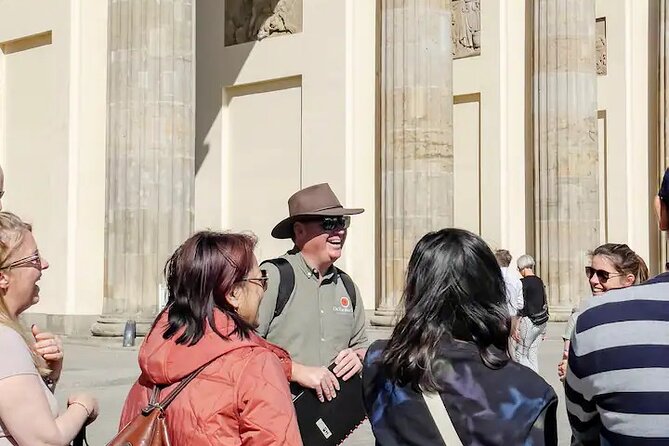
This is a small group tour with a maximum of 15 people, offered in English. You’ll use a mobile ticket, and you’ll get confirmation at booking. Expect about 2 hours 30 minutes total, with short stops and guided time built in.
The pacing is a key part of the value. You do not just arrive, take photos, and leave. Each stop has a purpose: a memorial that sets context, a political site that explains power, and an ending point tied to the Gestapo. The whole structure is meant to keep your brain in order while the subject matter is anything but light.
Two practical considerations to plan for:
- You should have moderate physical fitness. It is a walking tour with city surfaces that can be uneven.
- It runs in all weather conditions, but if weather is truly poor, the experience can be canceled and you’ll be offered another date or a full refund. So dress for Berlin, not for an ideal travel brochure.
Value check: why $54.44 makes sense here
At about $54.44 per person, the main question is what you’re really paying for. Here, the price is not mostly buying museum tickets. The tour includes guided visits to key Nazi-era sites and memorials, and the stop entries listed are free (tickets are free at each site noted). That means your money is largely going to the guide, the route planning, and the educational context.
For Berlin, where many top memorial locations are free but self-guiding can be confusing, a strong guide can be the difference between “I saw it” and “I understood what I saw.” The consistently high rating makes sense because this tour’s format is designed for clarity: it uses maps and Then and Now photographs, and it gives you Q and A moments built into the walk.
You should still know what is not included: food and drinks. So if you’re doing this earlier in the day, plan a meal before or after, and if you’re the type who likes to refuel, you might want a snack break elsewhere since there is a short break planned for tea or coffee and restrooms.
Stop-by-stop: the memorials that set the moral context

- Berlin: Reichstag, Dome and Government District Guided Tour
★ 4.7 · 18,288 reviews - Berlin: 1-Hour City Tour by Boat with Guaranteed Seating
★ 4.3 · 16,993 reviews - Berlin: Boat Tour Along the River Spree
★ 4.4 · 11,252 reviews - Discover Berlin Half-Day Walking Tour
★ 5.0 · 9,624 reviews - Berlin: Hop-on Hop-off Bus Tour with Live Commentary
★ 4.3 · 8,579 reviews
Memorial to the Sinti and Roma Victims of National Socialism
Your first stop frames the story correctly, with the Memorial to the Sinti and Roma Victims of National Socialism. This is not just a memorial photo stop. The guide explains who was targeted and the cruel social philosophies that later supported the Holocaust.
Why this matters: if you start with the political power story only, you can accidentally treat genocide like an abstract end point. Starting with Sinti and Roma victims helps you see that Nazi ideology had victims in its crosshairs long before the world focused on the biggest-name camps.
This stop is short, about 10 minutes, and the entry ticket is free.
The Reichstag building and the mechanics of getting power
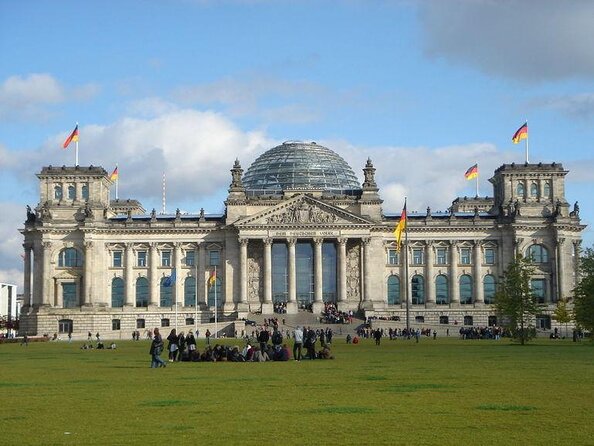
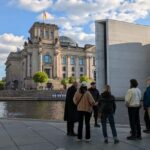
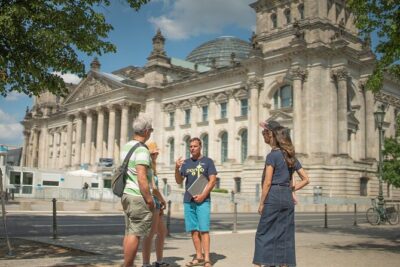
Next comes the Reichstag, the German Parliament building. Here the tour focuses on how the Nazi Party came to power and how Hitler became Führer of Germany.
This is where you see how political legitimacy and propaganda can work together. Even if you’ve read the history before, it lands differently when you connect it to the physical location tied to German state power.
Plan for about 15 minutes, and again the entry is free.
Soviet Memorial in Tiergarten, WWII brutality, and how Berlin remembers
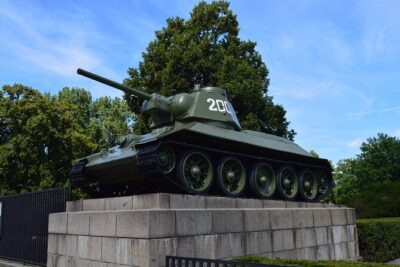
Then you shift from Nazi rise and persecution to the violence of the war’s end at the Soviet Memorial Tiergarten. The guide addresses the Battle of Berlin, described as the third bloodiest operation of WWII, and also talks about post-war remembrance.
This stop gives your brain a breather from Nazi ideology while keeping the timeline honest. It also reminds you that Berlin’s WWII story is not only about one side or one narrative. In a city that rebuilt itself, remembrance is part of the landscape too.
It’s about 15 minutes with free entry.
The memorials you should walk slower for
The Holocaust Memorial: feeling the weight, then talking it through
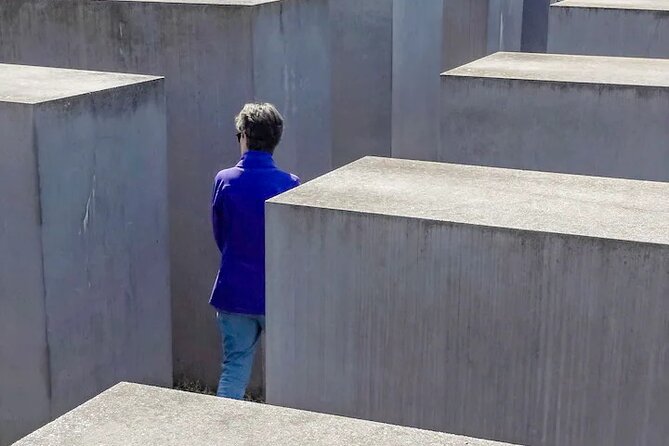
Next is the Memorial to the Murdered Jews of Europe, one of the most important places in Berlin for understanding the Holocaust. This stop includes time to reflect and discuss what the memorial means, with focus on the fact that Jews were the largest ethnic group targeted by the Nazis.
If you’re hoping for a quick hit of information, this is not that stop. You’ll have about 15 minutes to take it in and talk with your guide. That discussion time is valuable because memorials often raise questions that are hard to answer alone. The guide’s role is to give you structure, not to force a single interpretation.
Free entry applies here too.
Monument to Homosexuals Persecuted Under the National Socialist Regime
You then visit the Monument to Homosexuals Persecuted Under the National Socialist Regime. This one is shorter, around 5 minutes, but it fills an important gap.
It’s a reminder that Nazi persecution extended beyond what many people first learn in school. Even if you already know this, the physical presence in Berlin makes it harder to shrug off as a side note.
When the tour moves into the final days
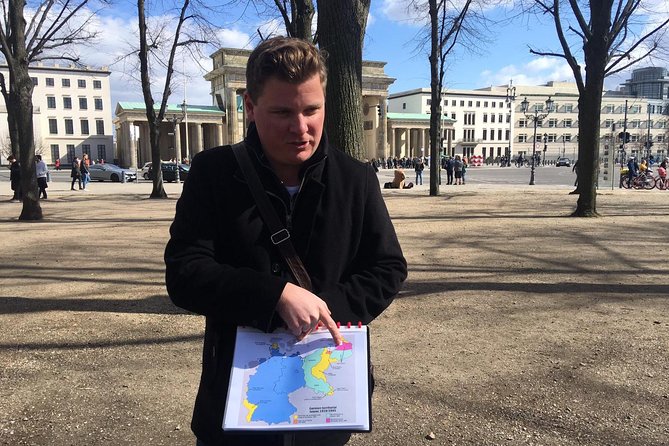
Fuhrerbunker: Hitler’s last stretch of the war
At the Führerbunker, you’ll hear about Hitler’s final days during the Second World War. This stop is about 15 minutes, and the entry is free.
The emotional tone shifts here. You’re moving from memorial reflection into the collapse phase of a regime. The guide’s framing usually helps you keep it grounded in cause and consequence, not just dramatic details.
Johann Georg Elser Memorial: resistance beyond the headline names
Next is the Johann Georg Elser Memorial, where the story turns to attempts to oppose the Nazi regime, including Elser’s role in efforts to assassinate Adolf Hitler.
This stop adds an angle many history tourists miss. It highlights resistance that did not only come from famous circles. It’s about the people who acted even when the odds were brutal, and it gives you a more complete picture of how opposition showed up on the ground.
Plan for about 15 minutes here, with free entry.
The buildings that explain ideology in bricks
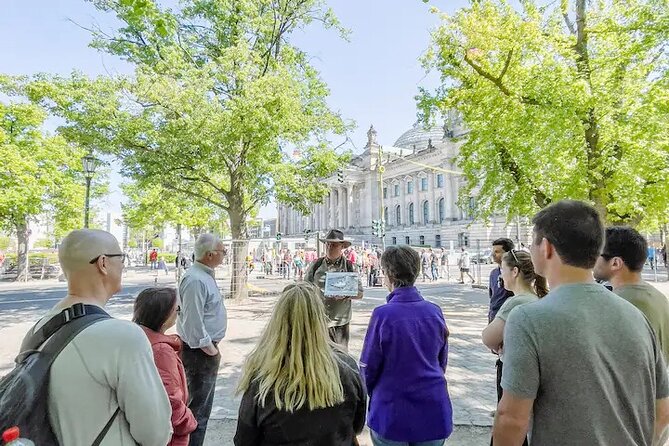
Aviation Ministry of Berlin: the air power dream behind the facade
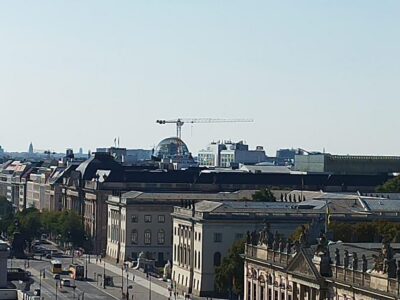
The tour then includes the Aviation Ministry of Berlin. The description focuses on how it was built in 1936 as one of the largest office buildings in Europe, housing the German Ministry of Aviation, the Reichsluftfahrtministerium, headed by Hermann Göring.
This is short, about 5 minutes, but it’s a smart stop because it connects policy to buildings. When you see a structure like this, the story stops being only about speeches and starts being about systems, funding, and machinery.
Topography of Terror: where the story ends at the Gestapo core
You finish at Topography of Terror, at the location where Gestapo headquarters once stood. The tour includes about 20 minutes here for the guided portion, plus time for a break to get tea or coffee and use the restrooms.
This is a strong ending point because it ties the Nazi system together: surveillance, repression, terror, and how that machinery operated in the real space of Berlin. If you want to keep learning after the walk, the location is one of the best anchors you can choose in the area.
It also helps that the tour ends with practical guidance. Your guide can suggest the best connection options for your next stop.
What stood out from the guides, and what you should expect
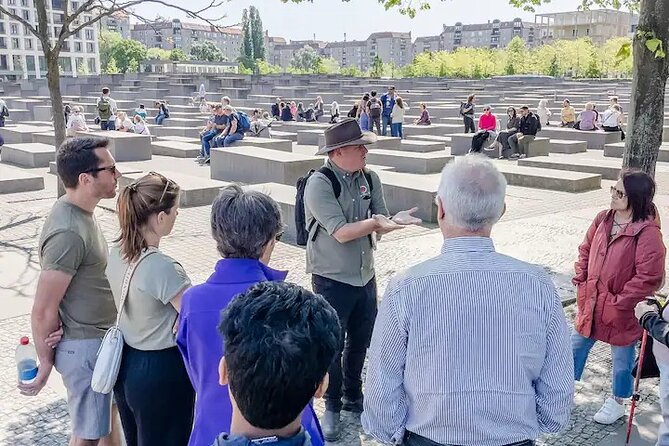
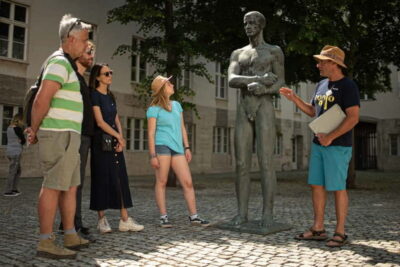
Across the many guides who have led this tour in the past, a few traits come up again and again:
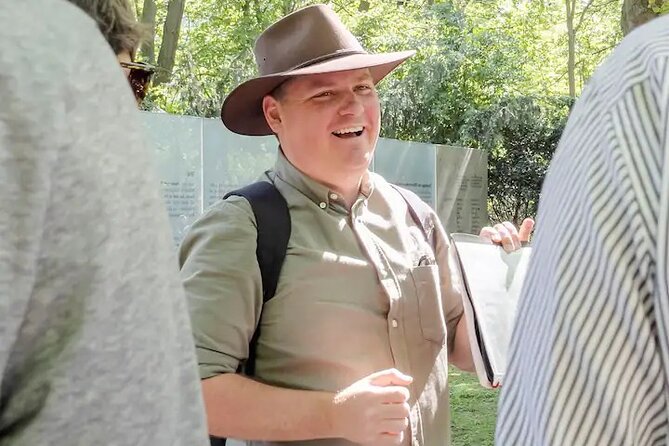
- People often praise guides for handling the heavy subject with sensitivity.
- Many emphasize that the guide keeps the story clear and structured, especially when explaining how Nazis gained power.
- Several notes also mention a friendly, interactive tone, with questions welcomed and not brushed off.
- Some people suggest that hearing can be an issue when noise is high, so the best move is to stand where you can hear well and keep your ears on your guide rather than the street noise.
Also, if you like to ask questions, this tour is built for that. The walking segments are short enough that Q and A does not feel like an interruption.
Who should book this tour, and who might want a different style
This is a great fit if:
- You want high-impact WWII and Nazi-era context in central Berlin.
- You like a guide who can explain politics and power, not just list dates.
- You prefer a small group over big-bus history.
You might choose something else if:
- You need a lighter, purely scenic walk. This is memorial-centered and political.
- You struggle with walking on uneven surfaces for a couple of hours.
- You get mentally worn out by discussions of genocide and persecution. The guide handles it carefully, but the topic is unavoidably heavy.
Practical tips to get the most out of it
- Wear comfortable shoes. Even though the route is not described as a huge trek, the city surfaces add up.
- Dress for Berlin weather. The tour runs in all weather conditions, and cold days can make you more uncomfortable than the topic itself.
- If you’re bringing a teen or older relative, this tour can work well because the guide invites questions and keeps the group moving at a pace that allows listening.
- Bring your best “listening mode.” One common piece of advice is to pay close attention, since the information is dense.
Should you book Hitler’s Berlin: rise and fall (Small Group)?
I’d book it if you want one focused half-day experience that turns Berlin’s top Nazi-era locations into an understandable story. The biggest reasons are practical: small-group attention, structured stop-by-stop context, and memorial reflection that is not vague.
Skip it only if you want a casual stroll or you’re not ready for emotionally serious history. If you can handle that, this is the kind of tour where you leave with more than photos. You leave with a clearer sense of how ideology became power, how it targeted specific people, and how it ended in catastrophe.
FAQ
Is this tour offered in English?
Yes. The tour is offered in English.
How long is the Hitler’s Berlin walking tour?
The duration is approximately 2 hours 30 minutes.
How much does it cost?
The price is listed as $54.44 per person.
Where does the tour start and end?
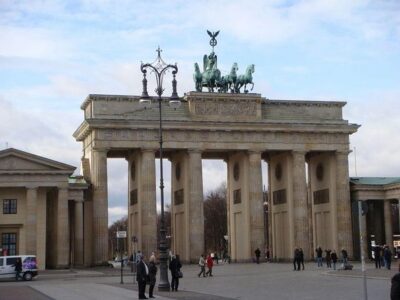
It starts at Brandenburg Gate, Pariser Platz, 10117 Berlin, and ends at Topography of Terror, Niederkirchnerstraße 8, 10963 Berlin. The guide can recommend the best connection options to your next destination.
Do I need to buy entry tickets for the stops?
The tour description lists free admission for the stops shown, and the tour includes guided visits to key Nazi-era sites and memorials. Food and drinks are not included.
What group size should I expect?
The maximum group size is 15 travelers.
What should I wear or plan for because of weather?
The tour operates in all weather conditions, so dress appropriately for Berlin. If it is canceled due to poor weather, you’ll be offered a different date or a full refund.
How does cancellation work?
Free cancellation is available. You can cancel up to 24 hours in advance for a full refund. If you cancel less than 24 hours before the start time, the amount you paid is not refunded.
More World War II History in Berlin


More Tour Reviews in Berlin




Recently added around Berlin


Berlin World War II & Third Reich Tours, compared.
 ★ 4.9Third Reich and Cold War 2 Hour Walking TourFrom $236,830 reviews
 ★ 5.0Berlin’s Best: 2 Hour Walking Tour Third Reich and the Cold WarFrom $245,486 reviews
 ★ 5.0Third Reich Berlin: Hitler and WWII Walking TourFrom $243,301 reviews
 ★ 4.9Third Reich, Hitler, and WWII Walking TourFrom $201,133 reviews
 ★ 5.0Berlin Third Reich Sites: Half-Day Walking TourFrom $21835 reviews
 ★ 4.7Guided Bike Tour of the Berlin Wall and Third ReichFrom $40499 reviews
 ★ 4.8Hitler’s Germany: Berlin During the Third Reich & WWIIFrom $23476 reviews
 ★ 5.0Private Walking Tour Berlin Third Reich Hitler and World War IIFrom $192360 reviews
Browse the lists this tour appears in