
Tour review · BERLIN WALKING TOURS
Berlin Cold War & World War II Third Reich Walking Tour
Berlin teaches history by walking. This tour turns the rise of the Third Reich into a Cold War story you can see with your own eyes, from the Reichstag down to Wall-era landmarks. I like the Q and A friendly guide style, which helps the facts stick, and I like how the stops connect WWII devastation to the Berlin Wall in one continuous route. One catch: the day can run longer than the shortest time estimates, so plan for a full half day and wear comfortable shoes.
You meet at Generator Berlin Alexanderplatz, start at 12:00 pm, and return there at the end, which makes the logistics easy. Guides like Miguel and Arthur show up in recent comments for being friendly, funny, and strong on answering questions, plus Miguel is even noted for sharing practical tips like where to eat and what to read. The route runs in all weather, and since there are no drinks or snacks included, bring your own water and a small snack.
Key things I’d plan around
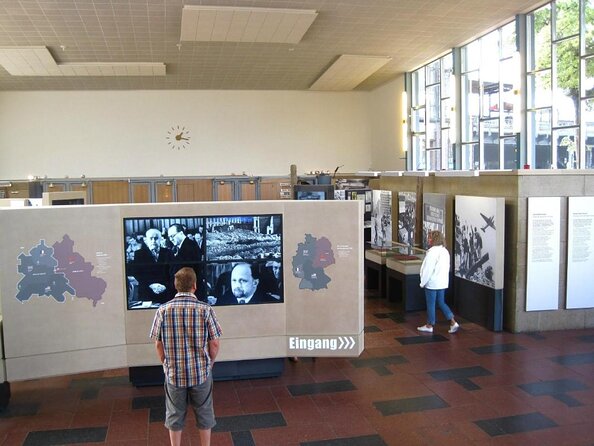
- Reichstag to East Side Gallery, one timeline: You’ll connect Nazi-era power, WWII turning points, and the divided city without hopping between unrelated areas.
- Wall scars you can actually see: Several stops focus on remnants and memorial spaces, not just big viewpoints.
- Free admission listed for major stops: The tour notes admission ticket free at each scheduled site, which is a real value add.
- Guide stories that answer the why, not just the what: Expect live explanation at each location and time to ask questions.
- Group size capped at 100: You can still hear and move through sites, even though it is a walking tour.
- Plan for longer walking time: One review noted it ran longer than the shorter listing estimate, so schedule your afternoon buffer.
Other ways to read the Wall and divided Berlin in the street
- Berlin: Third Reich and Cold War 2 Hour Walking Tour★ 4.9 · 6,830 reviews
- Berlin’s Best: 2 Hour Walking Tour Third Reich and the Cold War★ 5.0 · 5,486 reviews
- Skip-the-Line: Berlin Wall Museum at Checkpoint Charlie★ 4.1 · 2,041 reviews
- Cold War, Berlin Wall, Spies and the East Side Gallery★ 5.0 · 1,024 reviews
Price and value for a Berlin history walk
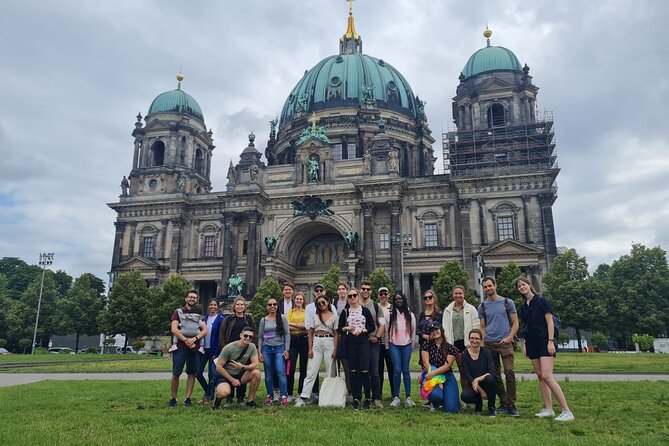
At $35.64 per person for a tour that runs about 6 hours, the value is mainly in two places. First, you get a local guide for a long stretch of the day, which is what turns street corners and buildings into a readable story. Second, the tour information lists admission ticket free for the stops it visits, so you are not stacking up extra fees site by site.
What you should not expect is a museum lecture with every artifact explained. This is a walking, story-based format. That can be great if you want context and clear connections fast, and you still want time to explore Berlin on your own after.
Meeting at Generator Berlin Alexanderplatz (and why it helps)
You start at Generator Berlin Alexanderplatz (Otto-Braun-Straße 65, 10178 Berlin) at 12:00 pm, and the tour ends back at the meeting point. That matters more than it sounds. Berlin can be confusing when you are tired, so returning to the same place helps you avoid the last-minute scramble.
It is also close to a major hub area, so if you are coming in from another part of the city, it is usually easier to get there. People also flag that the meeting point is easy to find, which is a practical win for a first-day history plan.
Reichstag Building: the starting point where power gets rewritten
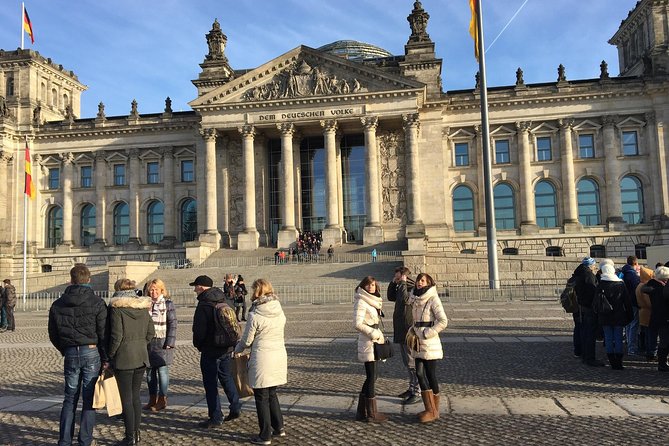
The tour begins at the Reichstag Building, with about 30 minutes there. This is not just a pretty stop. It is the symbolic front door for modern German history, where politics, propaganda, and public memory all overlap.
Why it works at the beginning: your guide can set up the big timeline before you start seeing the physical scars around the city. You’ll get a mix of architecture, major events, and the human side of the story, including how music and cultural references played into the era. The main drawback here is simple: 30 minutes goes quickly. If you want to linger for photos or read every plaque, you may feel the time squeeze.
Museum Berlin-Karlshorst: WWII reminders in a quieter setting
Next is Museum Berlin-Karlshorst for about 30 minutes. This stop is aimed at WWII history and memorial context, rather than just a general overview. You’ll hear what happened in the area historically, plus the guide may include urban legends along the way, which can make the facts easier to remember.
The benefit for you: it adds weight to the WWII half of the story. The Berlin that looks normal today has a lot of layers underneath, and Karlshorst is the kind of site that helps you feel that shift from everyday streets to wartime reality.
More carefully guided routes through Berlin’s wartime history
- Third Reich Berlin: Hitler and WWII Walking Tour
★ 5.0 · 3,301 reviews - Berlin: Third Reich, Hitler, and WWII Walking Tour
★ 4.9 · 1,133 reviews - Berlin Third Reich Sites: Half-Day Walking Tour
★ 5.0 · 835 reviews - Berlin: Guided Bike Tour of the Berlin Wall and Third Reich
★ 4.7 · 499 reviews - Hitler’s Germany: Berlin During the Third Reich & WWII
★ 4.8 · 476 reviews
Humboldthain Flak Tower: the kind of site you notice only when explained
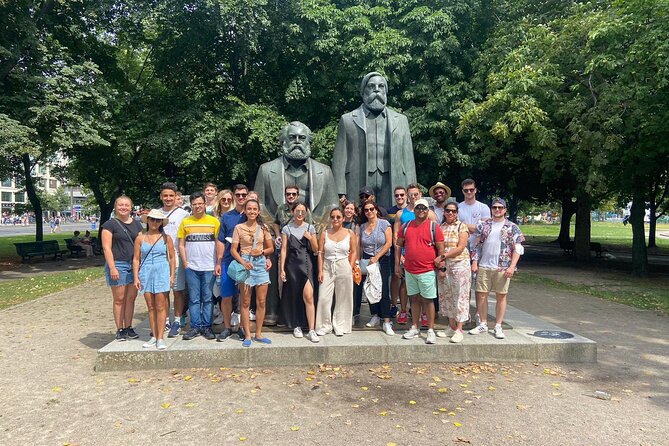
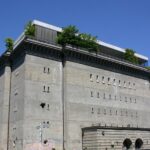
At Humboldthain Flak Tower, you get another 30-minute block focused on how war changed the skyline and what those structures meant at the time. Guides here typically point out details many people walk right past, so you come away seeing the building differently than if you were just taking a quick photo.
A practical note: the pace here is part of the walking tour rhythm. The info is great, but this is not the stop where you should plan to sprint for side streets. If you’re serious about photography, you might want to arrive with a sense of what you want to capture so you are not spending your time hunting for the best angle.
Prenzlauer Berg: seeing battle scars where they still sit
The tour moves into Prenzlauer Berg for about 30 minutes. This is where you start to connect the map to the violence of the Battle of Berlin. The guide talks about scars and battlefields left behind, meaning the city fabric becomes the textbook.
Why it is valuable: it turns the idea of ruins into something tangible. You see neighborhoods, streets, and buildings, and you learn how the fighting shaped what you are seeing today. The downside is that this is a walking tour, not an archaeological visit. If you need every last detail about the fighting in a specific block, you might want to pair this with a focused WWII site visit later.
Berlin Story Bunker: Hitler’s underground legend made walkable
At the Berlin Story Bunker, you’ll spend around 30 minutes. The stop is linked to the notorious underground lair story, where the tour connects rumor, legend, and the historical context around Hitler’s final months.
What you can expect: story-driven narration with the goal of helping you understand how people imagined safety, power, and control as the war collapsed. It is a good contrast to the more memorial and public-space stops, because it shows the warped psychological side of the era.
The consideration: if you prefer strict, museum-style sourcing and less storytelling, this kind of stop may feel more narrative than you want. It can still be useful, just know what kind of format you are in.
Palace of Tears: the Cold War explained through escape points

The tour then heads east to Palace of Tears for about 20 minutes. This is a Cold War stop, built around the idea of departure, separation, and what it meant to try to leave communist East Berlin.
The big value here is the way the guide frames the place as part of a system: boarding crossings, escape points, and famous East Berlin landmarks are brought into the conversation. Instead of treating the Berlin Wall as only a wall, you see it as a machine that controlled movement.
A reality check: with only 20 minutes, you won’t get a slow, fully absorbed experience. But for context and orientation, it is a strong use of time.
Berlin Wall Memorial: visible reminders you can stand beside
Next comes the Berlin Wall Memorial for about 30 minutes. This stop is specifically about the Cold War and Berlin Wall story, including reminders you can still see today.
Why it matters for your understanding: memorial spaces are where you learn how the story is remembered, not just what happened. Your guide helps connect the political catastrophe to everyday life, so the Wall is not an abstract symbol.
The drawback is that memorial areas can feel emotionally heavy. If you are prone to feeling overwhelmed by war and human suffering themes, you may want to pace yourself with water and short breaks.
Teufelsberg: the off-the-beaten-path Wall layer
Then you reach Teufelsberg for around 30 minutes. This is one of the more atmospheric stops because it helps you see major landmarks the Wall left behind, including guard tower references and wall-related remnants. The tour also aims to take you to wall sights off the beaten path.
What you’ll like: it feels more like walking through the ghost of a political era than reading about it. You also get a broader view on how Berlin repurposes space after conflict.
What could be challenging: the time is short, and Teufelsberg can be a place where the terrain and walking pace matter. If you have any mobility concerns, take it slow and don’t be shy about telling the guide if you need to pause.
East Side Gallery: where the conflict became art
At the East Side Gallery, you get about 20 minutes. This is where the East-West conflict culminates visually, with the Berlin Wall story translated into murals and messages.
This stop is great for perspective. You see how a place of confinement can later become a canvas for public meaning. Your guide ties it back to how life felt on the East side, so you do not just look at it as street art without context.
Limitation: it is easy to get pulled into photo mode here. Try to keep listening while you’re photographing, or you’ll miss the “why” behind the visuals.
DDR Watch Tower: escape stories and forced conscription context
Finally, you visit the DDR Watch Tower for about 20 minutes. This stop focuses on where the Wall once stood and includes stories around wall escapes and forced conscription.
Why it is useful: it closes the loop from political control to human consequences. You’ll hear how the system worked, not just what it was. It also helps you feel the constant pressure behind the Wall, which makes the memorial and artwork stops hit harder.
As with other short stops, you may want more time if you are the type who reads every detail on site. But for a single walking route, the time allocation keeps the story moving.
Walking pace, weather, and what to bring
This tour is aimed at travelers with moderate physical fitness, and it operates in all weather conditions. That is one of the most important pieces of advice I can give you. Berlin weather can change quickly, and a history walking route means you cannot just hop into a cafe whenever you want.
Comfort checklist:
- Comfortable shoes (a recurring point in feedback)
- Weather-ready layers since it runs in all conditions
- Umbrella if rain is in the forecast (cloudy skies came up in recent experiences)
- Water and a snack, since beverages and snacks are not included
Also, plan your schedule like it might run longer than expected. One person noted the tour time felt longer than the shorter estimate. If you have dinner reservations or another timed plan, build in buffer time.
Guides: how humor and Q and A make the story stick
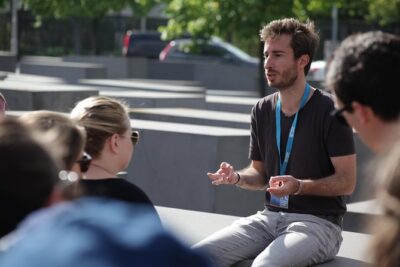
A standout part of this tour is the guide style. Names that show up include Miguel and Arthur, both described as patient and friendly, with humor that keeps the heavy topics more bearable. The guide format also gives you time to ask questions, which changes the experience from a one-way lecture into a conversation.
If you learn well through discussion, this is a real plus. When you ask something as basic as how Berliners handled a particular policy, you often get a better explanation because the guide can tailor answers to what your group wants to know.
You might also appreciate practical extras. Miguel is specifically noted for sharing restaurant, bar, and book tips, which can help you turn history knowledge into a better Berlin evening.
Who this tour is best for (and who should pass)
This walk is a great match if you want:
- A single route that connects WWII and the Cold War in Berlin
- A way to get bearings fast and understand how the Wall reshaped everyday life
- A guide who answers questions and adjusts to the group’s interests
- A history plan that is strong even if you do not know much German-era chronology yet
It may not be ideal if you:
- Want deep museum-level detail at every stop
- Hate walking in cold or rain, even with breaks
- Prefer quiet, self-paced sightseeing over guided stories and group pacing
Should you book the Berlin Cold War and Third Reich walking tour?
I’d book it if your goal is to understand Berlin’s WWII to Cold War arc using real places, not just dates. The price is fair for a long guided walking day, and the stop choices are practical because they cover political power, war remnants, and Wall-era memory in one flow.
Skip it only if you already planned specialized, site-by-site museum visits and you want heavy detail at fewer locations. Also, if you cannot do moderate walking, this may feel like too much. Otherwise, bring good shoes, pack water, and be ready to ask questions, because the guide interaction is one of the best parts of the day.
FAQ
How long is the Berlin Cold War and World War II Third Reich walking tour?
The tour runs for about 6 hours.
Where is the meeting point and when does the tour start?
You meet at Generator Berlin Alexanderplatz, Otto-Braun-Straße 65, 10178 Berlin, Germany. The start time listed is 12:00 pm.
What is included in the tour price?
The tour includes a local guide. The tour also lists admission ticket free for the scheduled stops.
Are drinks and snacks included?
No. Beverages and snacks are not included.
How big is the group?
The tour has a maximum of 100 travelers.
Does the tour run in bad weather?
Yes. It operates in all weather conditions, and you should dress appropriately.
What is the cancellation policy?
You can cancel for free up to 24 hours in advance for a full refund. If you cancel less than 24 hours before the start time, the amount paid is not refunded.
More World War II History in Berlin


More Wall & Cold War Berlin
More Tour Reviews in Berlin





Recently added around Berlin


Berlin Walking Tours, compared.
 ★ 5.0Discover Berlin Half-Day Walking TourFrom $249,624 reviews
 ★ 4.9Third Reich and Cold War 2 Hour Walking TourFrom $236,830 reviews
 ★ 4.9Discover Berlin Walking TourFrom $235,998 reviews
 ★ 5.0Berlin’s Best: 2 Hour Walking Tour Third Reich and the Cold WarFrom $245,486 reviews
 ★ 4.8Hidden Backyards Guided Walking TourFrom $235,360 reviews
 ★ 5.0Third Reich Berlin: Hitler and WWII Walking TourFrom $243,301 reviews
 ★ 4.6Alternative Berlin Walking TourFrom $291,204 reviews
 ★ 4.9Third Reich, Hitler, and WWII Walking TourFrom $201,133 reviews
Browse the lists this tour appears in