
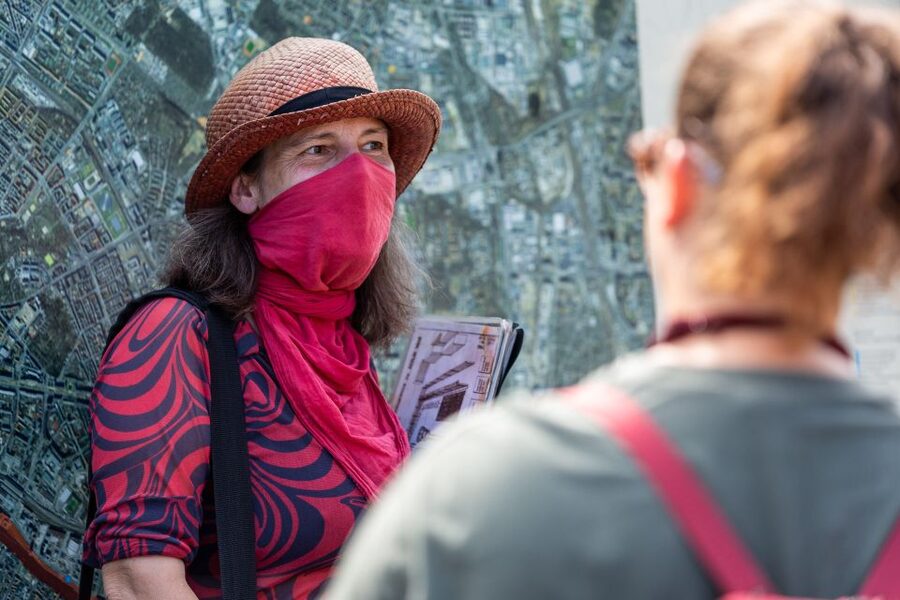
Tour review · BERLIN COLD WAR & WALL TOURS
Berlin Wall: Small Group Guided Tour
The Wall leaves marks you can still feel, and this tour follows them block by block. I like how it starts at Bornholmer Straße, where people from East and West celebrated the day the Wall fell, and I also love the stop for the cherry trees that grew along the former death strip. You’ll get a guided, narrative walk that stays grounded in place, not just dates.
You should know this is an all-weather outdoor walk, so you’ll want decent shoes and layers. If you prefer short, indoor sightseeing breaks, the 2.5-hour pace may feel like a lot on a cold or rainy day.
Key things that make this Berlin Wall tour worth your time
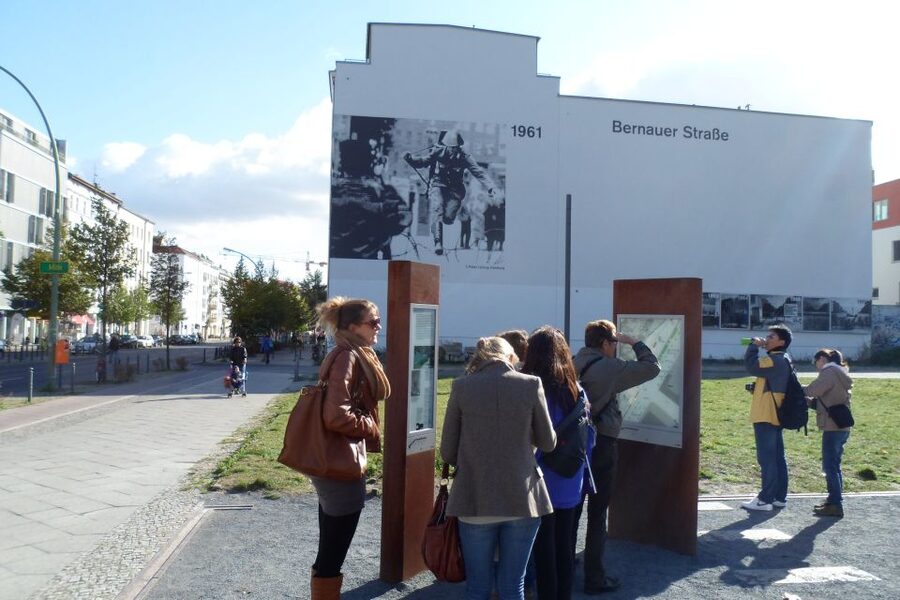
- Bornholmer Straße border crossing: the emotional turning point where East and West met when the Wall fell
- Death-strip cherry trees: a strange, memorable detail that makes the corridor feel real
- Ulbrichtkurve walk: you get the chance to understand why this stretch became so famous
- Schwedter Steg Bridge near Mauerpark: a quick change of scenery, with history in view
- Gleim Tunnel stop: a site tied to a major annual party, not just a museum moment
- Nordbahnhof ghost station ending: your walk finishes at a chilling reminder of separation
Other ways to read the Wall and divided Berlin in the street
- Berlin: Third Reich and Cold War 2 Hour Walking Tour★ 4.9 · 6,830 reviews
- Berlin’s Best: 2 Hour Walking Tour Third Reich and the Cold War★ 5.0 · 5,486 reviews
- Skip-the-Line: Berlin Wall Museum at Checkpoint Charlie★ 4.1 · 2,041 reviews
- Cold War, Berlin Wall, Spies and the East Side Gallery★ 5.0 · 1,024 reviews
Where the tour starts, and why Bornholmer Straße matters
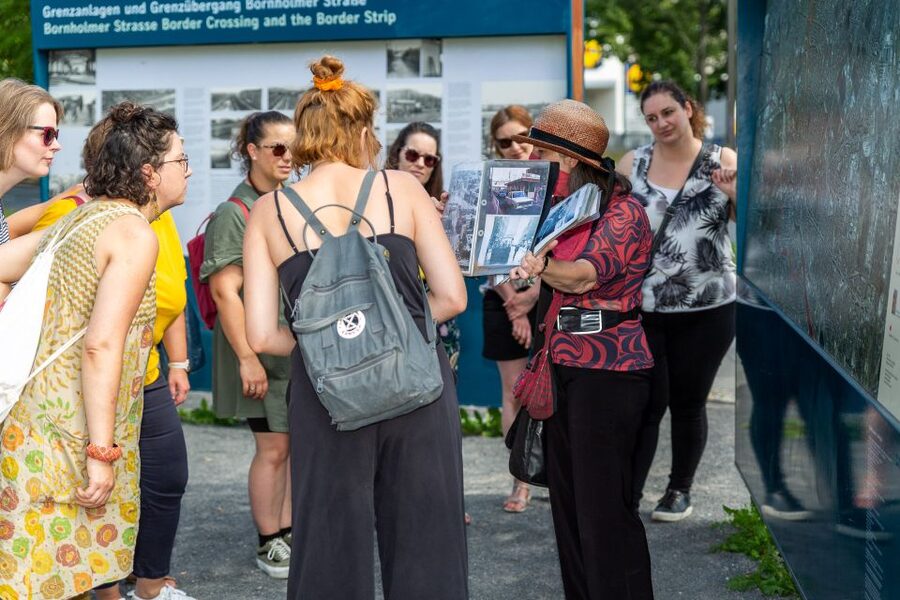
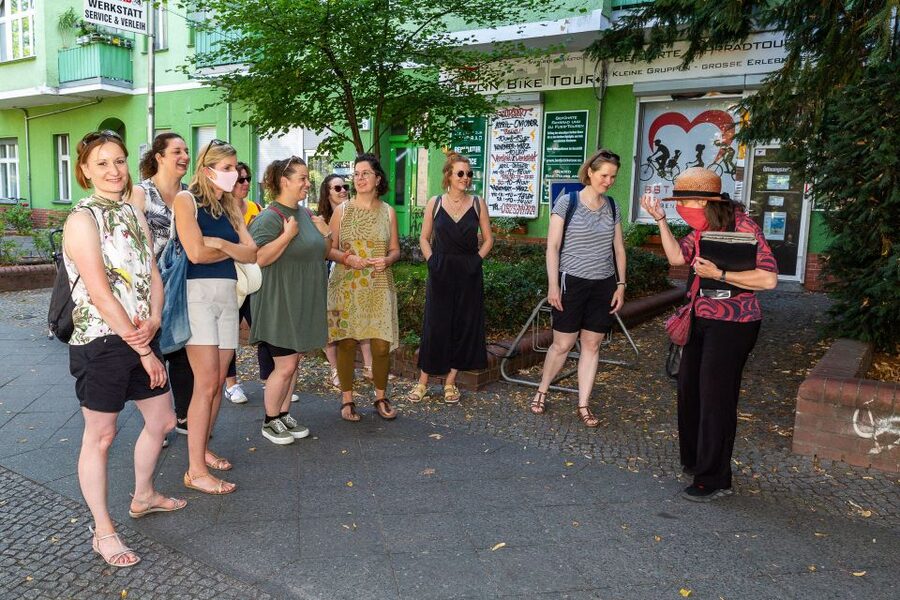
You meet your guide at the Berlin Bike Tours office, a practical hub for starting the day. From there, the location is easy to reach on public transport, including a short walk from tram-stop Björnsonstraße and S-Bahn Bornholmer Straße. If you like arriving early and getting your bearings, you’ll be able to do that without much stress.
The route begins at Bornholmer Straße, a street that sits right on the boundary between what was and what became. This is where the story turns from “wall as a physical barrier” into “wall as a human event,” because it was a key place where people from East and West met and rejoiced together when the Wall fell. That makes the whole tour feel more than sightseeing. You’re walking toward the same line of tension that once shaped daily life.
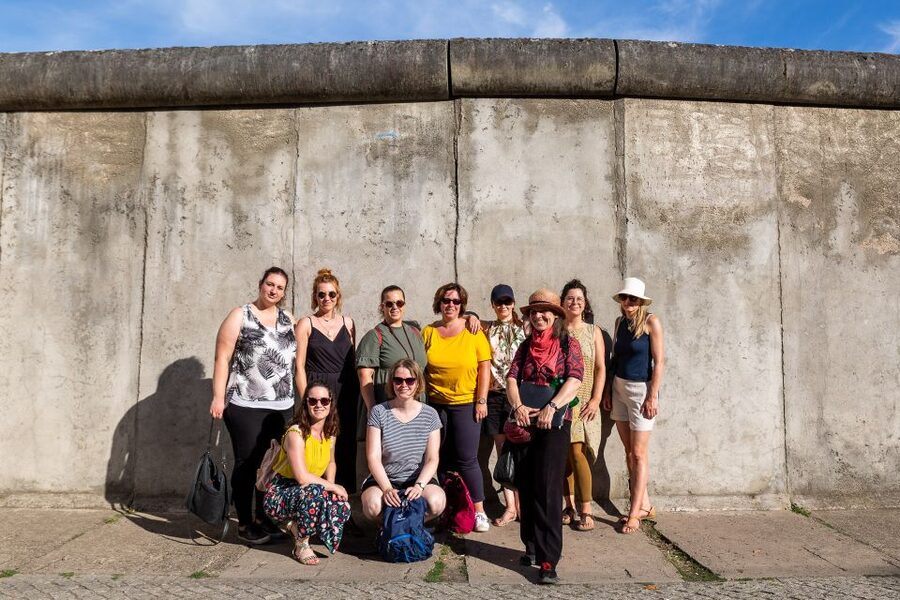
One nice feature of the tour size is the maximum 12 people rule. Smaller groups make it easier to ask questions without waiting for a lull, and you can hear the guide more clearly as you move.
Tracing the Wall: from visible remains to clues only experts spot
After the start, you move along the former border area and begin to notice something important: not everything looks like a dramatic ruin. Parts of the Wall left behind traces that can be subtle, and some details are only obvious if you know what to look for. That is where a guided walk earns its keep. Without a guide, you might walk past the very evidence the story depends on.
The tour also focuses on the idea of documentation, meaning you learn how traces get recorded and interpreted. That matters because Berlin Wall history is not only about what survived. It is also about how we decide what to preserve, what to mark, and what to explain to the next generation.
If you want a practical way to engage while you walk, watch how the guide points out line changes in the ground and what the route means in terms of surveillance and control. You’ll start to see the city as a map of decisions made by governments, patrols, and frightened families.
The death strip and the cherry trees you will not forget
The former death strip is one of the most disturbing concepts connected to the Wall, because it was designed to create a zone where escape was extremely hard. The tour brings this to life through the details you would otherwise miss, especially the cherry trees that grew along the Wall’s length.
I love this moment because it’s genuinely unsettling in a different way. Trees sound peaceful, but here they sit in the middle of separation and risk. It helps you understand how normal city features can exist beside brutal systems, which is a key lesson for Berlin.
If you’re the type who likes to photograph while you learn, this is a great stretch to do both. You can capture the landscape and still remember the meaning the guide connects to it, instead of just collecting pretty street views.
Ulbrichtkurve: why a bend in the line becomes a big deal
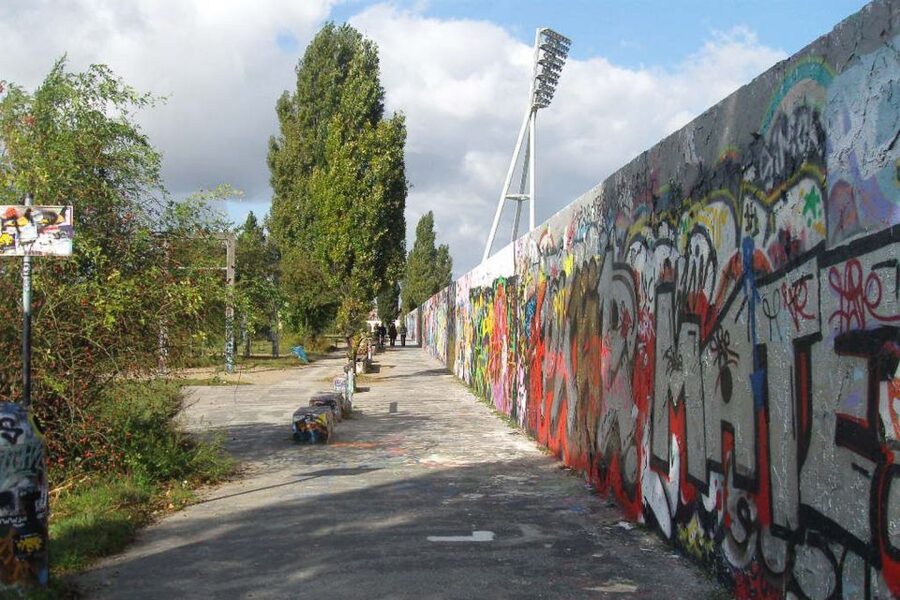
Next comes a highlight many Berlin Wall walks only mention in passing: the Ulbrichtkurve. This is a famously known bend in the route of the border, and walking it helps you understand why geometry mattered. In many places, a straight line would be easy to defend and patrol. A curve changes sightlines, movement patterns, and how people experience the barrier in real time.
On this stop, you get the practical benefit of a guide who can explain what the curve meant for people on both sides. You don’t need to be a wall-history expert to get it. You just need someone to point out the logic behind the layout, and then you can look for it with your own eyes.
The best part is that you’re not stuck in one spot. You keep walking, so the story stays tied to motion, not just a standing lecture.
Other ways to read the Wall and divided Berlin in the street
- Berlin: Guided Bike Tour of the Berlin Wall and Third Reich
★ 4.7 · 499 reviews - Berlin: Cold War Walking Tour on Berlin Wall Route
★ 4.8 · 437 reviews - Berlin: Cold War Era History Guided Bike Tour
★ 4.8 · 413 reviews - East Berlin and the Wall: Walking Tour
★ 4.9 · 407 reviews - DDR Museum Berlin Admission Ticket
★ 4.0 · 352 reviews
Memorials and the walk toward today’s Mauerpark
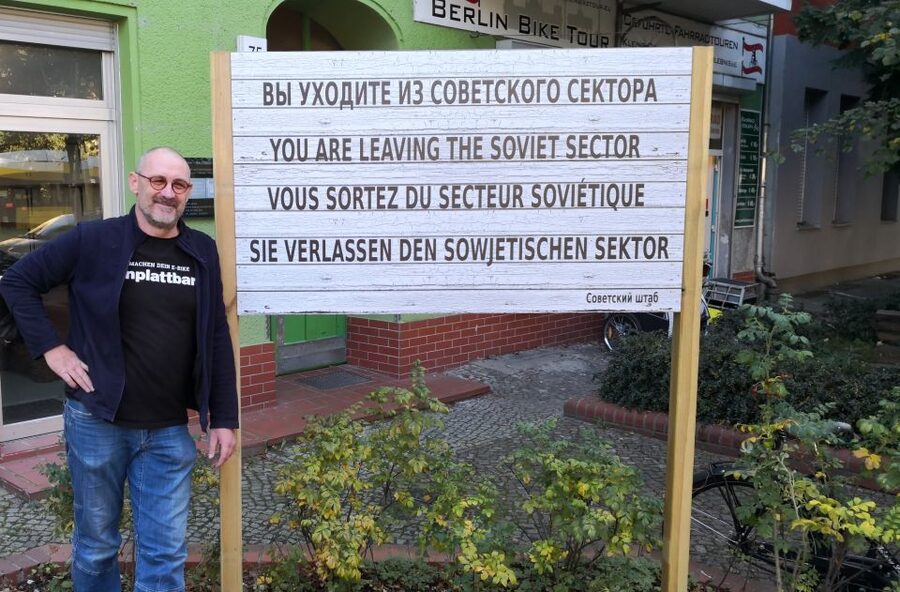
As you move through wall memorials, the tour shifts from “how the Wall worked” to “how Berlin remembers.” Memorials are not all the same. Some feel like careful markers, and others feel like a pause that forces you to pay attention longer than you planned.
This matters because Berlin has chosen to keep certain scars visible. The tour helps you interpret what you’re seeing without turning it into trivia.
Then you reach the Schwedter Steg Bridge near Mauerpark. This area is now one of Berlin’s more active social hubs, and that contrast adds weight. You get a sense of how space changes when a barrier disappears, but you also understand that memory stays anchored to the ground you’re standing on.
If you want a small break, this is a good phase to take advantage of the coffee stop included along the way. It’s not a full meal, but it gives you a chance to reset before the later stops.
The Gleim Tunnel stop, and why parties can live beside history
The tour includes a visit to the Gleim Tunnel, and one fact that makes it stand out is that a huge party takes place there every year. That detail does more than add a fun angle. It shows how Berlin reuses spaces, sometimes in ways that feel surprising, but also very human.
You’ll likely come away thinking about the tunnel as more than an isolated historical site. It’s part of a city that keeps turning, even when the past is heavy. Seeing that firsthand while you’re still on the wall’s route is a strong way to balance grief with life.
If you’re someone who worries that Wall tours can feel like only sadness, this stop helps. It adds a “Berlin after Berlin” feeling without erasing what came before.
Nordbahnhof ghost station: the last chills of the route
The walk ultimately ends back at the meeting point, but the route finishes with your final move toward Nordbahnhof, described as a former ghost station. This is one of those places that makes the Wall feel larger than a wall. It shows how separation shaped routines, stations, and movement throughout the city.
Even if you are only catching a portion of the station area, you will understand the emotional point. People expect trains to connect. A ghost station is what happens when the city’s connections get blocked.
This ending works well for most visitors because it leaves you with a final image that’s easy to recall later. You can later connect your other stops, from the border crossing to the memorials, by thinking of the routes that were cut off.
How long it takes, and what the pace feels like
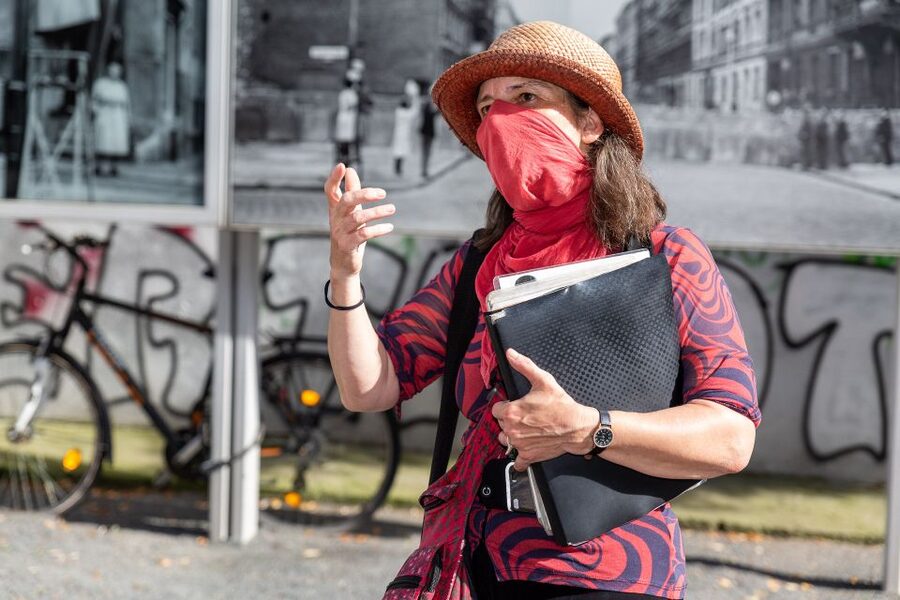
The scheduled duration is listed as 2.5 hours, so think of this as a compact history walk rather than a day-long tour. In practice, some departures can run longer depending on questions and walking pace. Either way, you should plan for continuous outdoor movement.
Because the group is small and the route includes multiple specific stops, you’ll spend more time looking and listening than you would on a casual self-guided loop. If you like focused, guided storytelling at street level, this format is a good fit.
Guides who bring real perspective, not just facts
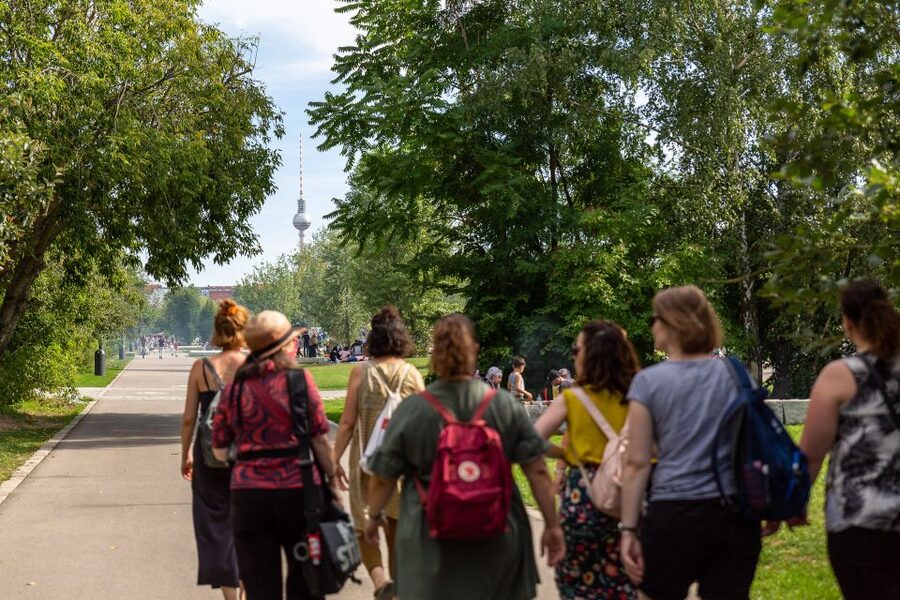
A big reason this tour earns high marks is the storytelling style of the guides. Some guides share personal context, like KatriNe, who was born and raised in East Berlin before the Wall fell. Others, such as Marcus, Markos, or Steffen, bring a mix of clear explanations and humor, plus space for questions in small groups.
That variety is useful to you because Berlin Wall history is emotional, and the best guides help you hold two things at once: the facts and the human impact. If you can ask questions, you’ll get more value from the experience, especially during the stretches where traces are hard to spot.
Also, the tour is led by a German live guide. If you speak some German, you’ll likely get the most out of the conversation. If your German is limited, you might still follow the main narrative through the visible sites, but your experience will depend more heavily on listening.
Price and value: what you get for about $24
At $24 per person, this is one of the more affordable ways to focus on the Wall with a small group. The reason I think it offers good value is simple: you’re paying for an expert-led route through specific sites like Bornholmer Straße, Ulbrichtkurve, Schwedter Steg, the Gleim Tunnel, and Nordbahnhof ghost station, plus guidance on how to read traces you would otherwise miss.
Also, rain protection is included. On a rainy day, the provided rain poncho helps you stay comfortable enough to keep walking.
What’s not included is food and drink. That’s normal for a 2.5-hour walk, but it means you should plan your timing. You’ll get coffee mentioned along the route, but you should not count on a full snack or meal.
Practical advice so you enjoy the walk more
Here’s how to make your experience smoother.
- Wear comfortable shoes for repeated walking. This is a history route, not a tram tour.
- Dress for weather. The tour runs in all weathers, and you’ll get a poncho if it rains.
- Bring your curiosity. This is the kind of tour where the smallest detail can click the biggest idea.
- If German is not your strength, consider downloading a translation app before you go and use it to catch key phrases.
Should you book this Berlin Wall: my quick decision guide
Book this tour if you want the Berlin Wall story tied to real places, and you like guided interpretation instead of just reading plaques. The small group size makes the experience more interactive, and the route includes memorable, specific stops like Bornholmer Straße, the cherry trees along the death strip, Ulbrichtkurve, Schwedter Steg near Mauerpark, the Gleim Tunnel, and a finish at Nordbahnhof ghost station.
Skip it or consider an alternative if you dislike outdoor walking, or if a German-only guide would make you feel shut out. In that case, you might enjoy a more language-friendly option.
If you’re aiming for one Wall-focused experience in Berlin that balances emotion with clear street-level learning, this is a strong choice for your time.
More Wall & Cold War Berlin


More Wall & Cold War Berlin
More Tour Reviews in Berlin




Recently added around Berlin


Berlin Cold War & Wall Tours, compared.
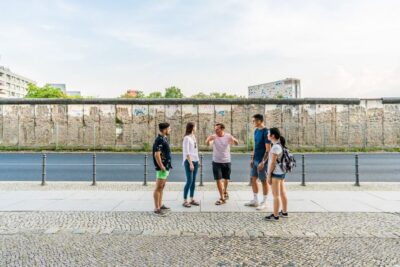 ★ 4.9Third Reich and Cold War 2 Hour Walking TourFrom $236,830 reviews
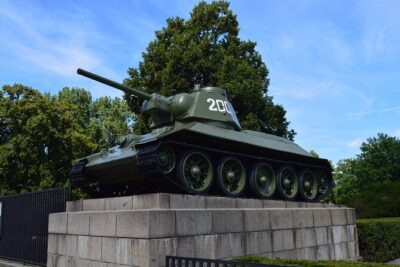 ★ 5.0Berlin’s Best: 2 Hour Walking Tour Third Reich and the Cold WarFrom $245,486 reviews
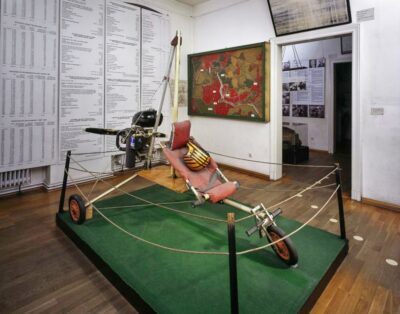 ★ 4.1Skip-the-Line: Berlin Wall Museum at Checkpoint CharlieFrom $212,041 reviews
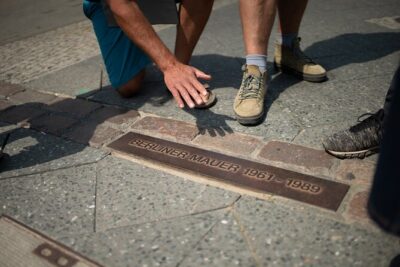 ★ 5.0Cold War, Berlin Wall, Spies and the East Side GalleryFrom $181,024 reviews
 ★ 4.7Guided Bike Tour of the Berlin Wall and Third ReichFrom $40499 reviews
 ★ 4.8Cold War Walking Tour on Berlin Wall RouteFrom $26437 reviews
 ★ 4.8Cold War Era History Guided Bike TourFrom $35413 reviews
 ★ 4.9East Berlin and the Wall: Walking TourFrom $351407 reviews
Browse the lists this tour appears in