
Tour review · BERLIN COLD WAR & WALL TOURS
Cold War and Berlin Wall Tour in Italian
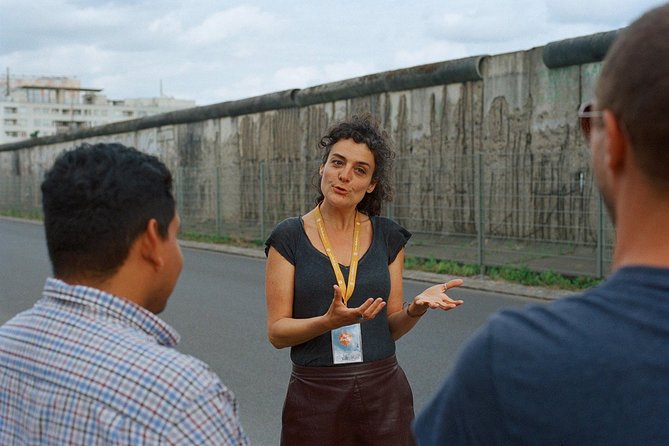
Berlin’s Cold War feels close on foot. This Italian guided walk strings together the Berlin Wall memorial area, Alexanderplatz, and the East Side Gallery with clear commentary, so you get context without doing guesswork. I especially like the tight route that hits multiple major Cold War landmarks in one morning, and the way the guide turns stops into a story you can follow. The main thing to consider is that this is a walk tour with a set time plan, so you will not have long, free wandering time at each site.
You meet at Potsdamer Platz, then head through spots tied to Berlin’s divided past, including the talk around ghost stations at Berlin-Nordbahnhof. One review mentions the guide Antonella bringing the emotions of 1989 to life, which matches the overall tone of the tour: factual, human, and grounded. If you want lots of museum time or independent exploration, you might prefer a slower, pick-and-choose approach instead.
Key things to know before you go
- Italian live guide commentary keeps the route understandable and paced for 3.5 hours
- Ghost-station talk at Berlin-Nordbahnhof adds an extra layer to the Cold War story
- Memorial of the Berlin Wall stop lasts about 50 minutes, with focus on victims and escape systems
- You see GDR architecture and planning at Alexanderplatz and Karl-Marx-Allee
- East Side Gallery is the Wall’s longest mural stretch, with freedom-themed artwork
- Small group limit of 25 makes it easier to hear and keep up
Other ways to read the Wall and divided Berlin in the street
- Berlin: Third Reich and Cold War 2 Hour Walking Tour★ 4.9 · 6,830 reviews
- Berlin’s Best: 2 Hour Walking Tour Third Reich and the Cold War★ 5.0 · 5,486 reviews
- Skip-the-Line: Berlin Wall Museum at Checkpoint Charlie★ 4.1 · 2,041 reviews
- Cold War, Berlin Wall, Spies and the East Side Gallery★ 5.0 · 1,024 reviews
Why this Italian Berlin Wall tour works for first-timers
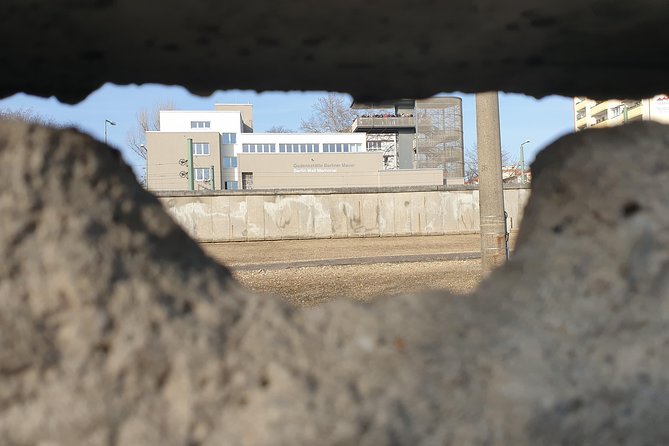
Berlin’s Cold War story can feel like a pile of names and dates at first. This tour turns that mess into an ordered walk, with a guide in Italian who explains what you are looking at as you go. Instead of spending hours bouncing between stops on your own, you follow a route that already makes logical sense.
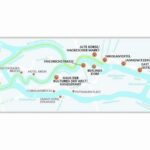
I also like that the tour is designed around major, recognizable landmarks. You start in the Potsdamer Platz area and end at the East Side Gallery, with Alexanderplatz and Karl-Marx-Allee in between. That gives you a spine for your morning, and you leave with a clearer mental map of where East and West Berlin met.
One more plus: the commentary is not only about politics. The Memorial of the Berlin Wall section focuses on tragic stories and the systems used to escape. That makes the “what happened” feel personal, not just historical.
Route basics: Potsdamer Platz start, mobile ticket, and 3.5 hours of walking
You start at Potsdamer Platz 10, 10785 Berlin, near the S/U-Bahn Potsdamer Platz station. The meeting point is easy to spot if you look for the blue bicycle by Vive Berlin Tours and their logo flag. The tour runs at 10:00 am and lasts about 3 hours 30 minutes.
You get a mobile ticket, and the tour does not include hotel pickup or drop-off. It is also listed as near public transportation, and your guide will advise which public transport to take at the end. In other words, you are meant to arrive on your own, then the walking route does the work.
The group size matters here. With a maximum of 25 travelers, you usually get enough space and attention to follow along without constantly asking, where are we going next? Still, remember this is a set route. If you stop to read every sign for a long time, you might feel rushed at the later parts.
Plan your morning like a walk first, photos second. Comfortable shoes are not optional, especially if Berlin weather is on the move.
Berlin-Nordbahnhof ghost stations: learning the Wall’s shadow from below
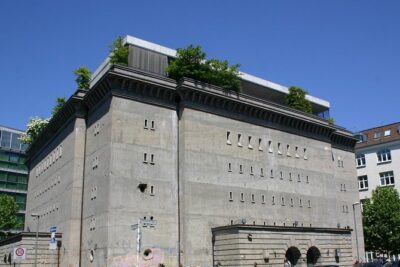
One early stop is Berlin-Nordbahnhof, where your guide explains the history of ghost stations. Even if you only know the phrase from documentaries, this kind of stop helps you connect the Wall story to the real infrastructure of everyday movement.
What you can expect is a guided explanation at the station, not a long, ticketed museum visit. Since the stop is listed for about 10 minutes, think of it as a focused moment that sets up what comes next. The “ghost stations” idea is powerful because it shows how division did not only happen on borders. It affected transit, routes, and the simple act of getting somewhere.
The drawback is time. A 10-minute stop is perfect for a clear idea, but it is not enough if you want to read everything on your own or linger for deep station details.
Memorial of the Berlin Wall: victims, building the system, and escape attempts
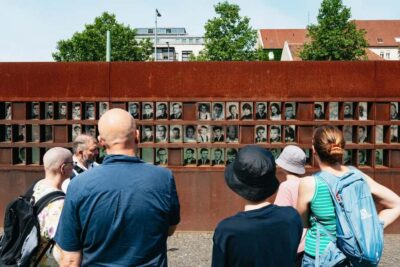
This is the heart of the tour. The Memorial of the Berlin Wall stop runs for about 50 minutes, which is generous compared to many guided walks. This is where the guide talks about how it was possible to build the Wall, and it also covers systems used to escape, plus tragic stories of victims.
I like this structure because it avoids turning the memorial into a purely visual photo stop. You understand the Wall as both a physical barrier and a controlled system. And the discussion of escape methods gives you context for why the Wall was not only about stopping people, it was also about managing how people tried to leave.
If you are sensitive to difficult topics, plan for that. The emphasis on victims means the tone can be heavy. But that is also the point: you learn why this memorial matters beyond architecture.
For your part, bring a respectful mindset and take your time for the main viewpoints the guide points out. This is the section where listening is the real souvenir.
Other ways to read the Wall and divided Berlin in the street
- Berlin: Guided Bike Tour of the Berlin Wall and Third Reich
★ 4.7 · 499 reviews - Berlin: Cold War Walking Tour on Berlin Wall Route
★ 4.8 · 437 reviews - Berlin: Cold War Era History Guided Bike Tour
★ 4.8 · 413 reviews - East Berlin and the Wall: Walking Tour
★ 4.9 · 407 reviews - DDR Museum Berlin Admission Ticket
★ 4.0 · 352 reviews
Alexanderplatz: GDR architecture and the crowd energy behind 1989
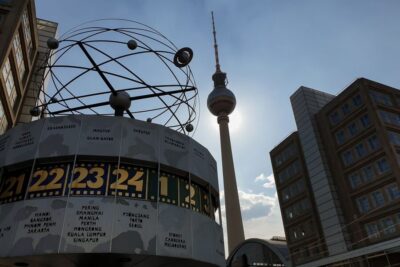
Next comes Alexanderplatz, with about 15 minutes here. Your guide connects the area with the German Democratic Republic (GDR) and highlights typical architecture. Even in that short time window, the explanation helps you see these buildings as part of an organized public space, not just a modern city center you happen to pass through.
This stop also links to the broader story of how the Wall fell. The guide covers popular demonstrations at Alexanderplatz that helped lead to 1989. That matters because you get the Wall story from more than the security and barriers angle. You also see it through public pressure and collective action.
A consideration: 15 minutes is just enough for a “learn the big idea” walkthrough. If you want to explore Alexanderplatz for shopping, cafes, or extra sightseeing, do it on your own after the tour. On the tour itself, you are on guide-mode time.
Berlin TV Tower outside: seeing the GDR height in today’s skyline
The tour includes a quick stop at the Berlin TV Tower, about 10 minutes, and it is described as outside only. The guide frames it as one of the most impressive structures associated with the GDR, and it is still the tallest building in Berlin.
Even if you do not go inside, the outside view can be useful. It gives you a vertical reference point for understanding how Soviet-era planning shaped visible landmarks. In a city where some buildings show you one era loudly, the TV Tower is a strong “you are in divided-city history” marker.
Because the time is short, treat this as a photo and orientation moment rather than a full attraction visit. If the idea of climbing or going up is important to you, you can add that separately after your tour ends.
Karl-Marx-Allee: Stalinist-era planning and the early GDR mindset
Then you move to Karl-Marx-Allee, stopping for about 20 minutes. This boulevard is surrounded by buildings linked to Stalinist era style, and your guide explains how it connects to the beginnings of the GDR.
I like this stop because it puts architecture into political context. You start noticing patterns: grand scale, planned streetscapes, and an almost scripted feel to how space is organized. Your guide helps connect those visuals to what the GDR wanted people to see and feel.
The same time limitation applies here. You can learn a lot in 20 minutes, but you cannot see every detail up close. So if you have a special interest in photography or facades, pick a couple of viewpoints and focus on those.
East Side Gallery: the Wall’s longest mural section and freedom symbolism
The finale is the East Side Gallery, about 20 minutes. This is described as the longest part of the Berlin Wall and the most famous thanks to its murals, with a symbol of freedom theme.
This is the stop that often feels most visually immediate. Earlier parts of the tour set up why the Wall existed, how people tried to leave, and how demonstrations contributed to change. Here, the story turns outward, into public art. That contrast helps the whole morning land in your brain.
If you care about street-art style or political murals, you will probably want more time. But the tour format makes sense: you get the key context from a guide, then you can keep exploring after the group ends.
Price and value: what 27.87 gets you, and what it does not
At $27.87 per person, this tour is priced like a good “Berlin morning shortcut.” You are paying for a live guide in Italian, plus a route that covers multiple major Cold War-related sights in one outing. The itinerary notes admission is free at each listed stop, so your cost is mostly the guiding and time structure.
What you do not get matters too. Transportation to and from attractions is not included, and food and drinks are not included. That is normal for a walking tour, but it means you should plan a snack and water. Berlin is walkable, yet you are still on a schedule.
Also, the tour end location is at the East Side Gallery area, so you will likely need transit back to your hotel. The good part is the guide will help you decide which public transport to take.
Value-wise, I think this is a solid pick if:
- you are short on time and want key Wall context fast
- you want an Italian explanation without building your own research itinerary
- you like walking routes where the guide keeps you oriented
Who should book this Cold War walk, and who might skip it
This tour fits best for people who want a guided storyline through Berlin’s divided past. If you are traveling with limited time, or you are not sure how to connect landmarks into a coherent narrative, the route helps a lot.
It also suits visitors comfortable with walking. The tour is listed as near public transportation, and most travelers can participate. Service animals are allowed, which is helpful to know.
I would consider skipping it if you need long, independent time at specific sites. The TV Tower is outside only, and most stops are short. Also, if you want a purely lighthearted city walk, the Wall memorial content may feel intense.
If you do decide to go, treat the tour as your “foundation morning.” Afterward, you can branch out based on what grabbed you most, like architecture, protests, or the murals.
Practical tips so the story sticks
A few things will make your experience smoother.
- Bring comfortable shoes. This is a guided walking route with multiple transitions.
- Dress for weather. Berlin can change fast, and you are outside for most of the time.
- Keep one focus question in your head: why was the Wall built, how did it function, and how did it finally fail. The guide’s route is built around that arc.
- At the Memorial of the Berlin Wall, slow down. This is where the factual and emotional weight is highest.
If you like taking photos, do that, but also listen. The tour’s value is not just what you can photograph, it is the way the guide connects each stop.
Should you book? My straightforward take
If you want a guided way to understand the Cold War and Berlin Wall sites without turning your trip into homework, this tour is a strong booking. The route is efficient, the group stays small, and the Italian guide commentary keeps the story clear from Potsdamer Platz to the East Side Gallery.
My one caution is pacing. With fixed stop times, you cannot expect to linger for every viewpoint. If you are the type who likes to wander freely for an hour at each stop, pick a different format.
If you are deciding, I’d lean yes, especially if you care about the Wall memorial context and you want GDR landmarks explained in a way that makes sense rather than just a checklist.
FAQ
How long is the Cold War and Berlin Wall tour in Italian?
The tour duration is approximately 3 hours 30 minutes.
What is the price per person?
The price is $27.87 per person.
What language is the guide?
The guide speaks Italian.
What are the main stops on the route?
Key stops include Potsdamer Platz (meeting point), Berlin-Nordbahnhof (ghost stations talk), Memorial of the Berlin Wall, Alexanderplatz, Berlin TV Tower (outside only), Karl-Marx-Allee, and the East Side Gallery.
Is transportation included in the tour price?
No. Transportation to and from attractions is not included.
Are food and drinks included?
No. Food and drinks are not included.
Where does the tour start and end?
It starts at Potsdamer Platz 10, 10785 Berlin, and ends at the East Side Gallery area, 10243 Berlin.
What is the cancellation policy?
You can cancel for a full refund if you do so up to 24 hours in advance of the experience start time.
More Wall & Cold War Berlin

More Wall & Cold War Berlin
More Tour Reviews in Berlin

Recently added around Berlin


Berlin Cold War & Wall Tours, compared.
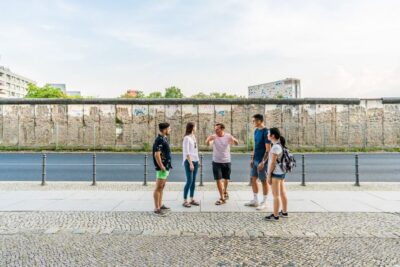 ★ 4.9Third Reich and Cold War 2 Hour Walking TourFrom $236,830 reviews
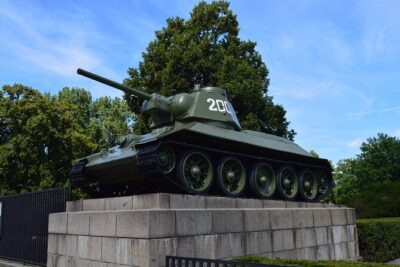 ★ 5.0Berlin’s Best: 2 Hour Walking Tour Third Reich and the Cold WarFrom $245,486 reviews
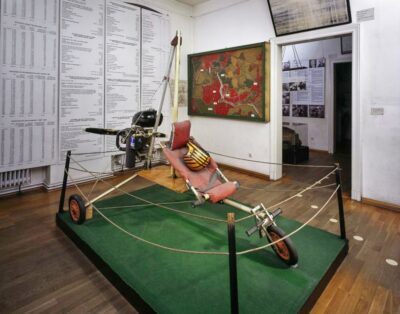 ★ 4.1Skip-the-Line: Berlin Wall Museum at Checkpoint CharlieFrom $212,041 reviews
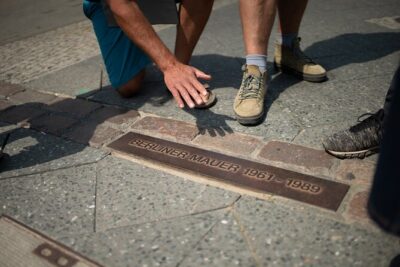 ★ 5.0Cold War, Berlin Wall, Spies and the East Side GalleryFrom $181,024 reviews
 ★ 4.7Guided Bike Tour of the Berlin Wall and Third ReichFrom $40499 reviews
 ★ 4.8Cold War Walking Tour on Berlin Wall RouteFrom $26437 reviews
 ★ 4.8Cold War Era History Guided Bike TourFrom $35413 reviews
 ★ 4.9East Berlin and the Wall: Walking TourFrom $351407 reviews
Browse the lists this tour appears in