
Tour review · BERLIN COLD WAR & WALL TOURS
Cold War, Berlin Wall, Spies and the East Side Gallery
Berlin’s Cold War feels close here. This Berlin Wall tour turns big events into street level stories, with stops at the Palace of Tears and the East Side Gallery. I love how the guide links Cold War spying and surveillance to what it felt like to try to live, work, and escape under pressure. I also love the range, from giant socialist architecture to graffiti turned art. One thing to plan for: you’ll need an AB public transport day pass for the moves between sites.
The best part is the storytelling. In the reviews, guides like Paul, Jamie g, Xavier, Klaus, and Nikolai get praised for bringing the era to life and answering questions in a way that sticks. Expect a lively pace for a 3-hour walk, with you hearing how ordinary people were caught in systems run by people with keys, files, and informants.
Key points to look for
- Death strip context near the Berlin Wall, explained in plain language
- Palace of Tears (Tränenpalast), a powerful stop for understanding crossings
- Karl-Marx-Allee as a lesson in propaganda through massive design
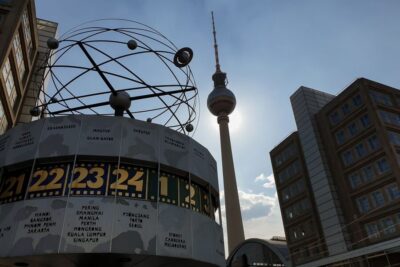
- Alexanderplatz for a sense of everyday GDR life and city rhythms
- East Side Gallery as the Wall reborn into long open-air street art
Cold War Berlin in 3 Hours: the mix that makes it click
This is a compact tour with a clear goal: help you understand divided Berlin without drowning you in names and dates. You move through the city by tram or train for short hops, then switch to walking so you can actually see what the guide is talking about.
You start around Friedrichstrasse and the Palace of Tears, then head toward the center at Alexanderplatz. After that you work your way along the grand Karl-Marx-Allee, before ending up in Friedrichshain for the Berlin Wall section and the graffiti stretch of the East Side Gallery. The payoff is that you get both the heavy, controlled side of the Cold War and the later public freedom of reunification, all in one route.
Because it’s only 3 hours, the guide has to be selective. That can feel perfect if you want the big picture fast, not a full day of museums. If you like to linger, take your own photos slowly, and stop for long debates at each corner, you might wish there was more time.
Other ways to read the Wall and divided Berlin in the street
- Berlin: Third Reich and Cold War 2 Hour Walking Tour★ 4.9 · 6,830 reviews
- Berlin’s Best: 2 Hour Walking Tour Third Reich and the Cold War★ 5.0 · 5,486 reviews
- Skip-the-Line: Berlin Wall Museum at Checkpoint Charlie★ 4.1 · 2,041 reviews
- Cold War, Berlin Wall, Spies and the East Side Gallery★ 5.0 · 1,024 reviews
Meeting at Friedrichstrasse and getting oriented fast
Your tour starts outside Friedrichstrasse train station, on the square beside the Tränenpalast (Palace of Tears). Look for a guide with a yellow name badge and a yellow umbrella. This is one of those details that matters more than you think. When you arrive in Berlin, stations can feel like a maze, and you’ll want to find the right person quickly so you don’t miss the start.
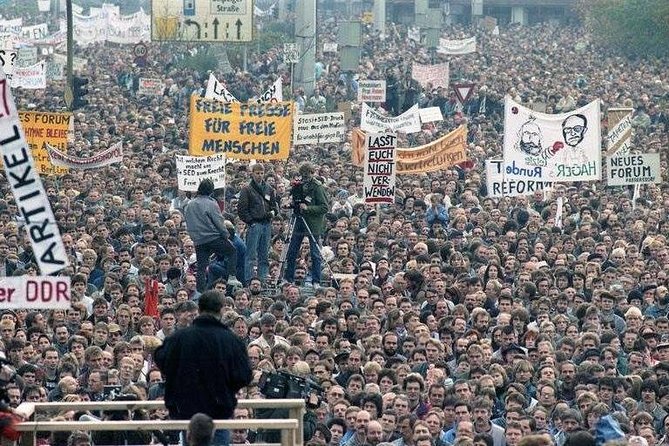
From the jump, the guide sets the tone: this isn’t just about a wall you can photograph. It’s about fear, control, and the methods people used to survive. You’ll see how Cold War politics became real street geography, with certain zones treated like warning labels.
You should also plan for a walk that changes surfaces and weather quickly. Wear comfortable shoes and expect to spend real time on your feet, even though the tour is short.
Tränenpalast, then the feeling of crossings you cannot forget
The Tränenpalast, or Palace of Tears, is your first major stop. You’ll have about 20 minutes here, guided, with time to look around and take it in. Even if you don’t know much about German division, the place helps you understand why crossings were so emotionally charged.
The guide uses this stop to frame the rest of the day. The Cold War was not just a line on a map. It was a system that could make people wait, separate families, and turn movement into a risk. Once you understand that, the Berlin Wall stops feel less like ruins and more like living evidence.
What to watch for: how the guide explains the human side without getting lost in technical details. In the reviews, people keep praising guides who make the day feel personal, not textbook. Guides like Paul and Xavier show up in comments as examples of that approach, and that style is exactly what helps this site land.
Alexanderplatz: GDR life seen through the city center
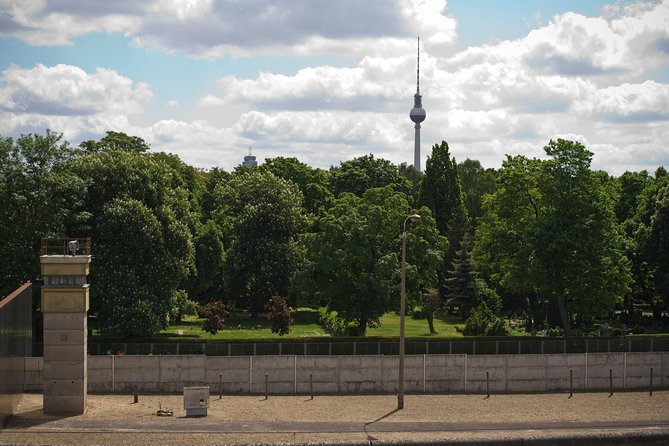
Next you head to Alexanderplatz for another guided stop of about 20 minutes. This is one of those locations that helps you zoom out. The Wall and crossing points can pull your attention into a narrow story. Alexanderplatz brings it back to the idea that life continued under the system, with architecture, commerce, and daily routines shaped by politics.
The tour gives you guided context for what you’re seeing, not just a free roaming walk. It’s a good match if you want to picture what everyday Berliners experienced, beyond dramatic escape headlines.
If you’re the type who likes “then and now” comparisons, you’ll probably enjoy this stop. You get to read the city’s layers: the GDR imprint in the buildings, and later changes that show how reunification reshaped the place.
Karl-Marx-Allee: propaganda as architecture, not slogans
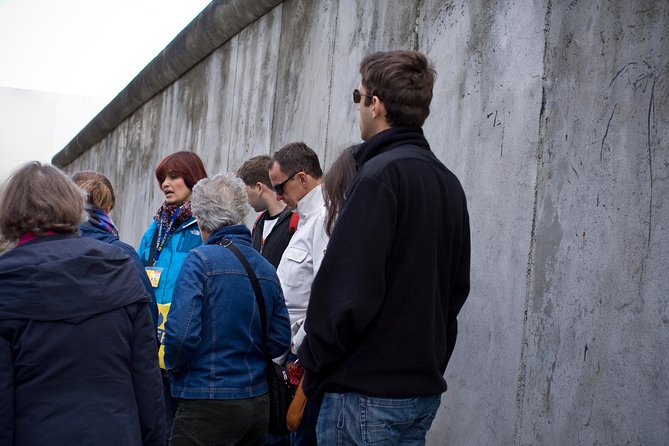
One of the most impressive parts of this route is Karl-Marx-Allee. You’ll spend about 20 minutes there with the guide. This boulevard is massive and commanding, and it’s the kind of place where you can learn how propaganda works when it’s built into stone and street layout.
The guide’s job here is to help you see past the facade. Socialist design wasn’t only about housing or traffic. It was meant to project power and certainty, to signal a future that felt predetermined. You’ll hear how the city’s monumental scale connected to political messaging, and how events shook that confidence.
A key moment is the reference to the 1953 workers’ uprising. When the guide ties that to what you’re seeing on the boulevard, it changes the walk from sightseeing into historical cause and effect. Suddenly, the architecture isn’t just impressive. It becomes evidence of what the regime wanted people to believe, and what happened when reality pushed back.
Practical tip: this stop is often more photo-friendly when you’re positioned well for a straight-on view. If it’s windy or rainy, stick close to the guide early so you can keep your framing consistent.
Other ways to read the Wall and divided Berlin in the street
- Berlin: Guided Bike Tour of the Berlin Wall and Third Reich
★ 4.7 · 499 reviews - Berlin: Cold War Walking Tour on Berlin Wall Route
★ 4.8 · 437 reviews - Berlin: Cold War Era History Guided Bike Tour
★ 4.8 · 413 reviews - East Berlin and the Wall: Walking Tour
★ 4.9 · 407 reviews - DDR Museum Berlin Admission Ticket
★ 4.0 · 352 reviews
Friedrichshain and the Berlin Wall line: the fear zone made visible
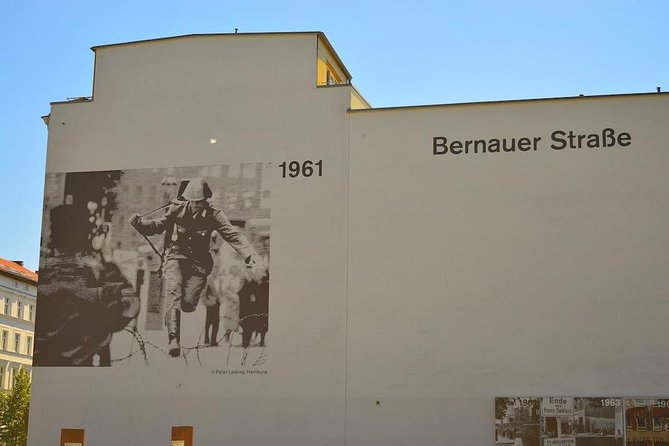
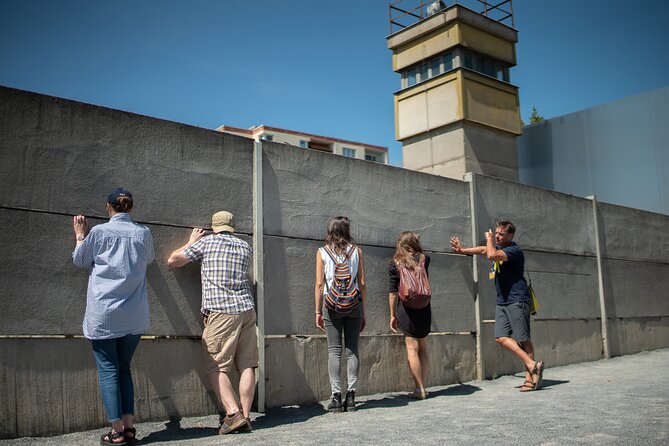
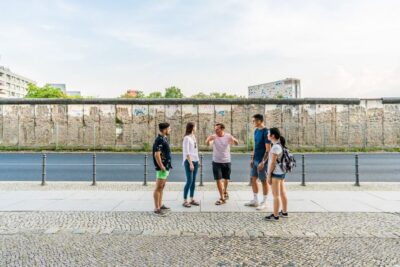
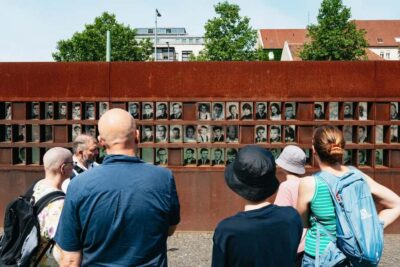
After Karl-Marx-Allee, you move on toward Friedrichshain for guided time, then you get the core Berlin Wall portion. The Wall stop is shorter, around 16 minutes, but it’s one of the most meaningful segments of the tour.
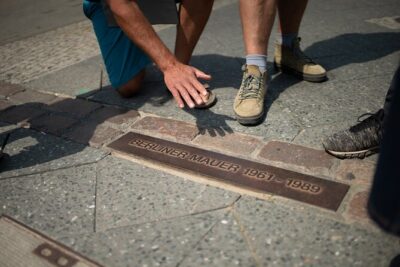
This is where the guide explains the dangerous geometry around the Wall, including the original death strip area. You’ll hear how surveillance and barriers shaped movement, and how people trying to escape faced a system designed to catch them. The guide also connects this to spies and informants, so the Wall isn’t isolated as a monument. It’s part of a broader network of control.
One thing I appreciate about this kind of walking tour is that it keeps the story grounded. You’re not staring at a single panel and hoping it explains everything. You’re moving along the same kinds of lines that once determined life or death decisions. That makes the explanations stick.
Because this topic is heavy, go in with the right expectations. This is not light entertainment. You’re learning how people risked everything to flee, and how East Germany’s secret police structure created constant pressure. It’s historical learning, but it’s also human stress made physical.
East Side Gallery: from barrier to street art you can read
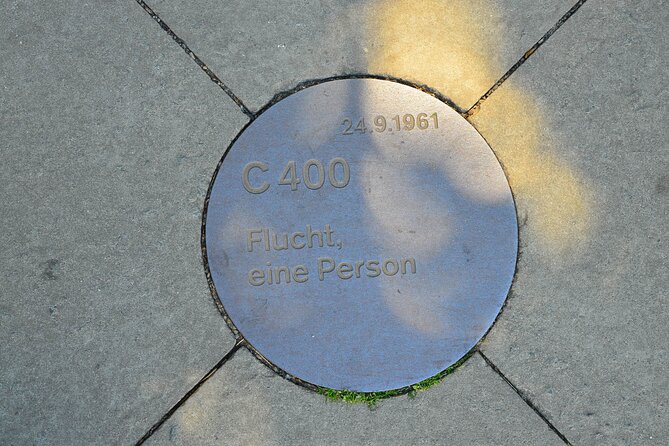
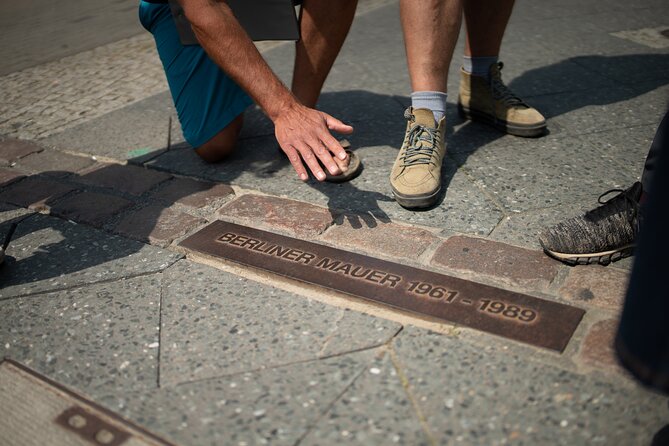
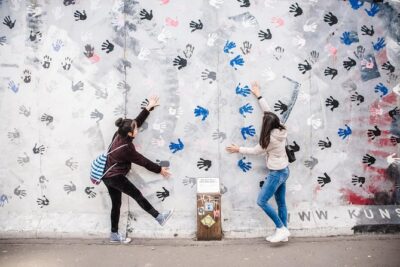
Finally, you end at the East Side Gallery, with about 20 minutes of guided time along the graffiti Wall stretch. If the Berlin Wall segment is about control and fear, the East Side Gallery is about the opposite: how a symbol of oppression became a public canvas.
This is where you’ll see the Wall’s transformation in a very visible way. The guide helps you interpret the art so it doesn’t feel like random murals. You’ll get context for what the imagery communicated in the era after the Wall fell.
You should expect good photo opportunities here, especially if you like street-level details. Try to take a few minutes to stop and look at individual sections rather than only filming the whole length. The guide’s explanations make those details easier to understand.
Also, remember you’re ending in a famous open-air spot, which can be busy. If you want quieter photos, keep an eye on the guide’s suggested viewing angles and move a little with the group rather than fighting the crowd.
Spies, informants, and escape stories: what you’ll remember later
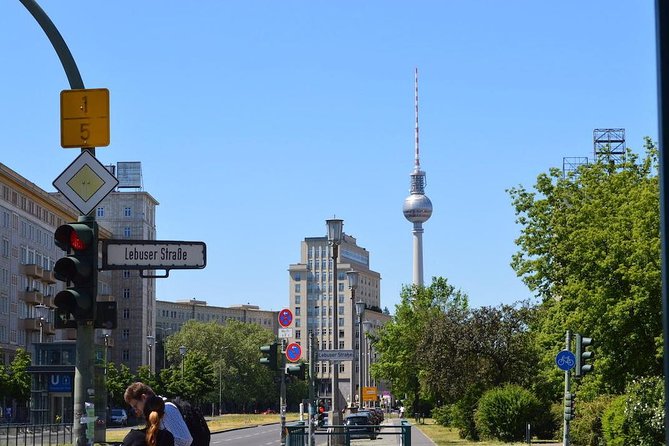
A tour like this works when the guide makes the Cold War feel practical. Not abstract. Not only about treaties. Practical about how control systems worked and why ordinary people made desperate choices.
In the reviews, the most repeated praise is for storytelling and clarity. People mention that guides like Jamie g and Klaus told the story brilliantly, didn’t skip details, and made everyday life under the DDR easier to picture. That matters, because the Cold War can feel like a lecture topic. When it’s told through escape attempts, informants, and surveillance, it turns into something you can actually understand.
The other memory hook is the blend of scales. You see the giant boulevard, then the crossing place, then the Wall’s dangerous zones, then the art that replaced it. That sequence helps you hold both sides of the story in your head at the same time: systems of control and the human pushback.
If you’re a history fan, you’ll probably enjoy the spy angle. If you’re not, you’ll still get something out of it because the guide ties it back to people, not just politics.
Price and logistics for this 3-hour Berlin Wall walk
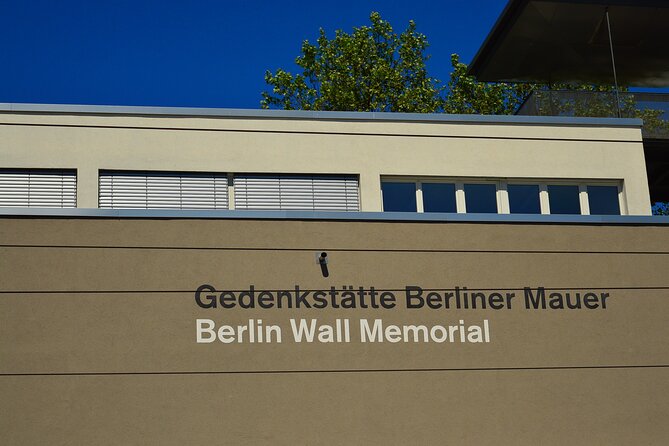
The price is $18 per person for a 3-hour guided experience. For Berlin, that’s strong value if you want an expert guide and don’t want to plan the route yourself. What you get is more than a walk to famous spots. You get guided context at each stop, with enough time to actually learn rather than sprint.
The trade-off is that the tour has moving parts. An AB public transport day pass is required to travel between sites. The good news is that staff can help you purchase this on the day. The not-so-good news is you’ll want to budget time for that, especially at the start.
Food and drink are not included, and alcohol and drugs are not allowed. That means bring water if you like to stay comfortable, and plan to grab a meal after. You’ll also want to wear weather-appropriate clothes. The tour proceeds regardless of the weather, so you can’t count on rain cancelling it into something easier.
Group size is flexible, with private or small groups available. That tends to improve the quality of Q and A, which is something many past guests highlighted in their comments.
Who should book this Berlin Wall, Cold War, and East Side Gallery tour?
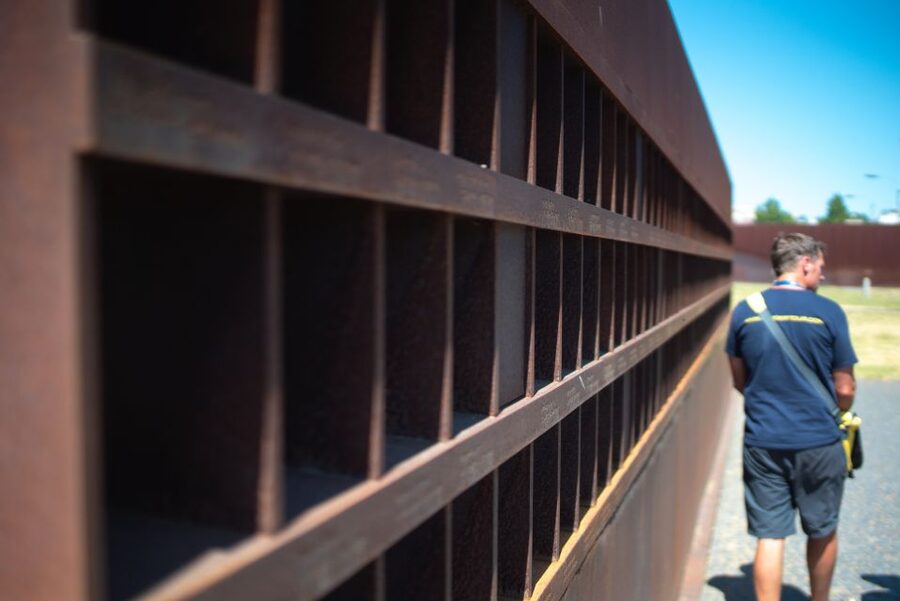
Book this if you want a focused Berlin Wall experience but don’t want to spend an entire day hopping between museums. You’ll get the Palace of Tears, Alexanderplatz, Karl-Marx-Allee, and both ends of the Wall story. It’s also a smart choice if you like photography with context, because the guide helps you understand what you’re pointing your camera at.
It’s especially good for first-timers to Berlin who want a fast, coherent explanation of division and reunification. You’ll leave with a cleaner mental map of how the city worked under the Cold War and how it changed.
Skip it if you hate walking, or if you prefer deep museum time where you can go at your own pace for longer. The 3-hour format is tight by design. You’ll learn a lot, but you won’t linger for hours in one place.
Should you book the Cold War, Berlin Wall, Spies, and East Side Gallery tour?
Yes, if your priority is understanding the Cold War in the places where it happened. The route hits exactly the combination that makes divided Berlin make sense: crossings at the Tränenpalast, daily life at Alexanderplatz, propaganda on Karl-Marx-Allee, the Wall’s fear zone, and finally the public freedom of the East Side Gallery.
The value is also real. For $18, you’re buying guided interpretation, not just access to landmarks. And based on repeated praise for guides like Paul, Jamie g, Xavier, Klaus, and Nikolai, you’re likely to get a guide who tells the story clearly and answers questions without rushing you.
If you’re willing to do short transport hops with an AB day pass and dress for weather, this is one of those Berlin tours that gives you more than photos. It gives you a framework you’ll use while you explore the city on your own afterward.
FAQ
How long is the tour?
The tour is 3 hours long.
Where do I meet the guide?
Meet your guide outside Friedrichstrasse train station, on the square beside the Traenenpalast (Palace of Tears). Look for a guide with a yellow name badge and a yellow umbrella.
What stops will we see during the tour?
You will visit the Tränenpalast (Palace of Tears), Alexanderplatz, Karl-Marx-Allee, Friedrichshain, the Berlin Wall, and the East Side Gallery.
Do I need public transportation tickets?
Yes. You need an AB public transport day pass to travel between sites during the tour. It can be purchased on the day with help from on-site staff.
Is hotel pickup included?
Hotel pickup and drop-off are not included, but pickup is optional if you select that option. If pickup is chosen, you wait in the hotel lobby 5 minutes before pickup time. After drop-off, you meet in front of the Tourist Information at the Brandenburg Gate at Pariser Platz 1.
Is the tour wheelchair accessible?
Yes, the tour is wheelchair accessible.
What should I bring?
Bring comfortable shoes, a camera, and weather-appropriate clothing.
Does the tour run in bad weather?
Yes. The tour proceeds regardless of the weather.
Is food or drink included?
No. Food and drink are not included.
More Wall & Cold War Berlin

More Wall & Cold War Berlin
More Tour Reviews in Berlin



Recently added around Berlin


Berlin Cold War & Wall Tours, compared.
 ★ 4.9Third Reich and Cold War 2 Hour Walking TourFrom $236,830 reviews
 ★ 5.0Berlin’s Best: 2 Hour Walking Tour Third Reich and the Cold WarFrom $245,486 reviews
 ★ 4.1Skip-the-Line: Berlin Wall Museum at Checkpoint CharlieFrom $212,041 reviews
 ★ 5.0Cold War, Berlin Wall, Spies and the East Side GalleryFrom $181,024 reviews
 ★ 4.7Guided Bike Tour of the Berlin Wall and Third ReichFrom $40499 reviews
 ★ 4.8Cold War Walking Tour on Berlin Wall RouteFrom $26437 reviews
 ★ 4.8Cold War Era History Guided Bike TourFrom $35413 reviews
 ★ 4.9East Berlin and the Wall: Walking TourFrom $351407 reviews
Browse the lists this tour appears in