
Tour review · BERLIN WORLD WAR II & THIRD REICH TOURS
Berlin: Guided Bike tour of the Berlin Wall and Third Reich
Pedal where Berlin divided itself. On this guided bike tour, you glide past Berlin Wall remains and key Third Reich era locations, with a leader keeping you safe through the city streets.
I also like the FREE BERLIN concept, which means each guide can shape the route. In the past, guides such as Paul, Juliette, Theo, Yonis, Constantine, and Simone have brought a strong mix of local perspective, crisp explanations, and interactive questions.
The tradeoff is time. Every stop is brief, so you get an overview, not a long, slow visit, and route flexibility can mean some named places may not be exact as listed.
Key things I’d circle before booking
- Helmet and city bike included, so you do not waste time figuring out rentals
- Small-group vibe (max 15), with guides able to handle pacing and regrouping
- Wall segments that are still visually powerful, not just distant photos
- History connections across regimes, from Nazi architecture to Cold War separation
- Family-friendly structure, with children welcome and infant seats possible on request
- English version includes Checkpoint Charlie, making it a must for many first-time visitors
Other ways to read the Wall and divided Berlin in the street
- Berlin: Third Reich and Cold War 2 Hour Walking Tour★ 4.9 · 6,830 reviews
- Berlin’s Best: 2 Hour Walking Tour Third Reich and the Cold War★ 5.0 · 5,486 reviews
- Skip-the-Line: Berlin Wall Museum at Checkpoint Charlie★ 4.1 · 2,041 reviews
- Cold War, Berlin Wall, Spies and the East Side Gallery★ 5.0 · 1,024 reviews
Why biking the Wall makes history stick
Berlin’s history can feel like a timeline on a museum wall. By bike, it becomes geography. You see how neighborhoods, rivers, parks, and government buildings shaped daily life, and you move between eras without the awkward shuffle of waiting for the next bus.
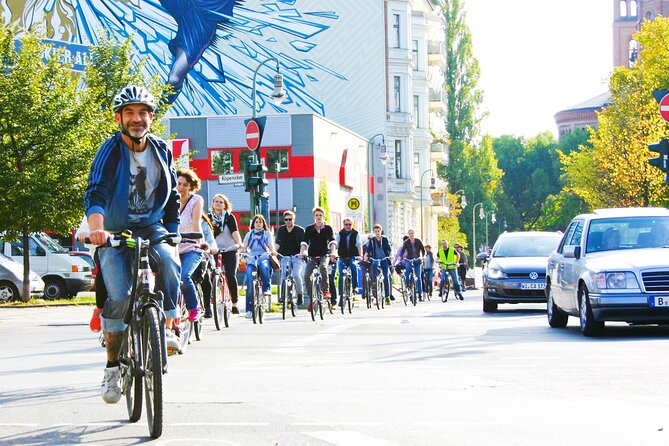
This tour is built around the idea that the Wall was not just a line. It was a way of turning a city into two different realities. You cycle with a professional guide who navigates and keeps the group together, which matters because Berlin traffic can be fast and the city’s bike lanes sometimes still feel like a skill test.
Two things I found especially valuable for most visitors:
1) You get guided context at the right moments, so memorials and ruins do not turn into random stops.
2) The route is designed to keep you moving, so you cover a lot in 3 hours without feeling like you are sprinting.
Price and what you actually get for your money
At $42.34 per person for about 3 hours, this is a strong value for Berlin. The big reason is that the essentials are folded in: a bike, a helmet, and a professional guide. You are also paying for more than motion. You are paying for a person who can connect what you see to what happened.
Add to that the practical rhythm of the day. Admission is listed as free for the stops on the tour, so you avoid the awkward guesswork of whether you need to budget extra ticket fees at each location. If you compare this to doing the same sites on your own with public transit and timed entry planning, biking with a route guide starts to look like the easier, often cheaper option.
What you should not expect: a full-day deep study. This is an overview tour. If you want to sit with one memorial for a long time, you will likely want to return later.
Meeting at Poststraße and what the ride feels like
You meet at Free Berlin Bike Tours & Rental at Poststraße 11, 10178 Berlin. It is near public transportation, so it is easy to connect from the rest of your Berlin plans.
You come equipped with a helmet and a city bike. One rider noted there is even a basket for carrying bags or water, which is exactly what you want in a city where you end up holding your stuff more than you expected.
On-road biking can sound intimidating, but the experience is designed for ordinary city riders. Still, take the setup seriously:
- Wear the helmet you are given.
- Keep your eyes on the guide and the group.
- Expect short waits at lights, since some groups have needed a moment to catch up.
If you have never biked in a big city, I would still recommend it, but start with the right mindset. Berlin is flat, and many parts of the route tend to use calmer paths, yet you can still hit busier stretches. A good guide makes that manageable.
Nikolaiviertel: starting with old-town realism
You kick off in Nikolaiviertel, which the tour frames as Berlin’s only true old town. That is not just a trivia line. It sets the tone: Berlin is layered, and the “old” you see today sits on top of destruction and rebuilding.
Even with the history of bombings in the background, this start makes sense. You begin in a place that feels like Berlin has always existed here, then the guide pivots from atmosphere to what the city endured. It is a smart way to bring you from street-level details into larger historical events.
Because the stop is short, treat it as orientation. Let it help you understand how to “read” the city when you get to the more intense sites.
More carefully guided routes through Berlin’s wartime history
- Third Reich Berlin: Hitler and WWII Walking Tour
★ 5.0 · 3,301 reviews - Berlin: Third Reich, Hitler, and WWII Walking Tour
★ 4.9 · 1,133 reviews - Berlin Third Reich Sites: Half-Day Walking Tour
★ 5.0 · 835 reviews - Berlin: Guided Bike Tour of the Berlin Wall and Third Reich
★ 4.7 · 499 reviews - Hitler’s Germany: Berlin During the Third Reich & WWII
★ 4.8 · 476 reviews
Synagogue courage at Centrum Judaicum
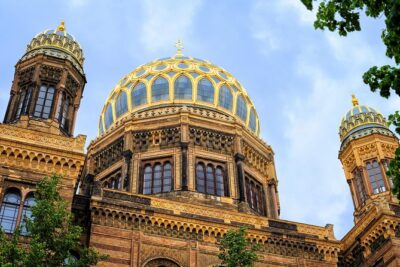
Next you head to the Stiftung Neue Synagoge Berlin, the Centrum Judaicum stop. The story centers on civil courage, including a police officer who saved the building during the night of broken glass.
This stop matters because it interrupts the usual one-note Berlin narrative of suffering. Yes, the Holocaust and Nazi persecution cast a long shadow, but this location also highlights how individuals could resist, even when systems were criminally violent.
The value here is not only the building itself. It is the human angle, which helps the later memorials land harder. You are not just learning about dates. You are learning how people behaved under pressure.
Deportation and Holocaust memory in a quieter setting
The tour also includes a memorial for victims of deportation and the Holocaust, described as designed in GDR times and contrasted with the better-known memorial near Brandenburg Gate.
I like this kind of contrast because it forces you to look beyond the headline sites. Berlin has famous memorials, but it also has quieter ones that carry a different flavor of remembrance. The guide’s framing helps you see why that matters: it is still part of the city’s attempt to tell the story responsibly, in more than one place and style.
Plan to take a moment here, even if your feet and the group keep you moving. A short pause is enough to shift the day from sightseeing to understanding.
Berlin Wall stops that are still real, not just symbolic
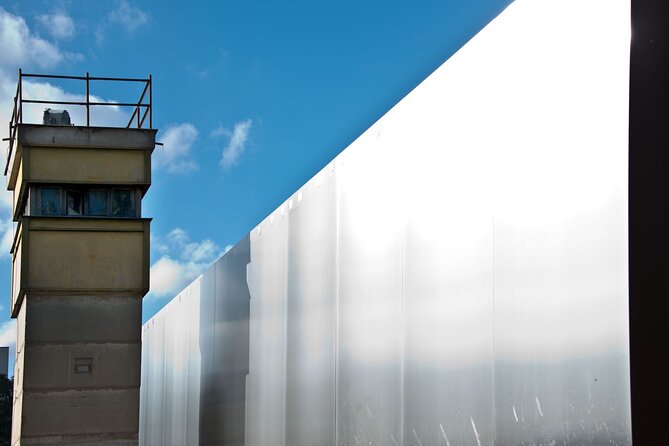
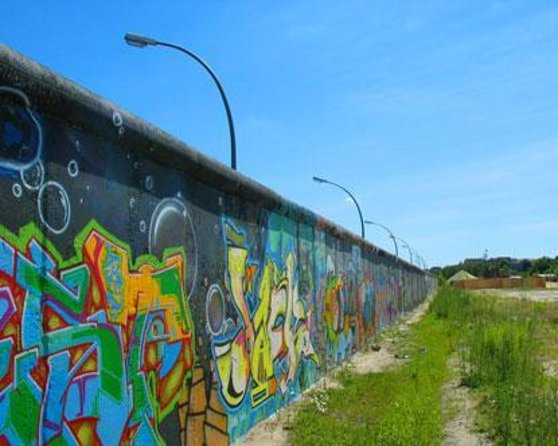
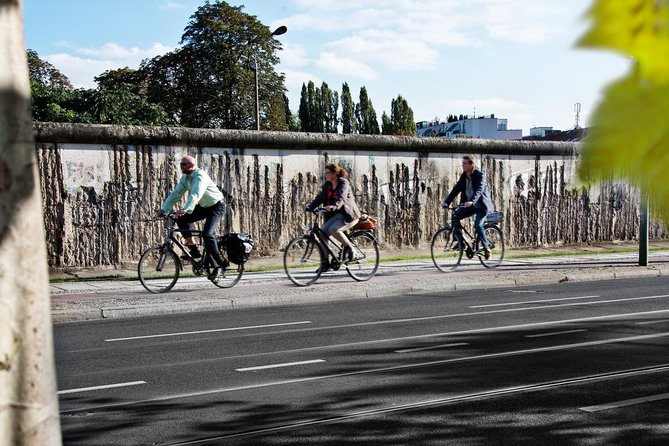
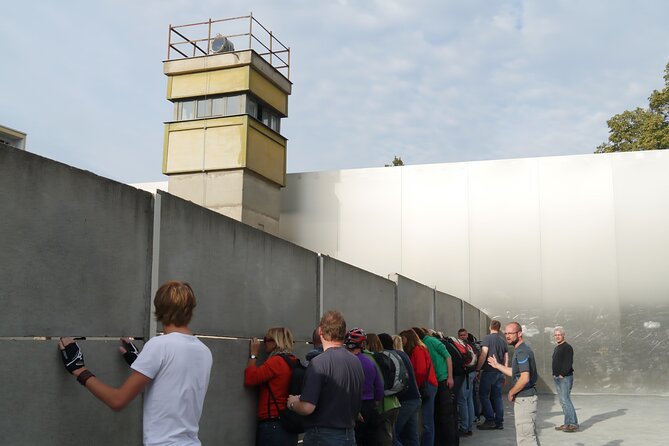
The heart of the tour is the Berlin Wall experience. The route includes the “still alive” parts of the wall, explained as the best section for understanding what the Wall meant and did to Berlin.
This is where biking really earns its keep. Walking gives you the feeling of the ground. Biking gives you the feeling of distance. And the distance is the point. The Wall created barriers in space, and you can sense that space when you are physically moving along it.
You also visit Mauerpark. Today it is known for its Sunday flea market, but the tour connects it to how Berlin transformed a city that had been “tortured” by the Wall for 28 years into a place for free expression. That connection is one of the most hopeful parts of the day, and it keeps the tour from becoming only grim.
If you want a takeaway, it is this: the Wall shaped behavior. The city’s recovery also shaped behavior. You see both in a few miles.
Humboldthain Flak Tower: Nazi air-war meets a panoramic view
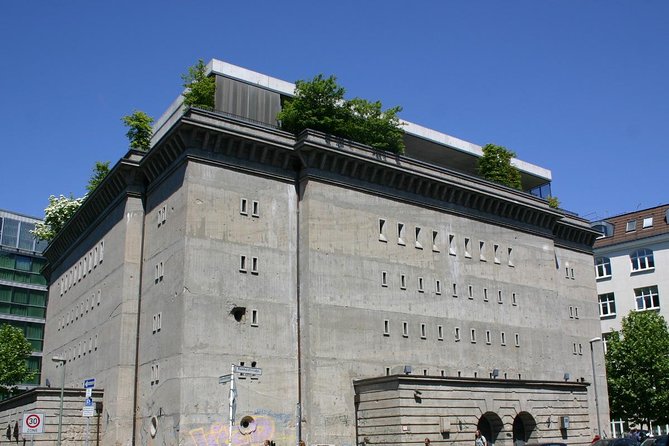
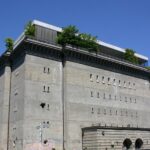
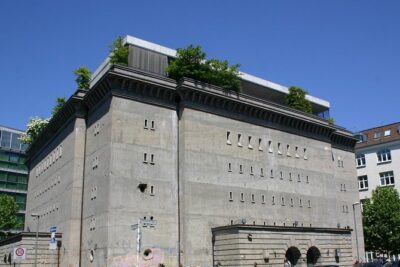
Then you reach Humboldthain Flak Tower, once a giant air-raid shelter and fortress. The stop includes a fantastic panoramic view and insights into Nazi-era architecture.
Views can be a trap on history tours. People point and take photos and forget the point. Here, the view works because the guide anchors it to how the Nazis thought about power, defense, and the built environment.
This stop is also a reminder that the Third Reich story is not only about ideology. It is about concrete planning, engineering, and buildings that outlast leaders.
Gunter Litfin and the first shot at the Wall
Another sharp moment is the Gunter Litfin Memorial, tied to the preserved original watchtower that remembers Günter Litfin, identified as the first person shot at the Wall.
This is the kind of stop that sticks because it is not abstract. It puts a name to the violence and connects it to how the Wall was enforced.
Short stop length helps here. You do not need a long speech to understand what this represents. You just need the story told clearly once, and then a quiet minute to let it sink in.
Invalidenfriedhof: graves cut by the Wall
At Invalidenfriedhof, the tour takes you to a burial place cut in the middle by the Wall. It also points out that it focuses on escape stories, since it sits close to former checkpoints and a canal that functioned as a natural border between East and West Berlin.
I like this stop because it shows how boundaries became part of everything, even where you would expect permanence and peace. This is also one of the more “Berlin-specific” experiences: the Wall is everywhere in concept, but here you literally see its impact on a historic site.
If you enjoy escape-history details, ask the guide questions at this stop. The story is made for that kind of curiosity.
Spreebogenpark and the Albert Speer Great Hall idea
Spreebogenpark offers an overview of the governing district of Germany, and the guide connects it to Hitler’s architect Albert Speer and his vision to build a Great Hall that could have seated 180,000 people.
Even if you know the general names, this kind of tour framing makes the ideas feel less like headlines and more like architecture plans that tried to dominate social life.
It is also a good pivot point. You move from the Wall’s physical separation into the Nazi ambition of mass power. The geography helps you connect the two, rather than treating them as separate chapters.
Reichstag from the outside: democracy versus dictatorship
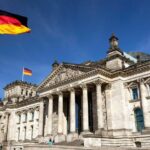
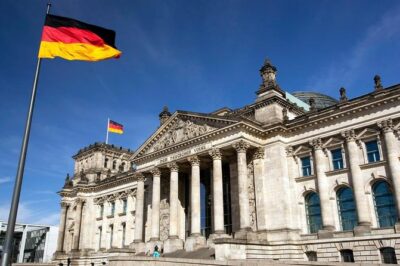
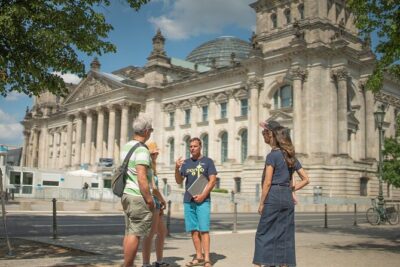
The Reichstag Building stop is all about political transformation. You discuss Hitler’s grab of power and Germany’s democratic history, but you do not go inside.
I think this is actually fine. The exterior works as a quick anchor, and the time savings let the guide keep the pace for the memorial-heavy parts ahead. Still, if you want an interior visit, you will want to schedule a separate stop later.
From a biking tour perspective, the advantage is that you keep your momentum and do not spend the day queuing.
Holocaust Memorial: why scale hits differently
The day includes the Holocaust Memorial, described as the Memorial to the Murdered Jews of Europe. It is presented as the biggest genocide memorial in the world, and the tour emphasizes its size and importance to history.
Scale matters here. When you are on foot, it can feel like rows of stone. On a bike, you tend to approach it as a distinct space within the city, which can make the contrast sharper.
One review highlight fits what I’d expect to feel: the memorial can become a discussion point. The guide prompts reflection and invites your interpretation, which helps you process what you are seeing instead of just absorbing facts.
Fuhrerbunker: a parking lot with the weight of a life-and-death plan
Fuhrerbunker is next. Today, all you can see is a parking lot, but the guide explains why.
That contrast, the banal present replacing a catastrophic past, is one of the hardest lessons of Berlin history. It tells you that the physical world keeps going while governments collapse and people vanish.
If you are the type who needs to picture events to understand them, this stop is built for you. The explanation matters because the “site” itself does not look dramatic.
Checkpoint Charlie, only for the English version
Checkpoint Charlie is included only on the English version of the tour. It is framed as the Cold War border station and noted as the only shared one between the USA and USSR, with a reminder that tensions could have escalated dangerously.
For many first-time visitors, this is the logical “bookend” to the Wall story. It is the Wall turned into an international stage, with the idea of a third world war hovering in the background.
One more reason to care: since this stop is language-version specific, double-check what you booked if Checkpoint Charlie is a priority.
Route flexibility (and why you should ask for your must-sees)
This tour uses the FREE BERLIN concept, meaning each guide designs their own route along the topic. That’s part of the charm, and it also explains why you might not hit every named point exactly.
I recommend doing two things before you go:
- If you have must-see locations, message or ask the company or guide in advance during check-in.
- Treat the tour as a themed route that leads you through strong history highlights, rather than a rigid script.
This flexibility is also why the same tour can feel different on different days, even when the overall topic remains Berlin Wall and Third Reich history.
Best for families, history buffs, and first-timers who want a map of meaning
This is a family-friendly tour. Children are welcome, children must be accompanied by an adult, and infant seats can be provided on request. I think the format works because stops are short and the route is designed for an easy pace, with plenty of breaks.
It is also a great option for first-time visitors who want a structured way to understand Berlin without needing to plan out every transit link.
History buffs often like it too, but with one caveat. You are not getting an all-day seminar. Some people finish and then want to go deeper on their favorite stop, and that is not a downside. It is a smart way to learn what to prioritize later.
If you dislike bike time or you need long museum-style pauses, consider whether a walking tour or a standalone memorial visit might fit you better.
Should you book this Berlin Wall and Third Reich bike tour?
I’d book if you want three hours that turns Berlin’s history into something you can feel through movement. The value is strong because the bike and helmet are included, the stops are free for admission as listed, and the guide does the connecting work that makes memorials and structures understandable.
I would not book if you want a slow, detailed visit to a fixed checklist of every major site. The brief stop format and the FREE BERLIN route flexibility mean you might not linger where you most want to linger, and some locations may shift depending on the guide’s design.
If you are choosing between options, this is the one I’d pick for a high-impact “get your bearings fast” history day, especially if you are comfortable with a basic city bike experience.
FAQ
How long is the Berlin Wall and Third Reich bike tour?
The tour runs for about 3 hours.
What is included in the price?
The tour includes the use of a bicycle, a helmet, and a professional guide.
Is the tour offered in English?
Yes. The tour is offered in English (and also in German depending on the option selected).
Where is the meeting point?
The meeting point is Free Berlin Bike Tours & Rental, Poststraße 11, 10178 Berlin, Germany.
Are admission tickets required for the stops?
For the stops listed on the route, admission tickets are noted as free.
Is this tour family-friendly?
Yes. Children are welcome, children must be accompanied by an adult, and infant seats can be provided on request.
Does the tour run in bad weather?
Yes. It operates in all weather conditions, so you should dress appropriately.
Does the tour follow the same exact route every time?
Because of the FREE BERLIN concept, each guide designs their own route along the topic, so it may not match every mentioned point the same way.
Can I cancel and get a full refund?
You can cancel up to 24 hours in advance for a full refund. If you cancel less than 24 hours before the start time, the amount paid will not be refunded.
More World War II History in Berlin

More Wall & Cold War Berlin
More Tour Reviews in Berlin

Recently added around Berlin

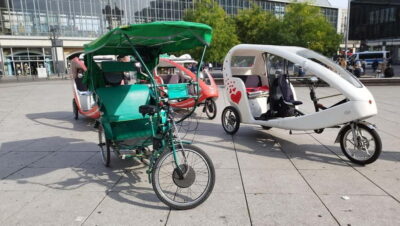
Berlin World War II & Third Reich Tours, compared.
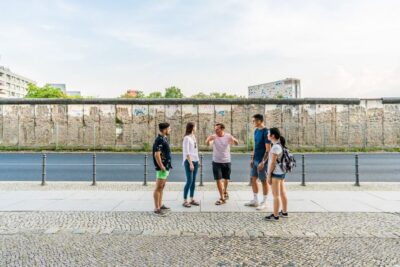 ★ 4.9Third Reich and Cold War 2 Hour Walking TourFrom $236,830 reviews
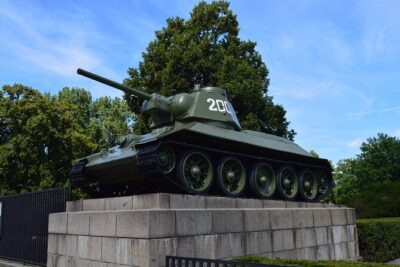 ★ 5.0Berlin’s Best: 2 Hour Walking Tour Third Reich and the Cold WarFrom $245,486 reviews
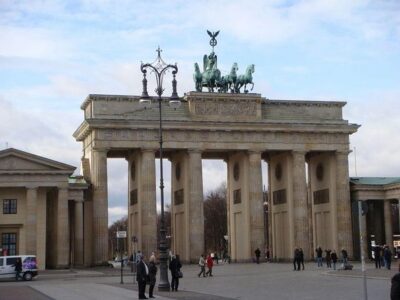 ★ 5.0Third Reich Berlin: Hitler and WWII Walking TourFrom $243,301 reviews
 ★ 4.9Third Reich, Hitler, and WWII Walking TourFrom $201,133 reviews
 ★ 5.0Berlin Third Reich Sites: Half-Day Walking TourFrom $21835 reviews
 ★ 4.7Guided Bike Tour of the Berlin Wall and Third ReichFrom $40499 reviews
 ★ 4.8Hitler’s Germany: Berlin During the Third Reich & WWIIFrom $23476 reviews
 ★ 5.0Private Walking Tour Berlin Third Reich Hitler and World War IIFrom $192360 reviews
Browse the lists this tour appears in