

Tour review · BERLIN PRIVATE TOURS
Stasi Museum GDR History Skip-the-line Private Tour Berlin
A tour like this makes the past feel close. I love the skip-the-line setup, and I like how the visit focuses on the original Stasi headquarters artifacts, from spying gear to the offices tied to Erich Mielke.
One possible drawback: the subject matter is heavy, and the museum is farther out, so you will want to stay strict with the schedule and transit plan.
Key highlights you should care about
- Skip-the-line entry: reserved time slot, so you do not waste your 3 hours in the queue
- Alexanderplatz 1989 context: you start in the place tied to the biggest GDR demonstration in 1989
- Real Stasi tools: bugs, hidden cameras, and other operational tech in the original building
- Mielke’s office details: you see his famous red briefcase and how sensitive information moved
- Informants and control: practical explanations of how surveillance worked on everyday citizens
- Private, small group feel: only your group joins, with English-language guiding
Other ways to read the Wall and divided Berlin in the street
- Berlin: Third Reich and Cold War 2 Hour Walking Tour★ 4.9 · 6,830 reviews
- Berlin’s Best: 2 Hour Walking Tour Third Reich and the Cold War★ 5.0 · 5,486 reviews
- Skip-the-Line: Berlin Wall Museum at Checkpoint Charlie★ 4.1 · 2,041 reviews
- Cold War, Berlin Wall, Spies and the East Side Gallery★ 5.0 · 1,024 reviews
Starting on Alexanderplatz, where 1989 changed everything
Your tour begins on Alexanderplatz, at Alexanderpl. 5-7, right by the Park Inn by Radisson Berlin. The meeting point is between a Burger King and a T-mobile store, and you should wait at the entrance. Do not walk into the building, since the staff may not be expecting tour arrivals.
This first stop is short, but it matters. Alexanderplatz sits in the center of the old GDR world, and your guide uses it as a mental kickoff for the year 1989, including the reality that this was where the largest GDR demonstration took place. Even if you have seen photos of the square before, this framing helps you connect the dots before you reach the museum.
You get a quick orientation, then you move on. That is a big deal for a timed, private tour: you do not just show up and wander. You start with a storyline.
Riding to Normannenstraße with the right kind of context
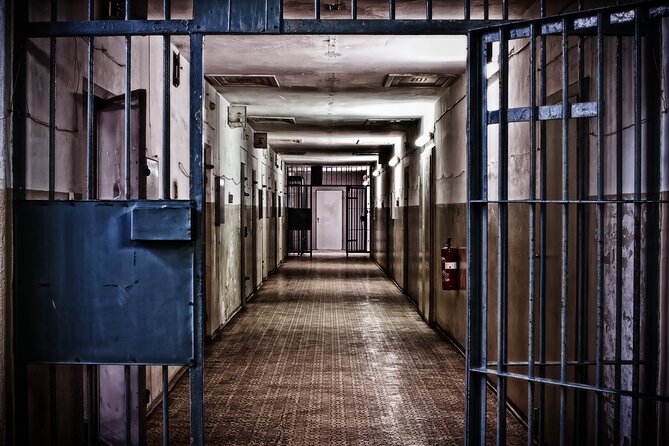
Next comes the Stasimuseum segment at Forschungs- und Gedenkstätte Normannenstraße. Plan on about 50 minutes for this portion, and also plan to use public transport, because the museum is not in the immediate city-center core.
What I like here is the “why” behind the walls. You are guided through how communism shaped everyday life in East Berlin before the Berlin Wall fell, and then you travel toward the site that made surveillance into an institution. This is not just museum talk. It is meant to show you how political power became a system of control.
A practical win: round-trip public transport tickets are provided. That means you do not have to stop and figure out trains right when you are trying to keep the schedule. You can focus on listening, watching, and getting oriented to where everything sits in Berlin.
The Stasi Museum inside the original headquarters
The main event is the Stasi Museum visit in the original building of the former headquarters of the Ministry of State Security. This is where the tour earns its time. You get about 2 hours inside, and the entry is included.
This is not a museum that relies only on photos and explanations. It also puts you in the actual operational space, which makes the whole topic feel more concrete. When you stand where decisions were made, it is harder to treat Stasi surveillance as something abstract.
Expect a guided walkthrough of multiple areas, including ministerial offices and rooms tied to key figures. You also get a strong focus on the machinery of spying, not just the political slogans.
What you see: bugs, hidden cameras, and the real tech of control
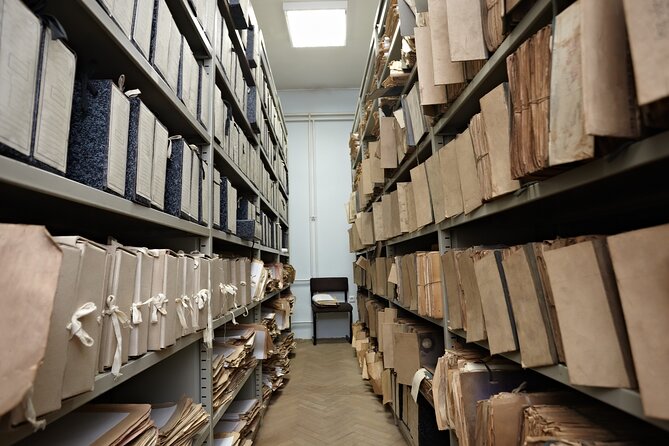
One of the most memorable parts is seeing original spying technology up close. The museum highlights items like bugs and hidden cameras, the kind of devices that turned normal life into something monitored and risky.
I like how the explanations are tied to purpose. You are not just looking at gadgets. You are learning why these tools existed, how they were used, and what they were meant to produce: fear, information, and obedience.
This is also where the tour can feel intense. The point is to show how far the system went. If you prefer light sightseeing, you may find yourself thinking about the moral weight of what you are seeing.
But if you want to understand how a secret police network functioned day to day, this portion is the reason the tour is worth doing in a guided format.
Other ways to read the Wall and divided Berlin in the street
- Berlin: Guided Bike Tour of the Berlin Wall and Third Reich
★ 4.7 · 499 reviews - Berlin: Cold War Walking Tour on Berlin Wall Route
★ 4.8 · 437 reviews - Berlin: Cold War Era History Guided Bike Tour
★ 4.8 · 413 reviews - East Berlin and the Wall: Walking Tour
★ 4.9 · 407 reviews - DDR Museum Berlin Admission Ticket
★ 4.0 · 352 reviews
Erich Mielke’s office and the red briefcase
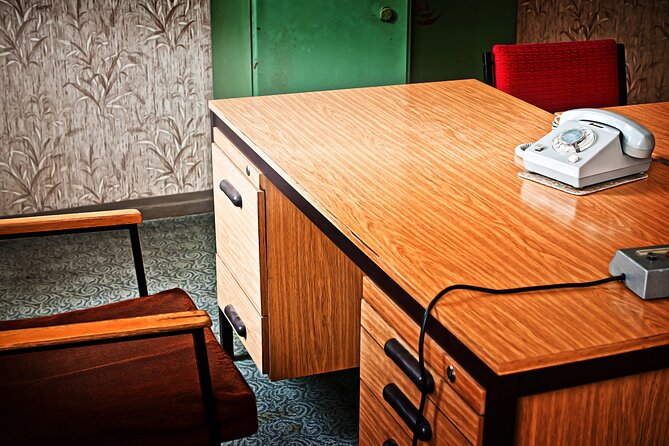
You also visit the office of Erich Mielke. The museum area is known for displaying his famous red briefcase, a detail that sticks with people because it symbolizes how sensitive information was handled and kept close.
This is a useful stop for two reasons. First, it gives you a face and a setting for the system, so the story does not stay at the level of slogans. Second, it shows you how information was packaged and moved through the machinery of power.
Even if you already know Mielke’s name, seeing the office space and hearing the role it played helps you understand the structure behind the surveillance. It is less about “one bad guy” and more about an entire workflow.
How informants were recruited and how citizens were controlled

The tour also focuses on informants and the control of everyday citizens. You hear how Stasi informants were recruited and what that meant for people living under constant suspicion.
This part is especially valuable because it moves beyond the obvious idea of “spying.” Instead, it explains the social consequences. You start to understand how trust could erode, how choices could be influenced, and how a person might change behavior simply because monitoring exists.
You do not have to be a full-time political science student to get it, but you do have to stay present. The guided format helps because you have context and a sequence of ideas, instead of trying to piece it together from labels on your own.
Skip-the-line entry and the timing reality
This tour includes skip-the-line tickets, which means you get a reserved time slot for entry. That is not a luxury detail. With timed access, the schedule becomes part of your experience quality.
So here is your simple rule: show up on time at the meeting point and stick to the flow. If you are late, you can lose the benefit of the reserved entry, and that can throw off your pacing for the entire 3-hour window.
Also note that the tour ends back at the meeting point. Since it is a private tour and only your group participates, you do not have random crowds splitting your attention during the guide-led portions. You get a cleaner experience, with less waiting around.
Private tour value at $258.59 per person
At $258.59 per person, this is not a budget add-on. But it can be good value if you care about getting the most out of your limited time.
Here is how I think about the cost:
- You are paying for a guided, English-language private experience, not just museum admission
- You get tickets included for the Stasi Museum
- You also get two-way public transport tickets, which reduces friction and time lost
- The skip-the-line entry saves you queue time, which matters in a museum designed for timed visits
If you are traveling with a group that can split the cost, it can feel more reasonable. And if you are the type of traveler who wants meaning, not just photos, the guide time becomes part of the value equation.
On the other hand, if you are comfortable reading on your own and prefer a self-paced visit, you may be tempted to skip the private guide. This tour is best for people who want structure, explanation, and a guided narrative connecting Alexanderplatz 1989 context to the operational Stasi spaces.
Who this Stasi Museum private tour is best for
This experience fits history buffs and people interested in how communism shaped East Berlin life before the Wall fell. It also works well if you like to understand how systems operated, not just when they happened.
It can be a smart choice if you want a guided visit focused on the mechanics of surveillance: spying tech, informants, recruitment, and control. The museum’s themes can be uncomfortable, but they are presented in a way that helps you follow the logic of the Stasi network.
If you are traveling with teenagers or older kids, it can be worth considering, but keep in mind the content is about repression and control. Go in knowing it is not a casual, feel-good day.
My practical take: book it if you want answers, skip it if you want a light day
If you want to learn how the Stasi police operated, and you want to see the real operational setting and technology, this is a strong choice. The combination of skip-the-line access, a private format, and the guided focus on key areas like Mielke’s office makes it easier to leave with understanding instead of confusion.
I would skip this tour if you mainly want a quick photo stop or you know you will struggle with heavy subject matter. Also skip it if you dislike timed plans, because the reserved entry and public transport routing make punctuality part of the deal.
FAQ
Where does the tour meet?
It meets at Alexanderpl. 5-7, 10178 Berlin, Germany, in front of the Park Inn by Radisson Berlin Alexanderplatz, between the Burger King and the T-mobile store.
Do I need to enter the Park Inn building at the start?
No. Wait at the entrance. The staff is not informed about the tour, so you should not enter the building.
How long is the tour?
The duration is approximately 3 hours.
Is this tour private?
Yes. It is a private tour or activity, and only your group participates.
What language is the tour offered in?
The tour is offered in English.
Is there a skip-the-line benefit?
Yes. With skip-the-line tickets, you have a reserved time slot for entry to help you skip the queue.
Is the Stasi Museum ticket included?
Yes. The tour includes tickets to the Stasi Museum (Forschungs- und Gedenkstätte Normannenstraße).
Is this the same place as the Berlin-Hohenschönhausen Memorial?
No. The tour includes the Stasi Museum at Forschungs- und Gedenkstätte Normannenstraße, which is different from the former Stasi prison memorial at Berlin-Hohenschönhausen.
Does the tour include transportation to the museum?
Yes. Since the Stasi Museum is outside the city center, two-way public transport tickets are provided.
When should I check my email before the tour?
You should check your email the day before the tour for important information from Rosotravel.
What is the cancellation policy?
You can cancel for free up to 24 hours in advance for a full refund.
More Wall & Cold War Berlin


More Wall & Cold War Berlin
More Tour Reviews in Berlin




Recently added around Berlin




Berlin Private Tours, compared.
 ★ 4.8Private Reichstag and Glass Dome TourFrom $2882,226 reviews
 ★ 5.0Berlin Private Complete History All Day Walking TourFrom $253474 reviews
 ★ 5.0Private Walking Tour Berlin Third Reich Hitler and World War IIFrom $192360 reviews
 ★ 5.0Private Berlin: Iconic Sights and Hidden Gems Walking TourFrom $192292 reviews
 ★ 5.0Berlin Private Half-Day Walking Tour: Discover the German Capital’s HistoryFrom $180244 reviews
 ★ 5.0Private Walking Tour: World War 2 and Cold War Sites in BerlinFrom $192230 reviews
 ★ 5.0The History of Berlin: WWII PRIVATE Walking Tour With LocalsFrom $143209 reviews
 ★ 5.0Private Sachsenhausen Concentration Camp tour with trainFrom $338205 reviews
Browse the lists this tour appears in