
Tour review · BERLIN PRIVATE TOURS
The Cold War and The Wall – Private Tour with Jacob
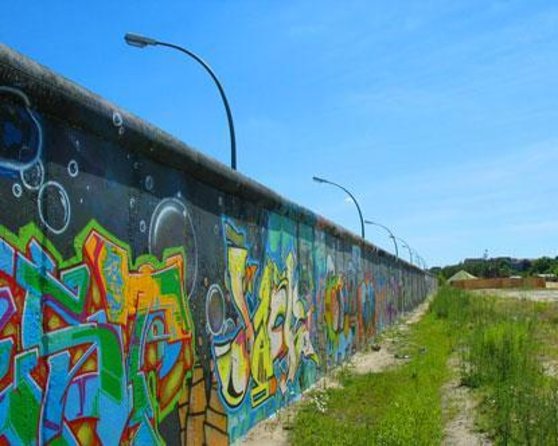
Berlin’s Cold War story is still visible. On this private walking tour with Jacob, you connect major sights into one clear timeline, from the early cracks in East Germany to the wall era and the road back to freedom. I like that you get a personal guide instead of joining a big group, and that the walk links monuments you already recognize (like Brandenburg Gate) with the smaller, telling details that explain what Berlin was like day to day.
What really makes it work is the mix of big landmarks and pointed Cold War flashpoints. You’ll also spend time on places that people often rush past, like the Trabi Museum and Berlin’s checkpoint sites, so the history feels grounded, not abstract. One thing to consider: it is a walking route, about 2 hours 45 minutes, so plan for winter chill or summer heat and bring an umbrella since it runs in all weather.
Key Takeaways Before You Go
- Private group up to 6 means you can ask questions and set the pace.
- Siegessaule to Alexanderplatz creates a logical route through major Cold War landmarks.
- Checkpoint-focused stops help you understand how East and West controlled movement.
- Trabi Museum time adds a human, everyday angle on life in East Germany.
- Included photo folder and subway map help you keep learning after the tour.
Other ways to read the Wall and divided Berlin in the street
- Berlin: Third Reich and Cold War 2 Hour Walking Tour★ 4.9 · 6,830 reviews
- Berlin’s Best: 2 Hour Walking Tour Third Reich and the Cold War★ 5.0 · 5,486 reviews
- Skip-the-Line: Berlin Wall Museum at Checkpoint Charlie★ 4.1 · 2,041 reviews
- Cold War, Berlin Wall, Spies and the East Side Gallery★ 5.0 · 1,024 reviews
Walking Berlin’s Cold War Lines, from Victory Column to Alexanderplatz
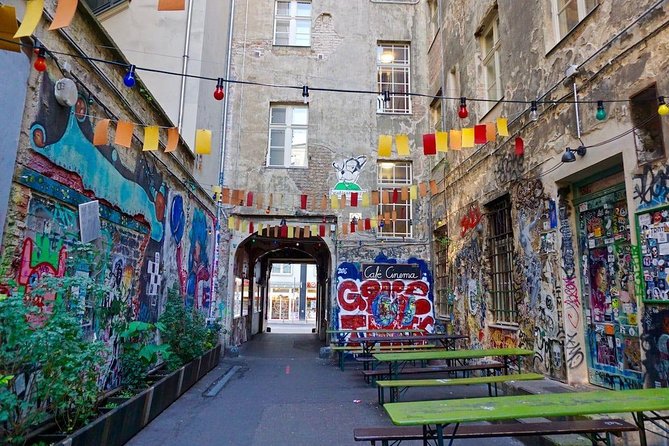
Berlin’s Cold War history can feel like a patchwork. This tour avoids that problem by stitching sights together in sequence, so you understand not just where things happened, but why these places mattered to people trying to live through it. The route ends at Alexanderplatz, which is convenient because it’s a major hub if you want to keep exploring after the walk.
The timing also helps. In roughly 2 hours 45 minutes, you don’t just “see” monuments. You get short stops at each place and narration that ties the site to the bigger Cold War picture. That pacing is a sweet spot for a first visit, especially if you want the main story without turning the day into a long marathon.
Private Guide, and Why Jacob-Nadav Style Matters
This is a private tour with your own guide, with Jacob named in the experience and Nadav Jacobs mentioned in the guide feedback. That personal element shows up in the way the tour can flex around your interests. If you’re curious about escape attempts, checkpoints, or how people actually got around, a private setup makes it easier to ask follow-ups and get real clarity instead of waiting for a group answer.
The guide experience also seems to land well with first-time Berliners. The feedback I saw emphasized deep, practical explanations and a feeling that the tour “scratched the surface,” which is exactly what you want on a first history tour. In other words, you leave with enough context to understand what you see on your own later, not just a list of names.
Stop by Stop: Siegessaule and the 1953 Revolution Context
The tour starts at Siegessaule (Victory Column) near Straße des 17. Juni. Even if you’ve seen the column in passing, it’s a good opener because it sets up the early tension in East Germany. One highlight here is the story tied to the 1953 revolution, a starting point that helps you see the Cold War as more than just walls and slogans.
This stop is short, about 15 minutes, and that’s practical. You get the setup without losing momentum. The only potential drawback is that if you love heavy museum-style history, you’ll want more time in the area on your own after the tour. Still, as an opening frame for the whole Cold War story, it’s a strong choice.
Brandenburg Gate and Potsdamer Platz, Where Division Got Physical
Next up is Brandenburg Gate. Even people who know Berlin basics recognize it fast, but the real value is the explanation: the erection and fall of the Berlin Wall, told from the perspective of what the gate symbolized as the city divided and then reunited. It’s also a free and easy photo stop with a 10-minute window, so you can quickly orient yourself.
Then you move to Potsdamer Platz, about 15 minutes. This is where the tour gets more than ceremonial. It connects the idea of the city divide with a post Cold War freedom moment, mentioned as a freedom concert. That kind of detail matters because it reminds you that after years of restriction, Berlin didn’t just flip a switch overnight. It had to re-learn how to gather and move.
If you’re the type who hates rushing, plan to stay present here. Potsdamer Platz is busy and visually busy, and it’s easy to let the narration slip if you’re scanning for photos. The guide’s job is to keep you focused, and that’s usually where the private format pays off.
Other ways to read the Wall and divided Berlin in the street
- Berlin: Guided Bike Tour of the Berlin Wall and Third Reich
★ 4.7 · 499 reviews - Berlin: Cold War Walking Tour on Berlin Wall Route
★ 4.8 · 437 reviews - Berlin: Cold War Era History Guided Bike Tour
★ 4.8 · 413 reviews - East Berlin and the Wall: Walking Tour
★ 4.9 · 407 reviews - DDR Museum Berlin Admission Ticket
★ 4.0 · 352 reviews
Aviation Ministry Stories, Max Linger, and Heinz Holzapfel Escape
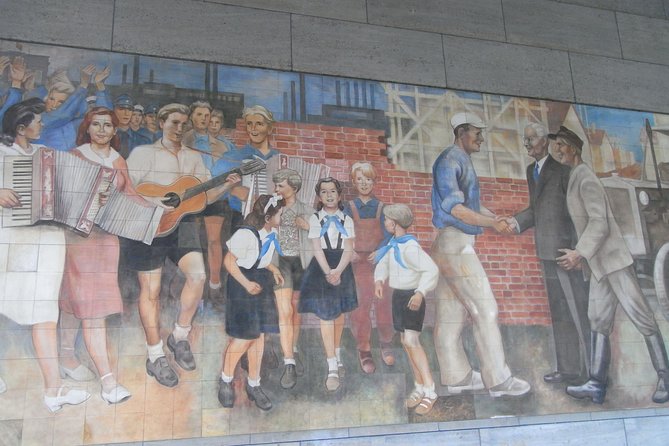
A short walk brings you to the Aviation Ministry of Berlin stop, around 10 minutes. This is a stop that sounds niche until you hear the stories behind it. You’ll learn about Max Linger’s communist utopia and Heinz Holzapfel’s escape attempt, and that shift is important.
Instead of treating the Cold War like a political movie, you get the human angle. Who people hoped to become, what they feared, and how escape attempts could play out. Even with limited time, the narrative at this stop is one of the more memorable ways to understand that the Cold War wasn’t just ideology. It was daily pressure and real risk.
Trabi Museum for the Everyday Side of East Germany
If the tour only focused on monuments and border drama, it would still be interesting. But Trabi Museum adds a different layer. You’ll spend about 30 minutes here, which is the longest stretch at a museum stop on the route.
You’re learning about the East German car, the Trabi (Trabant), a symbol that many visitors immediately connect to everyday life in the former East. This kind of stop is valuable because it breaks the rhythm of abstract geopolitics. It gives you a physical object, an everyday product shaped by shortages and restrictions, and it helps you understand the Cold War as something that showed up in normal routines.
The one caution: 30 minutes can feel short if you really get into car history or design. But as a balance on a walking tour, it’s a good amount. You’ll also have time to look closer without feeling like you’re losing the main story.
Checkpoint Charlie and Friedrichstraße, the Cold War’s Contact Zones
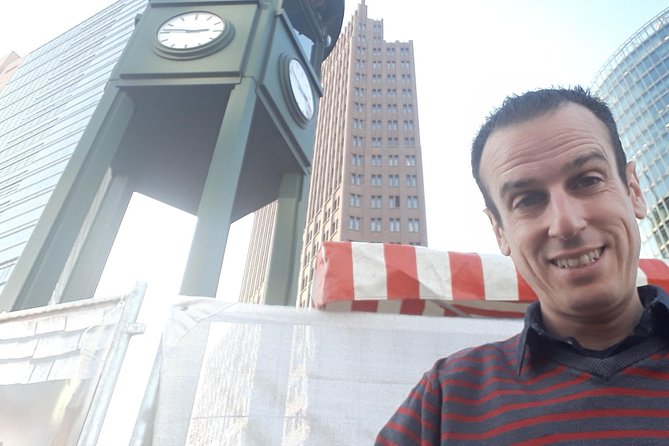
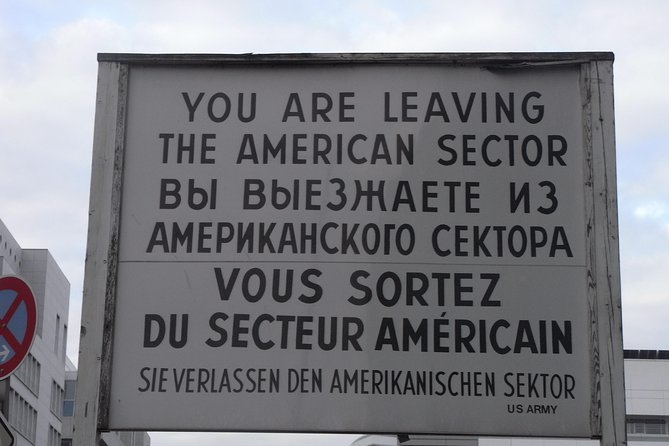
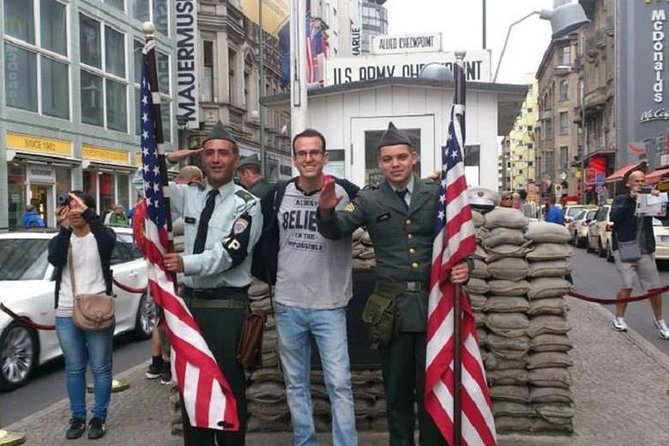
The tour then heads to Checkpoint Charlie, described as the main crossroad between East and West, about 10 minutes. This stop is famous, but it’s also easy to treat it like a photo backdrop. The tour’s framing makes it more useful: you learn the Cold War history of the crossing and what it represented for movement and power.
After that, you visit Friedrichstraße and the nearby Check points Street, about 20 minutes. This is where the narrative becomes more specific about the “how” of control, not just the “where.” Checkpoint sites are powerful because they force you to imagine the moment someone approaches, the questions they might face, and the uncertainty they lived with.
If you’re visiting Berlin for the first time, these stops can be emotionally intense in a way you might not expect. The good news is that you don’t stay too long at one location. The tour keeps you moving, so you get the context without burning out.
Unter den Linden and the Palace of Tears, Movement Under Control
At Unter den Linden, about 20 minutes, you follow the East Germany main avenue leading to the border. This helps you connect the geography to the concept of controlled movement. The tour doesn’t treat the boulevard like just a scenic corridor. It frames it as a route into systems of authority.
Then comes Palace of Tears, about 20 minutes. This stop is described as the main checkpoint for citizens and communist control. If you’re wondering why a checkpoint building has such a dramatic name, this is where the tour helps. It gives you the reason the place is remembered, not as a generic border, but as a moment where personal plans collided with political power.
A small practical note: these checkpoint-focused stops are usually the ones where you’ll stand and listen for a while. Wear comfortable shoes and plan to take photos thoughtfully. The best photos here come after you understand what you’re looking at, not before.
Alexanderplatz and the Space Race Angle from the TV Tower
The tour finishes at Alexanderplatz, about 10 minutes, including the TV tower area and a link to the space race. That might sound like a curveball if you think Cold War Berlin is only about walls and guard posts. But it’s a clever reminder: the Cold War was also about prestige, technology, and competition on many fronts.
Alexanderplatz is a smart ending point for another reason. It’s easy to continue your day there, with lots of transit options. Ending at a major hub means you’re not forced to plan a secondary ride just to get back to your hotel.
If you want to use the tour as a springboard, this ending location helps. You’ll know what to look for as you move through the city afterward.
What You Actually Get Included, and How It Helps You After
This tour includes your own private guide, plus pickup from hotel, Airbnb or B&B, train station, or the airport in Berlin. Pickup matters for value because it reduces friction, especially if you’re staying a bit outside central sightseeing areas.
You’ll also receive an A3 guidance picture folder and a big subway station map. Those items are underrated. Berlin’s transit can be confusing at first glance, and having a map in your hands right after a Cold War orientation helps you keep the story going as you ride between neighborhoods.
You also get guide availability for questions during or after the tour, which is one reason private history tours work better than audio apps. If you’re left with one big question, you can ask it right away.
Price and Value for a 2 Hours 45 Minutes Private Cold War Walk
The price is $310 per group, up to 6 people, for about 2 hours 45 minutes. That can sound high if you only compare it to a standard group walking tour. But for a private history route, it’s easier to judge value by cost-per-person and time.
If you’re traveling as a small group, the math usually looks better because you’re paying for one guide and one coordinated route that serves up the Cold War storyline across multiple major stops. Also, the tour includes pickup, which would cost extra on many standard tours.
A final value note: many stops on the route are listed as free admission, which means you are paying mainly for interpretation and route design, not for a bundle of museum tickets. If you like learning from your guide and not just checking boxes, that’s a fair way to spend your time in Berlin.
Who This Tour Fits Best in Your Berlin Plan
This is a great fit if you want:
- A first-visit Cold War overview that makes Berlin’s landmarks connect.
- A guided route that includes checkpoint sites and everyday context like the Trabi Museum.
- A private experience, where you can ask questions and keep the pace comfortable.
It’s also a smart option if you’re not trying to plan a complex day across lots of different neighborhoods. The tour is built as a walkable storyline ending at Alexanderplatz, so it’s easier to plug into the rest of your itinerary.
Should You Book The Cold War and The Wall with Jacob?
Yes, if your top priority is understanding Berlin’s division with real context, not just photos. The strongest reason to book is the way the tour ties famous symbols like Brandenburg Gate to checkpoint reality and the everyday East Germany angle from the Trabi Museum. The guide feedback also points to strong, clear explanations, including practical options for future tours, which makes this feel like a start to your deeper Berlin learning.
I’d skip or reconsider if you want a long, museum-heavy day, or if you strongly dislike walking and standing for narration. It is designed for a brisk, structured walk across key points, not for slow lingering.
If you do book, bring comfortable shoes, and plan to use the included map and photo folder to keep the story straight after the tour. That’s when the value lasts.
FAQ
How long is the Cold War and The Wall private tour?
It runs for about 2 hours 45 minutes (approx.).
Is this a private tour?
Yes. It is a private tour, and only your group participates.
How many people can be in the group?
The price is per group for up to 6 people.
Where does the tour start and end?
It starts in Berlin, Germany, and ends at Alexanderplatz 10178 Berlin, Germany.
Is pickup included?
Yes. Pickup is offered from your hotel, Airbnb or B&B, train station, or the airport in Berlin.
Are there admission tickets to pay during the stops?
Most of the listed stops are described as admission free. Public transport costs, if needed, are not included.
What public transport costs should I expect?
Public transport ticket fees are around 3 to 11 euro for a 2-hour or day ticket, depending on what you use.
What is the cancellation policy?
You can cancel for free up to 24 hours in advance for a full refund.
More Wall & Cold War Berlin

More Wall & Cold War Berlin
More Tour Reviews in Berlin



Recently added around Berlin

Berlin Private Tours, compared.
 ★ 4.8Private Reichstag and Glass Dome TourFrom $2882,226 reviews
 ★ 5.0Berlin Private Complete History All Day Walking TourFrom $253474 reviews
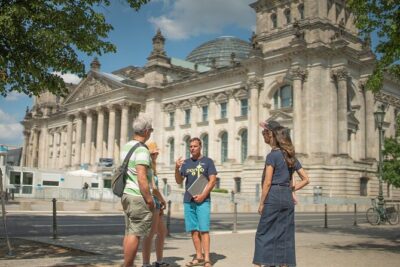 ★ 5.0Private Walking Tour Berlin Third Reich Hitler and World War IIFrom $192360 reviews
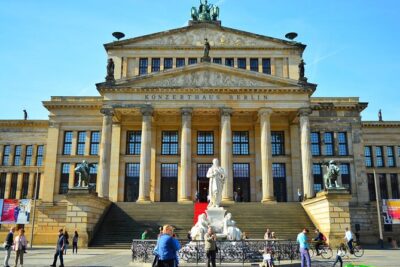 ★ 5.0Private Berlin: Iconic Sights and Hidden Gems Walking TourFrom $192292 reviews
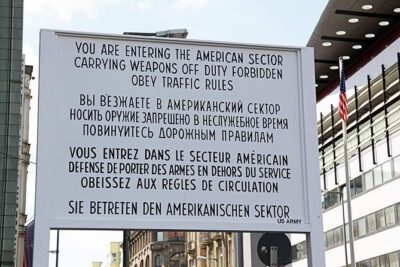 ★ 5.0Berlin Private Half-Day Walking Tour: Discover the German Capital’s HistoryFrom $180244 reviews
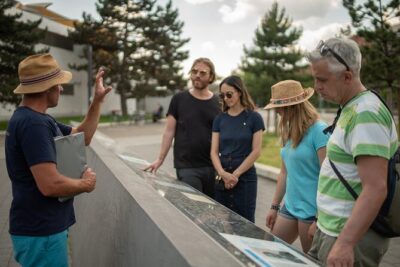 ★ 5.0Private Walking Tour: World War 2 and Cold War Sites in BerlinFrom $192230 reviews
 ★ 5.0The History of Berlin: WWII PRIVATE Walking Tour With LocalsFrom $143209 reviews
 ★ 5.0Private Sachsenhausen Concentration Camp tour with trainFrom $338205 reviews
Browse the lists this tour appears in